Key Takeaways
BYD overtakes Tesla in 2025 EV sales with over 2.25M units. Analyze implications for global auto stocks, competition, and investor strategy.
Overview
In a significant shift within the global electric vehicle (EV) market, China’s BYD is poised to overtake Elon Musk’s Tesla as the world’s leading EV seller for 2025. This marks a pivotal moment for Stock Market India and global investors, highlighting the intensifying competition and evolving landscape within the burgeoning EV sector.
For retail investors and finance professionals, this development underscores the dynamic nature of market leadership and the critical impact of strategic pricing and market expansion. The changing tide necessitates a re-evaluation of long-term investment strategies in EV stocks.
BYD reported annual sales of over 2.25 million battery-powered cars, an almost 28% increase, while Tesla’s estimated sales hovered around 1.65 million vehicles for the same period, based on analyst projections.
This report delves into the underlying financial and strategic factors driving this shift, providing a data-driven outlook for both companies and the broader electric vehicle investment landscape.
Key Data
| Metric | BYD (2025) | Tesla (2025 Est.) | Sales Difference |
|---|---|---|---|
| Annual EV Sales (Units) | >2,250,000 | ~1,650,000 | +600,000 |
| Annual Sales Growth (BYD) | ~28% | Specific data not disclosed | N/A |
Detailed Analysis
The electric vehicle (EV) sector has undergone a profound transformation, moving from nascent innovation to a highly competitive global market. Tesla, initially the unchallenged pioneer, established the premium benchmark. However, the rapid emergence of competitors, particularly from China, has fundamentally reshaped the landscape. This evolution culminated in 2025, with BYD reportedly surpassing Tesla in annual EV sales, signifying a pivotal moment for global automotive investment. This shift highlights the increasing importance of factors like affordability, diversified offerings, and aggressive regional expansion. For long-term investors and finance professionals observing the Stock Market India and global indices, this signals a maturation of the EV industry, requiring a nuanced understanding of market share dynamics and competitive strategies beyond initial technological leads.
Examining the 2025 performance data reveals clear divergences. BYD achieved over 2.25 million battery-powered vehicle sales, reflecting an almost 28% year-on-year increase. This robust growth, despite a slowdown in its overall growth rate to a five-year low, underscores BYD’s aggressive market penetration. In contrast, Tesla’s estimated sales for 2025 stood at approximately 1.65 million units. This underperformance stemmed from several challenges: a mixed reception to new offerings, investor concern over Elon Musk’s political engagements, and intense competition. Tesla’s October introduction of lower-priced models aimed to counteract criticism about its slow release of affordable options. Furthermore, Q1 2025 sales slumped due to backlash against Musk’s role in the US government. Musk’s substantial pay package, tied to boosting Tesla’s market value and sales, coupled with his commitments to X, SpaceX, and “Optimus” robots, has fueled investor speculation about his singular focus on Tesla’s automotive core.
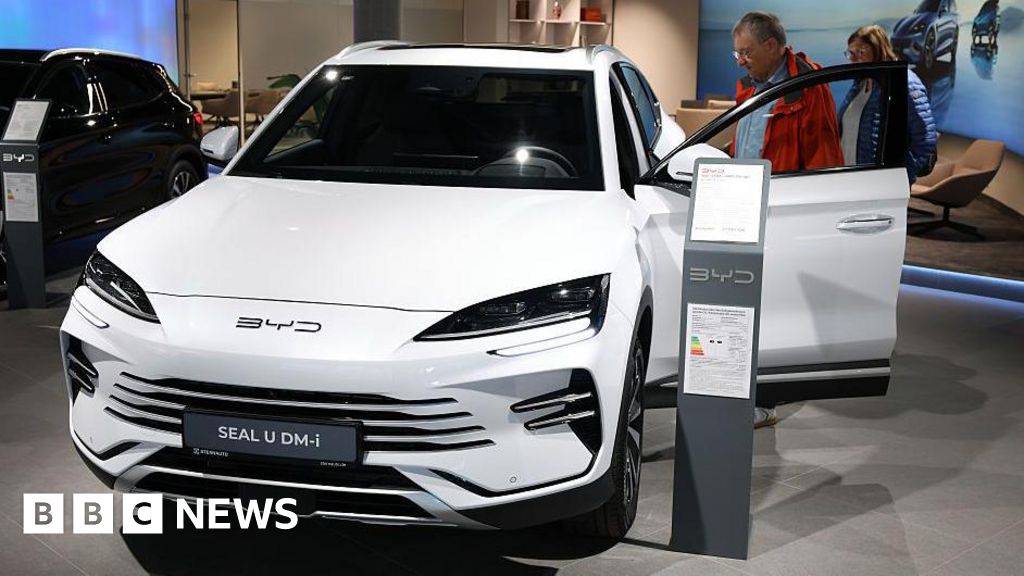
BYD’s strategy hinges on competitive pricing and a broad product portfolio, including successful plug-in hybrids like the Seal U SUV. This has driven rapid international expansion across Latin America, Southeast Asia, and parts of Europe, even amidst tariffs. The UK became BYD’s largest market outside China, with sales surging 880% year-on-year to September. Tesla, conversely, maintains a premium focus, betting on innovation in self-driving ‘Robotaxis’ and humanoid robotics. While this cultivates a strong tech-forward brand, it leaves significant market share open to value-oriented rivals. Chinese competitors like XPeng and Nio also intensify pressure within BYD’s domestic market, illustrating a multifaceted EV market India landscape. This dynamic suggests diverse strategies will shape regional and global market share. [Suggested Matrix Table: Comparison of BYD and Tesla Key Strategies (Pricing, Global Reach, Product Focus)]
For Retail Investors and Swing Traders, this market shift mandates vigilance. While Tesla remains an innovation leader, BYD’s ascendancy underscores the power of cost leadership and global market penetration. Investors should monitor quarterly sales, new model launches, and any regulatory shifts impacting EV tariffs. Long-term investors must assess broader macroeconomic trends, geopolitical factors, and intensifying competitive pressures. Key metrics include growth rates, battery technology advancements, cost management, and profitable market expansion. Elon Musk’s future commitment to Tesla, particularly his pledge to reduce US government roles, will be crucial for investor sentiment and stock performance on exchanges like NSE and BSE. The evolving global EV market signals a new era of intense competition and diverse investment opportunities for informed participants.
About the Author