Key Takeaways
Former President Bolsonaro’s health event prompts a review of Brazil’s political stability and emerging market risk. Analyze investor sentiment for 2025.
Overview
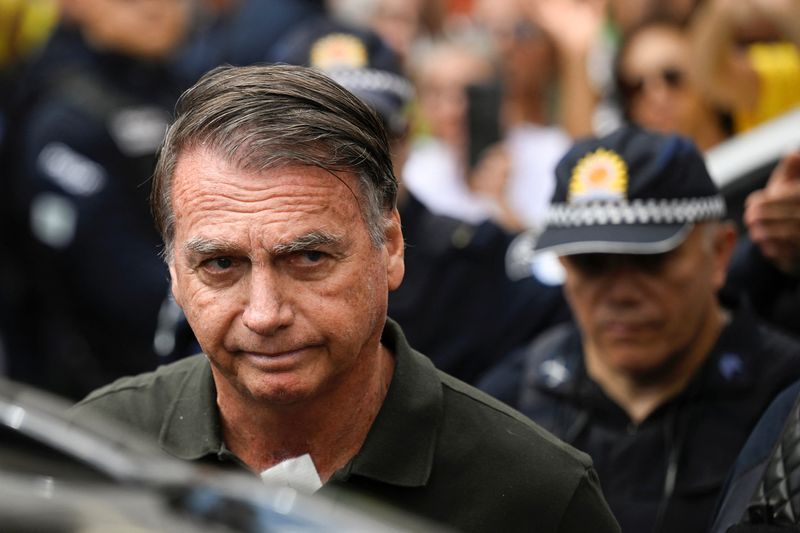
Brazil’s political landscape, a crucial factor for emerging market investors, saw a recent update regarding former President Jair Bolsonaro’s health. His wife confirmed a surgery to address persistent hiccups, a development that, while medically minor, prompts a nuanced look at investor sentiment and political stability in Latin America’s largest economy.
For retail investors, swing traders, and finance professionals monitoring Stock Market India and global emerging trends, understanding the interconnectedness of political figures and market perception is paramount. Events involving prominent leaders, even seemingly peripheral ones, can influence foreign investment flows and sovereign risk assessments.
While specific financial metrics or direct market indices were not immediately impacted by the health news itself, the broader context of political certainty remains a key consideration for investment in Brazil. The market’s reaction tends to be more about perceived stability than the medical details of a former leader’s ailment.
This analysis delves into the potential, albeit indirect, implications for Brazil’s investment climate, examining the role of political news in shaping investor confidence and identifying factors for stakeholders to monitor amidst evolving global market dynamics and broader financial analysis.
Detailed Analysis
Emerging markets like Brazil inherently carry a higher degree of political risk, which forms a significant component of investment analysis. The health status of influential political figures, even former ones, can become a focal point for market participants who continuously assess stability and potential shifts in governance or policy direction. In Brazil’s recent history, political events have frequently triggered notable fluctuations in its currency, the Real, and its benchmark stock index, the Ibovespa. While the surgery for hiccups suffered by former President Jair Bolsonaro is a routine medical procedure, the mere announcement of a prominent political personality requiring medical attention often initiates a period of heightened observation among investors. This is particularly true for long-term investors and finance professionals who factor political continuity and leadership stability into their country risk models.
Detailed financial analysis of emerging markets extends beyond traditional balance sheet metrics to encompass geopolitical and internal political dynamics. In the absence of specific financial metrics directly disclosed in relation to Bolsonaro’s health update, the focus shifts to qualitative risk assessment. Investors typically monitor such events for any signals of underlying political fragility or potential power vacuums, even when none are immediately evident. The impact on investor confidence, while not quantifiable in this specific instance, is a critical, intangible metric that underpins decisions regarding foreign direct investment and portfolio allocations in economies like Brazil. Swing traders, for instance, might observe initial knee-jerk reactions in Brazilian ETFs or currency pairs, while long-term investors weigh the cumulative effect of such news on the nation’s broader governance framework and economic policy trajectory.
Comparing Brazil’s situation to other emerging economies, the market sensitivity to political news, including leader health updates, is a recurring theme. Countries with strong institutions and diversified political power structures tend to absorb such events with minimal market disruption. However, in regions where political personalities wield considerable influence, any news regarding their well-being can introduce an element of uncertainty. This comparative perspective highlights that the event itself, while minor, serves as a reminder of the inherent political risk premium often associated with investing in emerging markets. Regulatory clarity and consistent economic policies, regardless of leadership changes, are crucial for sustaining investor interest and mitigating the impact of political headlines. [Suggested Matrix Table: Emerging Market Political Risk Factors: Country | Governance Stability | Policy Predictability | Market Sensitivity to News]
For retail investors, swing traders, and finance professionals engaged in global asset allocation, the takeaway from this development is clear: maintaining a diversified portfolio and conducting thorough country-specific risk assessments are paramount. This event underscores the importance of monitoring not just economic indicators but also political stability metrics, particularly in the run-up to future elections or periods of potential political transition. Investors should stay abreast of broader developments in Brazil’s political landscape, assessing how public sentiment and political narratives might influence future policy decisions impacting sectors like commodities, banking, or infrastructure. The inherent volatility of emerging markets necessitates a prudent approach, where understanding the interplay between political stability and investor confidence is key to making informed investment decisions in 2025 and beyond.
About the Author