Key Takeaways
Congress announces solo run for BMC Polls 2025, straining MVA amidst Uddhav-Raj bonhomie. Understand key implications for Mumbai’s political landscape and future alliances.
Market Introduction
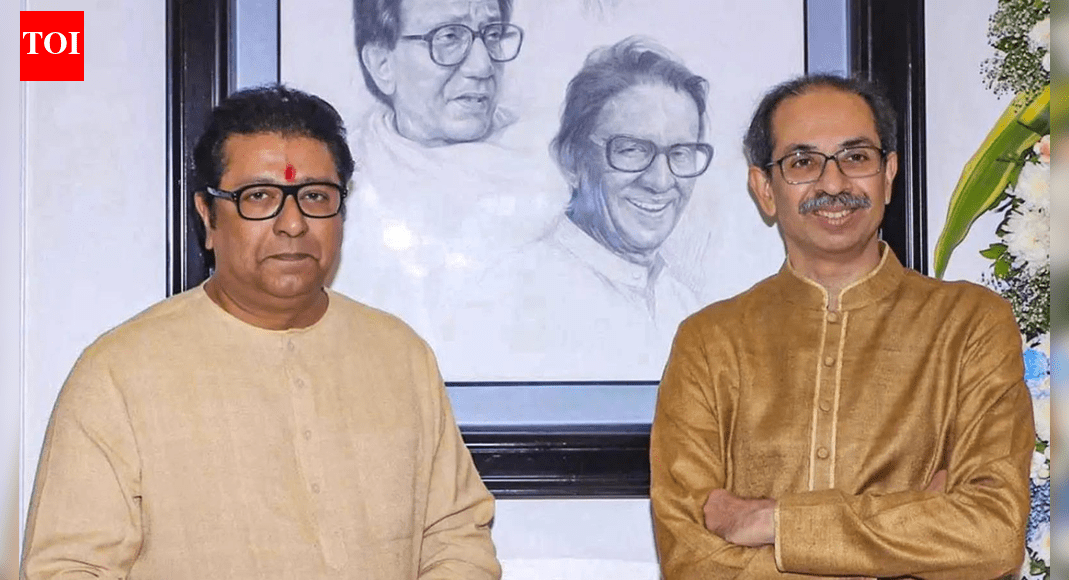
Ahead of the crucial Brihanmumbai Municipal Corporation (BMC) polls in 2025, the Congress party has officially declared its intent to contest independently. This strategic decision unfolds amidst significant political realignments in Maharashtra, notably the strengthening proximity between Shiv Sena (UBT) chief Uddhav Thackeray and Maharashtra Navnirman Sena (MNS) supremo Raj Thackeray, which is visibly straining the Maha Vikas Aghadi (MVA) alliance.
This shift carries profound implications for News Readers, Policy Watchers, Informed Citizens, and Political Analysts, signaling a potential reshaping of Mumbai’s political landscape. The outcome of the BMC polls frequently serves as a barometer for regional political sentiment, reflecting shifts in voter loyalty and alliance dynamics in India Politics.
Congress leader Ramesh Chennithala confirmed the party’s solo approach, stating, “Congress has taken a decision to contest the elections alone.” Polling for BMC and other municipal bodies is slated for January 15, with results on January 16, 2025.
The confluence of Congress’s solo flight and the Uddhav-Raj bonhomie sets the stage for a complex electoral battle, with observers keenly watching for further alliance declarations and their long-term impact on state politics.
Data at a Glance
| Election Body | Polling Date | Result Date | Number of Bodies |
|---|---|---|---|
| Brihanmumbai Municipal Corporation (BMC) | January 15, 2025 | January 16, 2025 | 29 Municipal Corporations |
| Zilla Parishads | January 15, 2025 | January 16, 2025 | 32 Zilla Parishads |
| Panchayat Samitis | January 15, 2025 | January 16, 2025 | 336 Panchayat Samitis |
In-Depth Analysis
The political landscape in Maharashtra is undergoing a significant transformation as the Brihanmumbai Municipal Corporation (BMC) polls approach. Historically, Mumbai’s civic body has represented a powerful administrative and financial stronghold, making its elections intensely contested. The Congress party’s unilateral decision to contest the BMC elections marks a distinct shift from the collaborative approach often seen within the Maha Vikas Aghadi (MVA). This move by the Congress, an integral part of the MVA, aims to reassert its independent identity and rebuild its grassroots presence, which has experienced erosion in recent years. This comes against a backdrop where the MVA, comprising Shiv Sena (UBT), Nationalist Congress Party (NCP – SP), and Congress, faced a notable setback in the 2024 Maharashtra Assembly elections against the BJP-led Mahayuti alliance, intensifying pressure on its constituents to adapt their electoral strategies.
Adding to this complex dynamic is the re-emerging bonhomie between cousins Uddhav Thackeray of Shiv Sena (UBT) and Raj Thackeray of MNS, who were once bitter rivals. This convergence appears to be driven by a shared objective: safeguarding the Thackeray political legacy in Mumbai. For Uddhav Thackeray, securing control of the BMC is of paramount importance, potentially serving as a crucial opportunity to reaffirm his political relevance following the 2022 split in the Shiv Sena. The MNS, under Raj Thackeray, positions itself as a custodian of Marathi identity, aiming to consolidate the Marathi vote bank. This strategic calculus by all parties involved underscores the high stakes of these local elections, which often serve as a microcosm of broader state politics.
The immediate consequence of the Congress’s solo strategy is the perceptible strain it imposes on the MVA alliance at the local level. While the MVA has operated as a cohesive unit in state government affairs, these divergent paths for the BMC polls highlight underlying tensions and differing priorities among its members. This situation contrasts sharply with the alliance’s state-level cooperation, prompting questions about the MVA’s long-term viability and strategic alignment. The potential Uddhav-Raj alliance, while not yet formally declared, introduces another formidable force into the municipal elections, potentially fragmenting the anti-BJP votes and significantly altering the electoral arithmetic. Previous BMC elections have frequently demonstrated that a fragmented opposition tends to benefit a consolidated ruling party, suggesting a challenging path for any single entity in this anticipated multi-cornered contest.
For News Readers and Informed Citizens, the BMC polls directly impact local governance, urban development, and the future trajectory of Mumbai, India’s financial capital. Policy Watchers and Political Analysts should closely monitor not only the formal announcement of any Sena (UBT)-MNS alliance but also the subsequent campaign strategies of all major parties, including the BJP, which will undoubtedly seek to capitalize on any perceived disunity within the opposition ranks. The election outcome will not only determine Mumbai’s civic leadership but also send strong signals about the public mood and potential shifts in India Politics ahead of future state and national elections. This period of political flux offers both the risks of fragmented mandates and significant opportunities for parties to redefine their electoral appeal and solidify their bases.
About the Author