Key Takeaways
Bajrang Dal’s Bareilly church protest over alleged hurt Hindu sentiments goes viral. Understand the incident, police action, and community implications for India News consumers.
Overview
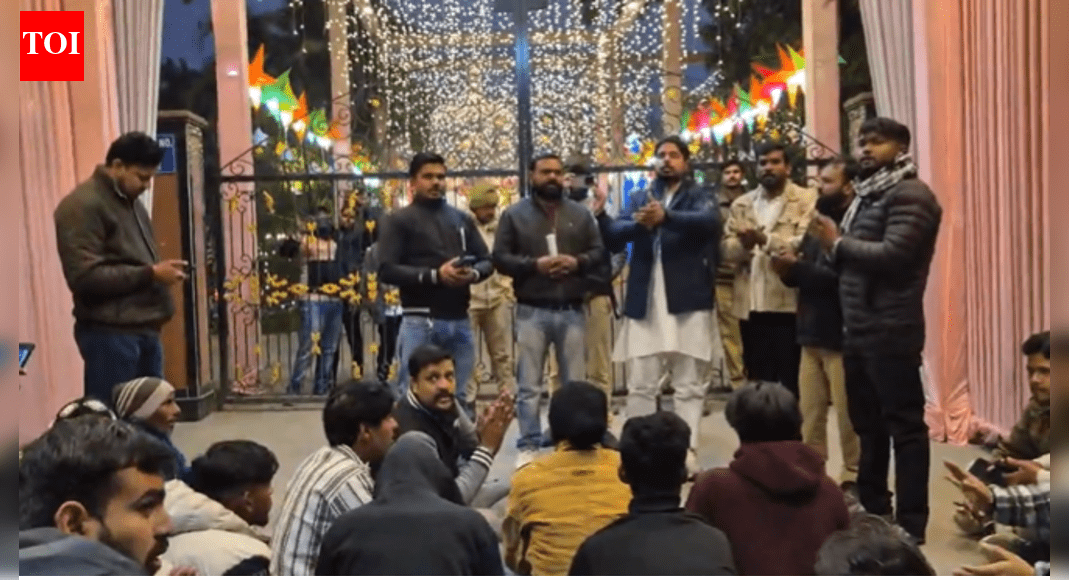
A recent incident in Bareilly, Uttar Pradesh, saw members of the right-wing organizations Bajrang Dal and Vishwa Hindu Parishad stage a significant protest outside a local church during Christmas Eve. This Bareilly church protest quickly garnered attention after a video of the demonstration, featuring protesters reciting ‘Hanuman Chalisa’ in front of police, surfaced and went viral on social media, drawing widespread focus to religious sentiments in India.
The demonstration highlights escalating tensions around religious celebrations, prompting discussions among general readers and news consumers about community harmony and freedom of expression. Such events are increasingly becoming a focal point in current affairs, reflecting deeper societal dynamics.
Protesters gathered near the church’s main gate in the Cantt police station area, alleging the Christmas program portrayed Hinduism objectionably. The demonstration concluded within 30 minutes, after leaders submitted a memorandum to City Circle Officer Ashutosh Shivam.
This incident, marked by demands for an impartial investigation and stringent action, signals an ongoing situation that warrants close monitoring for further developments in India News and Today Updates.
Detailed Analysis
The recent protest outside a Bareilly church, spearheaded by Bajrang Dal and Vishwa Hindu Parishad, marks another chapter in the ongoing discourse surrounding religious harmony and perceived affronts to community sentiments in India. Historically, various right-wing outfits have voiced concerns over alleged religious conversions and the portrayal of Hindu traditions. This incident, occurring on Christmas Eve, follows a pattern where religious festivals, intended for celebration, sometimes become flashpoints for ideological clashes. The swift spread of the protest video across social media platforms underscores the amplified role digital channels play in shaping current affairs and public perception, turning local incidents into national conversations.
Delving into the specifics, the core of the protest stemmed from allegations that a Christmas program held at the church on the preceding Tuesday featured audio-visual skits by various schools. Protesters claimed these skits misleadingly depicted issues related to religious conversion, Hindu temples, and Hindu society. During the demonstration, members chanted ‘Jai Shri Ram’ and ‘Har Har Mahadev,’ along with reciting the ‘Hanuman Chalisa.’ Police presence at the scene was notable, with officers arriving after receiving alerts about the gathering. The protest culminated in Bajrang Dal members presenting a memorandum to City Circle Officer (City) Ashutosh Shivam, calling for a thorough and impartial investigation into their grievances and stringent action against those deemed responsible. Officer Shivam, quoted by PTI, assured that “an investigation will be carried out and necessary action will be taken on the basis of facts.” This initial response, however, did not prevent a subsequent protest outside the Kotwali police station, where the right-wing groups demanded Shivam’s suspension for allegedly failing to register an FIR against a pastor accused of making defamatory remarks against Hindu deities.
This Bareilly church protest bears similarities to other incidents across India where right-wing organizations have expressed strong opposition to perceived slights against Hindu religious beliefs or practices, particularly during Christian or Muslim festivals. Such events often ignite debates on freedom of speech versus religious sentiments, challenging law enforcement to maintain order while upholding constitutional rights. The amplification of this incident through a viral video demonstrates how social media can quickly transform localized protests into national-level discussions, influencing public opinion and potentially inspiring similar actions elsewhere. Observers note that these episodes can strain inter-community relations, prompting calls for greater dialogue and understanding to prevent escalation and ensure a balanced environment for all religious practices.
For general readers and news consumers, this incident offers crucial insights into the complexities of religious dynamics and law enforcement in India today. It highlights the importance of distinguishing between genuine grievances and politically motivated actions, and the necessity of transparent investigations to ascertain facts. The unfolding situation underscores the fragile balance between religious freedom and maintaining public order, emphasizing why balanced news analysis is vital. Upcoming events to monitor include the official outcome of the police investigation, any legal proceedings initiated against individuals or groups, and further statements from religious and political leaders. This incident serves as a reminder of the ongoing need for respectful coexistence and adherence to legal processes in addressing community concerns.
About the Author