Key Takeaways
Bangladesh faces escalating unrest as protesters breach Parliament after youth leader Sharif Osman Hadi’s funeral. Analyze political stability and India-Bangladesh diplomatic implications.
Market Introduction
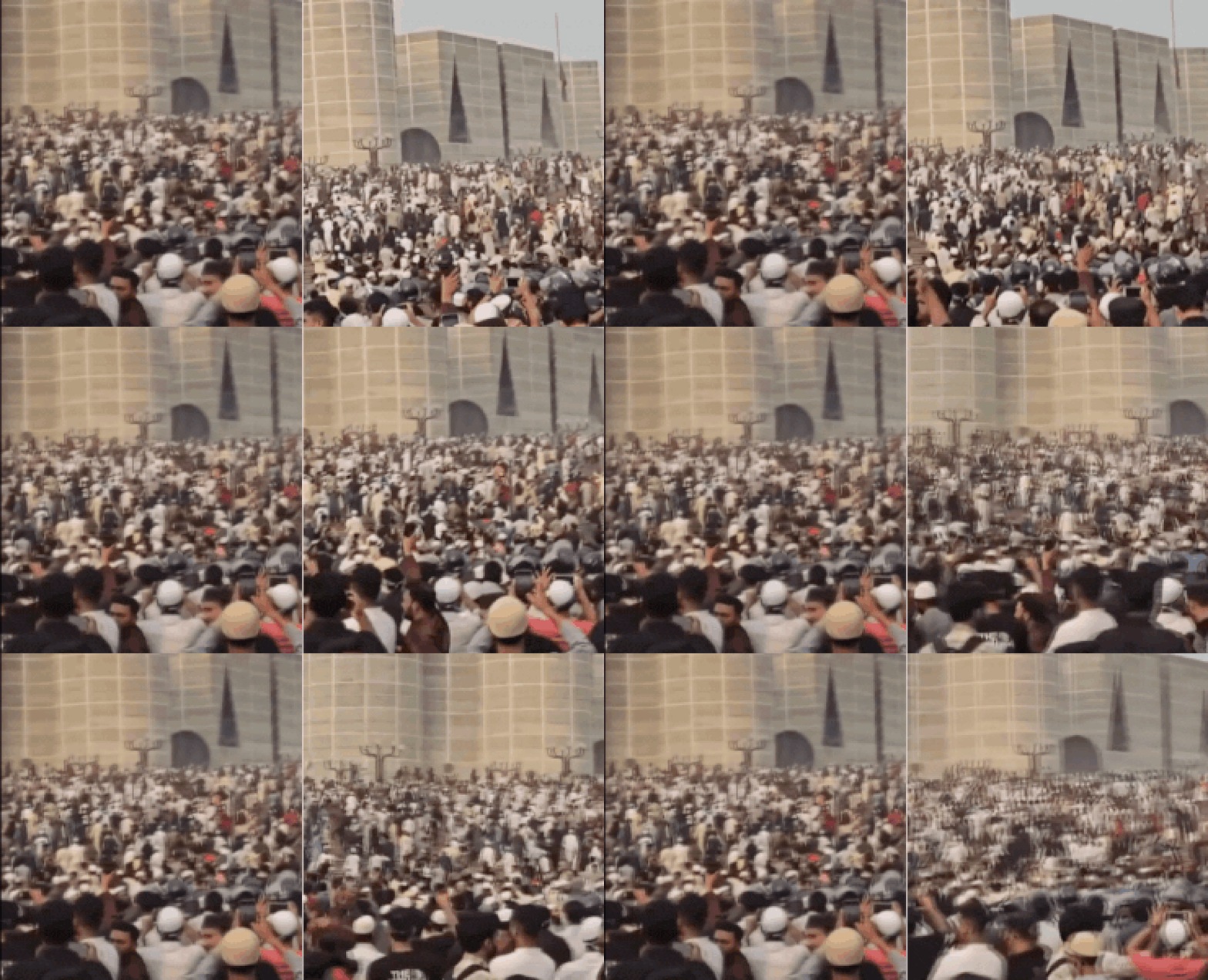
Heightened political tensions in Bangladesh reached a critical point following the funeral of youth leader Sharif Osman Hadi, as protestors broke through security barricades and entered the Parliament building on Saturday. This dramatic escalation highlights growing public outrage and poses significant challenges for the interim government’s authority.
The incident carries profound implications for Bangladesh’s internal security and its diplomatic relations, particularly with neighboring India, as protestors voiced strong anti-India sentiments and made specific demands.
Sharif Osman Hadi, shot on December 12 during an election campaign, succumbed to his injuries in Singapore on Thursday, sparking widespread demonstrations that quickly expanded beyond Dhaka.
This analysis will delve into the immediate security concerns, the unfolding political instability, and the complex diplomatic fallout stemming from these events.
In-Depth Analysis
The dramatic breach of the Parliament building following the funeral of youth leader Sharif Osman Hadi signals a severe escalation of political unrest in Bangladesh. This incident, occurring amid heightened tensions in Dhaka, underscores deep-seated grievances and challenges the interim government’s control. Hadi’s assassination on December 12, shot by masked gunmen during an election campaign in Bijoynagar and succumbing to injuries in Singapore, served as the immediate catalyst. Historically, Bangladesh has experienced significant periods of political volatility, where the deaths of influential figures or contentious electoral events often ignite widespread public demonstrations. The current outpouring of thousands onto the streets, swiftly expanding beyond the capital, reflects a potent public outrage that is testing the nation’s security apparatus and political stability.
Sharif Osman Hadi’s death triggered swift and widespread demonstrations. Thousands converged in Dhaka late Thursday and early Friday, demanding justice. The unrest quickly spread geographically, with protestors attempting to approach Indian diplomatic facilities, including India’s deputy high commissioner’s residence, leading to police deploying tear gas. Notably, elements like the National Citizen Party (NCP), identified as a key splinter group of the Students Against Discrimination (SAD), participated. Protestors chanted anti-India slogans, asserting the masked gunmen responsible for Hadi’s death had fled to India. Demonstration leaders further escalated by calling for the interim government to suspend operations at the Indian High Commission until suspects were extradited. Authorities confirmed ongoing investigations into Hadi’s killing and the security incidents, with law enforcement on high alert to prevent further violence.
The recent breaching of the Parliament building represents a significant escalation in comparison to previous protest movements, such as those spearheaded by Students Against Discrimination (SAD) last year. While earlier protests focused on broader societal grievances, the direct assault on a national institution and the targeting of Indian diplomatic sites introduce a more volatile and internationally sensitive dimension. The explicit accusations of attackers escaping to India and the demand for suspending the Indian High Commission transform the domestic crisis into a delicate diplomatic challenge for Bangladesh’s interim government. This shift from purely internal dissent to protests with strong anti-foreign elements complicates the policy implications, requiring sophisticated handling beyond typical crowd control.
For News Readers, the evolving Bangladesh unrest demands vigilance regarding public safety and the rule of law. Policy Watchers should assess the interim government’s capacity to restore order and address underlying causes of discontent, particularly the policy implications for internal security and justice. Informed Citizens need to comprehend the long-term impacts of political instability on economic development and human rights. Political Analysts must scrutinize the implications for India-Bangladesh bilateral relations, observing how diplomatic tensions over alleged fugitives and the Indian High Commission’s status unfold. Key metrics to monitor include the progress of investigations, the government’s stability, and any official statements or diplomatic resolutions concerning the escalating regional issues.
About the Author