Key Takeaways
Former PM Sheikh Hasina accuses Yunus’s interim government of chaos, lawlessness, and failing minorities. Analyze the political fallout and regional implications.
Market Introduction
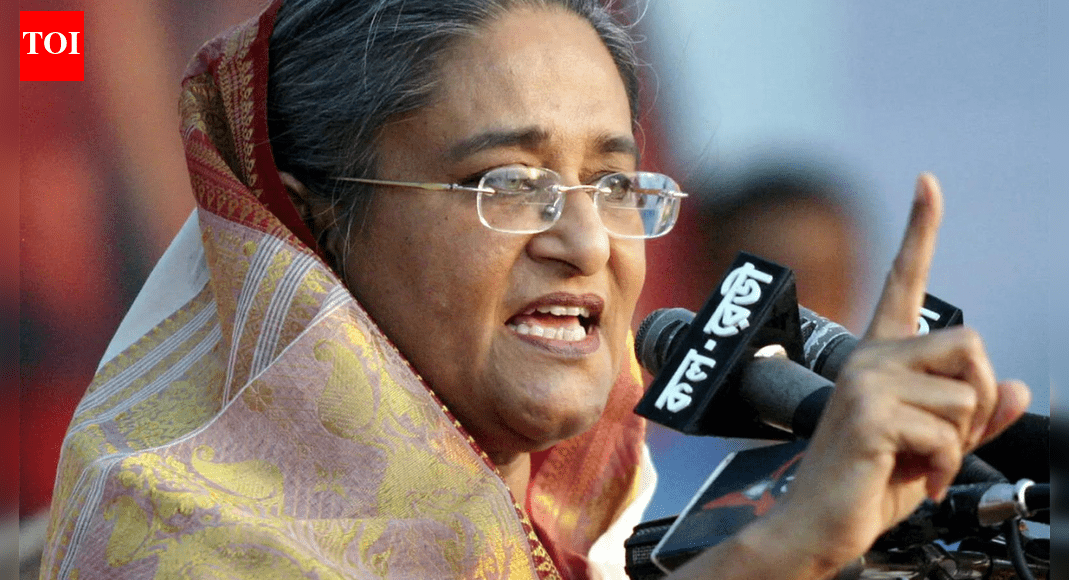
Former Bangladesh Prime Minister Sheikh Hasina has issued strong accusations against the Muhammad Yunus-led interim government, holding it responsible for escalating lawlessness and the breakdown of governance in Bangladesh. These criticisms follow recent incidents of violence, including the death of student leader Sharif Usman Hadi and the lynching of Hindu youth Dipu Chandra Das.
Hasina’s statements highlight concerns for News Readers, Policy Watchers, Informed Citizens, and Political Analysts regarding Bangladesh’s internal stability, its secular foundations, and critically, its long-standing diplomatic relations with India, a vital regional partner.
Specifically, Hasina cited the killing of Sharif Osman Hadi, a prominent youth leader, and the lynching of 27-year-old Dipu Chandra Das, as evidence of the interim government’s failures to protect its citizens and minorities.
The former premier’s remarks underscore growing regional instability and prompt deeper examination of the interim administration’s policy direction and governance capabilities.
In-Depth Analysis
The recent political upheaval in Bangladesh, marked by the ouster of Sheikh Hasina’s government and the ascent of an interim administration led by Muhammad Yunus, has triggered significant commentary on governance and regional stability. Hasina, in an email interview, has directly attributed the nation’s perceived decline in law and order to the current regime, asserting that a culture of violence has intensified since her departure. This period of transition provides a critical lens through which to examine Bangladesh’s domestic challenges and their international ramifications, particularly concerning its relationship with India and its commitment to secular principles. The former Prime Minister’s allegations bring into sharp focus the precarious balance of power and the diverse ideological currents shaping Bangladesh’s political landscape, urging both domestic and international stakeholders to observe developments with acute attention.
Hasina’s accusations are multifaceted, addressing both internal governance and foreign policy shifts. She specifically linked the tragic death of Sharif Usman Hadi, a youth leader associated with the 2024 “July uprising,” to the interim government’s alleged presiding over “lawlessness.” Hadi, shot in Dhaka on December 12, succumbed to his injuries after six days. Furthermore, Hasina critically referenced the lynching of Dipu Chandra Das in Mymensingh district, a Hindu youth allegedly beaten to death over blasphemy accusations and subsequently set on fire. These incidents, according to Hasina, reflect a profound failure by the Yunus administration to protect religious minorities and maintain basic public order. She also accused the interim government of issuing “hostile statements against India,” allowing extremists to influence policy, releasing convicted terrorists, and placing extremist-linked groups in public roles, thereby endangering Bangladesh’s secular foundations.
The diplomatic implications of these internal developments, particularly with India, form a core part of Hasina’s critique. She argued that the current strain in India-Bangladesh relations is “entirely of Yunus’s making,” contrasting it sharply with the decades-long “steadfast friend and partner” status India held. Hasina claimed that the interim government’s alleged “headlong embrace” of Pakistan, after needlessly alienating longstanding allies, represents an inappropriate and strategically unsound realignment of foreign policy. This shift, she contended, lacks democratic legitimacy, as the interim administration was not elected and therefore has no mandate to undertake decisions with long-term consequences. Historically, Bangladesh has maintained a policy of “friendship to all, malice toward none,” a principle Hasina believes is being undermined.
For News Readers, Policy Watchers, Informed Citizens, and Political Analysts, Hasina’s statements provide a critical, albeit partisan, perspective on Bangladesh’s political trajectory. The alleged rise in lawlessness and the erosion of minority protection demand close scrutiny, as these issues bear significant implications for human rights and social cohesion. The reported strain in India-Bangladesh relations, if sustained, could lead to broader geopolitical realignments within South Asia, impacting trade, security, and regional stability. Stakeholders should monitor the interim government’s responses to these accusations, its handling of internal security, and any observable shifts in its foreign policy direction. The prospect of future elections and the return to a democratically elected government remain crucial junctures for assessing the long-term stability and orientation of Bangladesh’s governance and international standing.
About the Author