Key Takeaways
Avenue Supermarts Q3 revenue surged 13% to ₹17,613 Cr in Dec 2025. Analyze DMart’s financials, stock performance, and investor outlook.
Overview
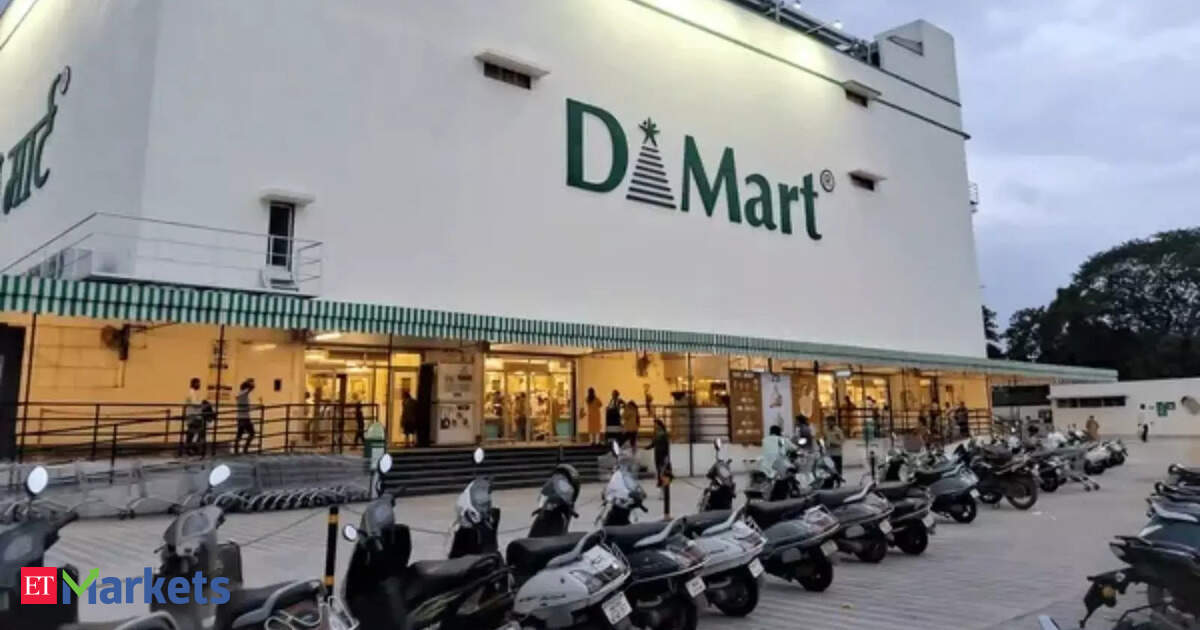
Avenue Supermarts (DMart) has announced a provisional standalone revenue from operations of ₹17,613 crore for the quarter ended December 31, 2025, marking a 13% year-on-year surge from ₹15,565 crore. This significant update provides early insights into the retail giant’s performance within the dynamic Stock Market India.
For Retail Investors and Finance Professionals, this topline expansion is a key metric. However, DMart’s stock has notably underperformed, rising only 4% over the past year and trading below crucial technical levels, prompting a detailed Financial Analysis.
Earlier, Q2 FY26 reported a 4% net profit growth at ₹685 crore and an 11.3% YoY jump in EBITDA to ₹1,230 crore. The store count reached 442 in Q3.
This article dissects DMart’s provisional Q3 figures, examines its stock trajectory, and offers strategic implications for Long-term Investors and Swing Traders.
Key Data
| Metric | Q3 FY25 (YoY Base) | Q3 FY26 (Provisional) | YoY Change |
|---|---|---|---|
| Standalone Revenue | ₹15,565 Cr | ₹17,613 Cr | +13% |
| Metric | Q2 FY25 (YoY Base) | Q2 FY26 | YoY Change |
| Revenue from Operations | ₹14,444 Cr | ₹16,676 Cr | +15% |
| Net Profit (PAT) | ₹660 Cr | ₹685 Cr | +4% |
| EBITDA | Not Disclosed | ₹1,230 Cr | +11.3% |
Detailed Analysis
DMart, a prominent player in India’s organized retail sector, operates under Avenue Supermarts, a brand synonymous with value-for-money shopping. Promoted by Radhakishan Damani, the company has carved a niche by focusing on everyday low prices and efficient supply chain management. This operational philosophy has historically underpinned its growth, making its quarterly updates closely watched by the broader Investment community and particularly by Long-term Investors focused on consumer discretionary plays. The Q3 FY26 provisional revenue declaration arrives against a backdrop of evolving consumer spending patterns and increased competition within the retail segment across Stock Market India. The provisional nature of these figures implies that the final audited numbers could see minor adjustments, a common practice in pre-earnings disclosures. Understanding this context is crucial for Finance Professionals when interpreting the immediate and future implications of DMart’s performance.
The provisional Q3 FY26 standalone revenue of ₹17,613 crore represents a healthy 13% year-on-year increase, signaling continued topline expansion. This follows a strong Q2 FY26 performance where revenue from operations climbed 15% YoY to ₹16,676 crore. However, a deeper dive into profitability metrics reveals a mixed picture. While Q2 FY26 net profit (PAT) grew 4% YoY to ₹685 crore, it marked an 11% sequential decline from Q1 FY26’s PAT of ₹773 crore. Similarly, Q2 topline saw only a modest 2% quarter-on-quarter growth from ₹16,360 crore in Q1 FY26. EBITDA for Q2 FY26 showed an 11.3% YoY jump to ₹1,230 crore, indicating operational efficiency gains. The company’s expansion strategy continues with 8 new stores added in Q2 FY26, bringing the total to 442, an important aspect for assessing future growth avenues for Retail Investors.
Despite consistent revenue growth, Avenue Supermarts’ stock has significantly lagged the broader market, returning only 4% over the past year. This indicates investor caution, particularly regarding profitability sustainability against expansion. For Swing Traders, the stock’s technical posture is crucial; it trades below its 50-day (₹3,968.6) and 200-day (₹4,189.7) Simple Moving Averages, a bearish signal. This divergence between robust top-line performance and muted stock appreciation suggests market focus on margins and store expansion costs. Comparing DMart’s 13-15% revenue growth to other retail competitors on the NSE and BSE, while strong, requires juxtaposing it with the Q2 FY26 11% sequential PAT decline for a comprehensive sector assessment. [Suggested Line Graph: Avenue Supermarts Stock Price vs Nifty Retail Index over 1-Year Period, highlighting 50-day and 200-day SMAs]
For Retail Investors and Long-term Investors, DMart’s Q3 provisional revenue confirms its capacity for top-line growth. The 442-store count and continued expansion suggest a long runway for geographical penetration. However, the stock’s technical weakness and Q2’s sequential profit dip highlight the challenges of maintaining profitability amidst aggressive expansion and rising operational costs. Finance Professionals should scrutinize the final Q3 earnings report for clarity on margins, same-store sales growth, and management commentary on future outlook. Key metrics to monitor include the sustainability of EBITDA growth, PAT recovery, and the effectiveness of new store additions in driving bottom-line results. Investors must weigh the company’s strong brand and market positioning against current valuation concerns and profitability pressures in their Investment strategy.
About the Author