Florida battles largest dengue fever outbreak in decades
Florida is combatting its largest dengue fever outbreak in decades, with over 290 locally acquired cases reported. Former CDC Director Dr. Robert Redfield breaks down the risks of transmission and essential prevention measures. Meanwhile, Hillsborough County mosquito management teams deploy aerial spraying to target the mosquitoes carrying the virus.
NEWYou can now listen to Fox News articles!
You probably aren’t thinking much about mosquitoes in November. In much of the country, cooler weather has sent those annoying little bloodsuckers into hiding. But in Florida, mosquitoes are still causing serious trouble. The state is dealing with its largest dengue outbreak in decades, and hundreds of people have caught the virus without leaving the state.
Now, researchers at the University of South Florida have developed an AI mosquito trap that could help health officials find dangerous mosquito species much faster. It can identify mosquito species with more than 98% accuracy in laboratory testing. And with dengue still spreading in Florida, the timing couldn’t be more important.
Missed CyberGuy LIVE? Watch the replay and discover 5 ways to travel smarter and save money.
Our free CyberGuy LIVE class, 5 Ways to Travel Smarter and Save Money, has ended, but you can still watch the full replay. Kurt “CyberGuy” Knutsson walks you through five practical ways to protect your phone and personal information, avoid common travel scams, find better deals, save money on bookings and use technology to make your travels easier and less stressful. No technical experience is needed.
Watch the free replay + downloadable checklist now at CyberGuyLive.com.
TROPICAL DISEASE SPREAD BY MOSQUITOES CLAIMS FIRST RECORDED DEATH IN SOUTHERN US STATE

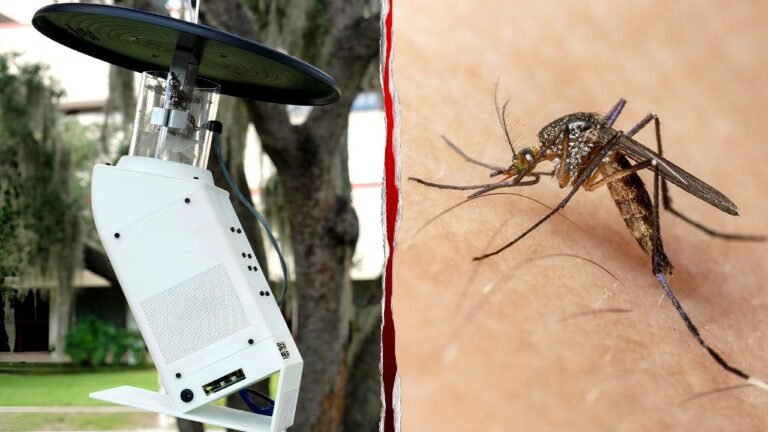
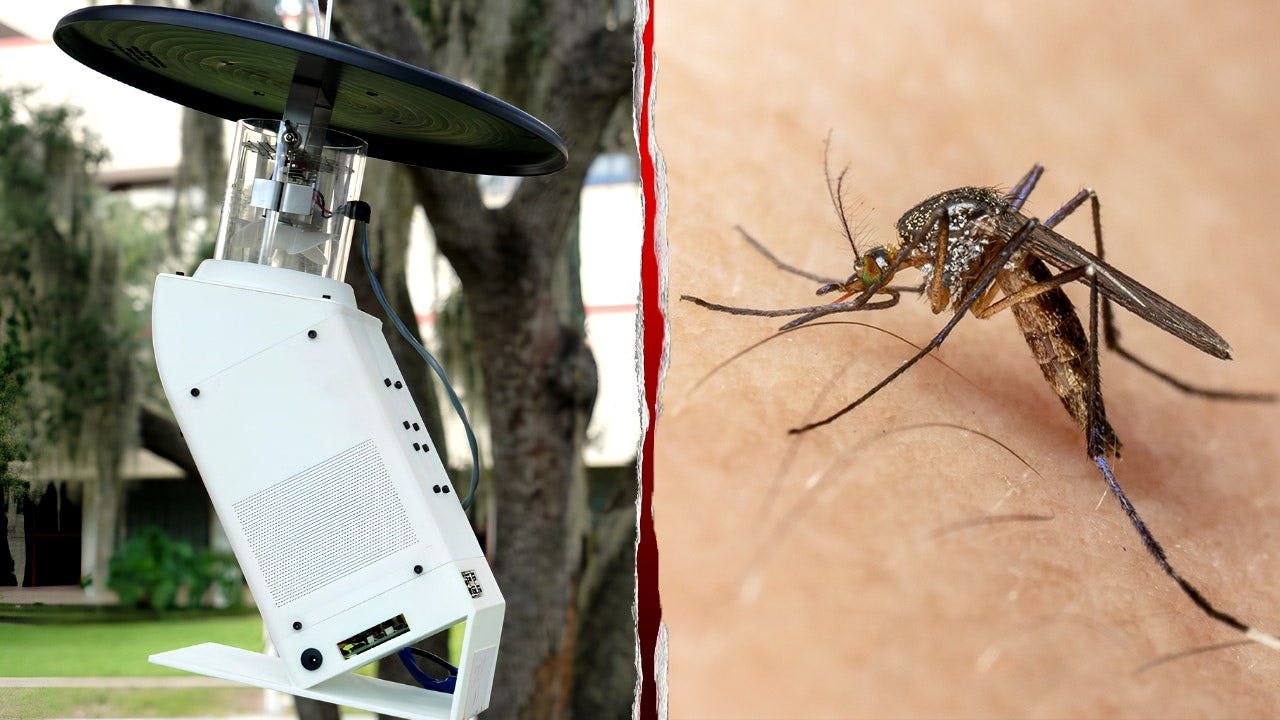
The Digitomy AI mosquito trap uses built-in cameras and artificial intelligence to identify mosquito species that can spread diseases like dengue. (University of South Florida)
Why Florida’s dengue outbreak is making headlines now
If you thought mosquito season ended when summer did, Florida has a different story to tell. According to the Florida Department of Health’s latest available weekly surveillance report, Hillsborough County has recorded 407 locally acquired dengue cases in 2026, the county’s largest outbreak on record. Across Florida, health officials have reported 524 locally acquired cases through October 31. That means people contracted the virus from mosquitoes in the area rather than while traveling overseas.
The Tampa area has been hit especially hard. In October, the Florida Department of Health confirmed that Hillsborough County was still responding to an ongoing dengue outbreak. Dengue can cause high fever, severe headaches and intense muscle pain. In serious cases, it can lead to life-threatening complications. Health officials continue to encourage residents to take precautions against mosquito bites.
On November 13, Hillsborough County announced that it had extended its state of local emergency through November 19 as mosquito control crews increased aerial and ground treatments to help contain the outbreak. County officials say mosquito surveillance continues to detect dengue virus activity in neighborhoods across the area.
And here’s why we’re talking about this in November. While mosquitoes have largely disappeared from colder parts of the country, they can remain active in warmer states. Florida’s outbreak shows that the threat doesn’t disappear simply because summer is over. Meanwhile, a new generation of technology could give communities a better way to respond before mosquito populations get out of control.
How the new AI mosquito trap works
The technology comes from Digitomy, a startup founded by researchers at the University of South Florida. Associate Professor Ryan Carney and Professor Sriram Chellappan have been developing the system through research dating back to 2018. Their goal is to help mosquito control teams identify the insects they’re catching without spending days examining them under a microscope.
The trap itself looks fairly straightforward. Workers can hang it from a low tree branch or place it on the ground. A light or bait attracts mosquitoes, and a small fan pulls them inside. Once the insects land on a sticky pad, two built-in cameras photograph them. Artificial intelligence then compares those images against a large database to determine which mosquito species have been captured.
But the technology goes further. It can also identify whether a mosquito is male or female and whether it has recently fed on blood. That’s useful information because female mosquitoes bite people and can transmit diseases. The researchers say their system achieved more than 98% accuracy in identifying mosquito species during laboratory testing.
GOOGLE WANTS TO RELEASE MILLIONS OF MOSQUITOES

A researcher displays mosquitoes collected by the smart trap, which uses AI to identify potentially dangerous species much faster than traditional methods. (University of South Florida)
Why identifying mosquitoes faster could save lives
Traditional mosquito surveillance can take two to three days because specialists often need to examine captured insects under a microscope. That’s valuable work, but when health officials are trying to track a disease outbreak, waiting several days can slow their response. Digitomy wants to shorten that process dramatically. Its system uses AI and cloud computing with the goal of identifying captured mosquito species the same day. That could help mosquito control teams see where potentially dangerous species are appearing and decide where to concentrate their efforts.
This is especially important with Aedes aegypti, the mosquito species primarily responsible for spreading dengue in Florida. There are roughly 3,500 mosquito species worldwide, but only certain species spread particular diseases. Knowing which ones are present can help officials make better decisions. There’s one important point to understand. The trap identifies mosquito species capable of carrying disease. It does not automatically prove that a captured mosquito is infected with dengue. Health officials would still need laboratory testing to confirm the presence of the virus.
AI mosquito traps could create an early warning system
What I find particularly interesting is what happens after the trap identifies a mosquito. Digitomy can send that information to a mapping dashboard, allowing mosquito control teams to see where certain species are appearing. The goal is to give mosquito control teams access to that information the same day, helping them identify where potentially dangerous species are appearing. Think about how useful that could be during an outbreak. If several traps begin detecting more Aedes aegypti mosquitoes in one neighborhood, officials could investigate that area and consider targeted mosquito control measures. Instead of waiting for more people to become sick, they could use surveillance data to guide their response.
The researchers have already integrated trap information into a private layer of their Global Mosquito Observations Dashboard at mosquitodashboard.org/. That system also incorporates more than half a million citizen science reports. The idea is to combine information from automated traps with observations from people who help track mosquitoes. Digitomy’s technology could also complement an existing early warning system developed by Carney for dengue and West Nile virus. Together, these tools could give public health departments a clearer view of mosquito activity across communities. Of course, detecting mosquitoes early doesn’t guarantee that an outbreak can be prevented. But faster information could help officials respond sooner, particularly in areas where mosquito control resources are limited.
When could communities start using these smart traps?
Digitomy has already tested its technology at the University of South Florida and worked with the Anastasia Mosquito Control District in St. Johns County, which includes St. Augustine. The researchers are also preparing for field validation with Hillsborough County, where Florida’s dengue outbreak has been especially severe. The startup is working with USF’s Technology Transfer office to license the AI identification system to established mosquito trap manufacturers. That could allow companies to add the technology to equipment they already produce.
Digitomy is working toward commercial availability by licensing its AI technology to established mosquito trap manufacturers. For now, the university has not announced a consumer launch date or retail price. The company also received a $25,000 grant from the USF Research Foundation’s Bull Ring Accelerator during summer 2026. The funding is intended to help accelerate the licensing and commercialization of university-developed technology. The team is also developing an online education platform that would allow mosquito control professionals and the public to practice identifying mosquito species using images and AI-generated feedback.
THIRD PERSON DIES AFTER MOSQUITO IS REPORTEDLY TRAPPED ON PLANE TO GERMANY IN ‘AIRPORT MALARIA’ PHENOMENON

Researchers test the AI-powered mosquito trap in a controlled environment as they work to improve mosquito surveillance and help communities respond faster to disease threats. (University of South Florida)
What this AI mosquito trap means for you
You probably won’t be hanging a Digitomy trap in your backyard anytime soon. But that doesn’t mean this technology couldn’t eventually affect your community. If mosquito control departments adopt smarter surveillance systems, they may be able to identify dangerous mosquito populations sooner and make better decisions about where to intervene. And even though we’re heading into November, people living in warmer areas still need to pay attention to mosquito activity. If you’re traveling to Florida or another place where mosquitoes remain active, taking precautions is important.
For now, the best protection is still fairly simple. Empty standing water from flowerpots and other outdoor containers because mosquitoes can breed in surprisingly small amounts of water. Use an EPA-registered insect repellent when spending time outdoors. Wearing long sleeves and pants can also help reduce exposed skin. We’ve covered some useful products that can help keep mosquitoes away, including repellents and outdoor gadgets.
You can find them in our guide to mosquito and tick repellents at CyberGuy.com
Kurt’s key takeaways
I think this is one of those uses of AI that could make a real difference in people’s lives. Most of us see mosquitoes as an annoying part of summer. But Florida’s dengue outbreak is a reminder that these tiny insects can cause serious health problems, even late in the year. What interests me about Digitomy is the possibility of giving mosquito control teams information while they still have time to act. The technology looks promising, especially with its reported accuracy in laboratory testing. But I want to see how it performs in real-world conditions before calling it a breakthrough. If it works as researchers hope, communities could have a valuable new tool to help protect people from mosquito-borne diseases. And that’s a use of AI I can get behind.
CLICK HERE TO DOWNLOAD THE FOX NEWS APP
Would you feel safer knowing AI-powered mosquito traps were monitoring your neighborhood? Let us know by writing to us at Cyberguy.com
Sign up for my FREE CyberGuy Newsletter
- Get my best tech tips, urgent security alerts and exclusive deals delivered straight to your inbox.
- For simple, real-world ways to spot scams early and stay protected, visit CyberGuy.com – trusted by millions who watch CyberGuy on TV daily.
- Plus, you’ll get instant access to my Ultimate Scam Survival Guide free when you join.
Copyright 2026 CyberGuy.com. All rights reserved.
Source: https://www.foxnews.com/tech/ai-mosquito-trap-targets-deadly-dengue-outbreak
About the Author