Key Takeaways
AI Defense Boom funding surged to $4.3B in UK & Germany by 2025. Explore key growth drivers, company valuations like Helsing & Quantum Systems, and investor outlook for this vital sector.
Market Introduction
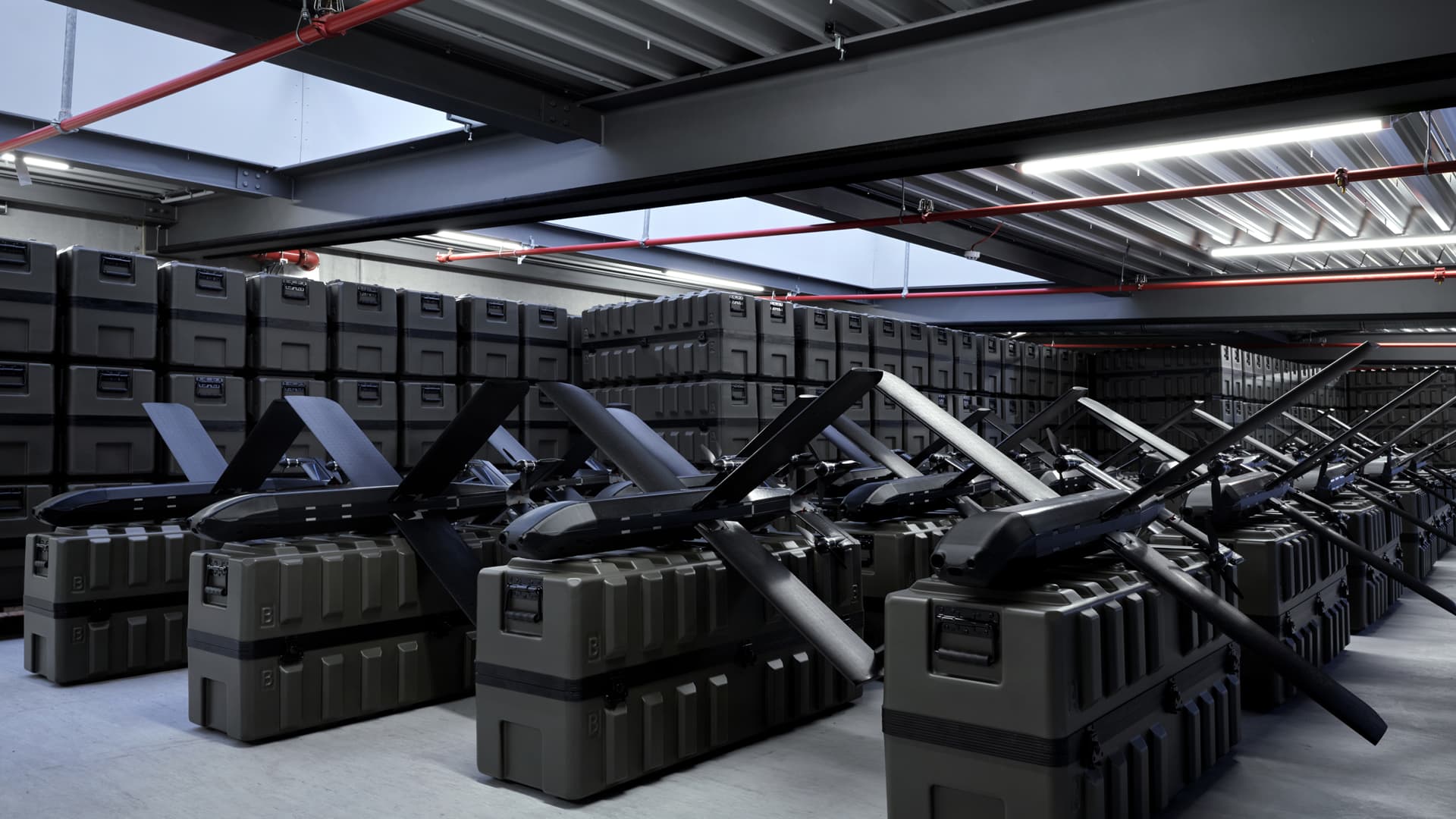
The AI Defense Boom in the UK and Germany sees private funding surge to a record $4.3 billion by 2025. This nearly quadruples investment since early 2022, establishing both nations as critical hubs for AI defense startups.
This growth offers robust commercial opportunities for investors, driven by intensified geopolitical dynamics and NATO’s increased security spending. Governments adopt advanced AI defense technologies, fueling substantial market demand.
Germany’s Helsing reached a €12 billion valuation, Quantum Systems €3 billion, and UK’s PhysicsX secured $155 million. These figures, as of 2025, underscore immense investor confidence.
This analysis explores key growth drivers and the evolving outlook for this strategically vital sector.
Data at a Glance
| Metric | Previous | Current | Change |
|---|---|---|---|
| AI Defense Private Funding | ~$1.08 Billion | $4.3 Billion | +300.0% |
| NATO Defense Spending Target | ~2.0% of GDP | 5.0% of GDP | +150.0% |
| Germany Defense Spending (2026) | ~€50 Billion | €100 Billion+ | +100.0% |
In-Depth Analysis
The robust growth in Europe’s AI defense sector, particularly within the UK and Germany, is deeply embedded in the continent’s evolving geopolitical landscape. Since the Russia-Ukraine war, a decisive shift towards rearmament accelerated, driving unprecedented private funding into defense startups. Historical patterns suggest heightened global instability invariably spurs innovation in national security. Pressure for NATO members to increase defense spending, coupled with the alliance’s agreed target of 5% of GDP, has directly ramped up government military budgets. This macro trend, consistent with similar surges observed in 2022, provides fertile ground for new AI-driven defense technologies. The UK and Germany, with their scientific expertise and manufacturing bases, are key launchpads for breakthrough innovations across Europe.
From a fundamental perspective, the valuations of key players like Germany’s Helsing at €12 billion and Quantum Systems at €3 billion in 2025 underscore immense investor confidence. These figures reflect not just technological prowess but also ‘visible pathways to procurement’ facilitated by national commitments. The significant capital inflows, such as PhysicsX’s $155 million and Cambridge Aerospace’s reported $100 million rounds, illustrate a strong market appetite for advanced manufacturing and missile interception solutions. Management guidance from industry leaders emphasizes streamlined procurement processes as critical for scaling, directly impacting potential EBITDA margins. For instance, the UK government’s Strategic Defence Review in June proposed a £5 billion tech investment package and simplified procurement, aiming to attract younger players. Similarly, Germany’s increase to 100 billion euros in defense spending from 2026, alongside revised procurement, signals a systemic shift for startups to secure major national contracts.
While European governments boost defense budgets, the UK and Germany lead due to robust ecosystems and strategic advantages. Germany’s industrial heritage provides deep talent pipelines in hardware, software, and manufacturing, which companies like Stark leverage for next-generation technologies. This offers a significant competitive edge over other markets in terms of intellectual property and speed to market. The UK benefits from world-class universities and dense networks of aerospace and advanced manufacturing suppliers. Strategic alliances like AUKUS have lifted export controls, streamlining technology sharing. This directly impacts market share, positioning UK entities like Anduril UK as attractive entry points into Europe, compelling peers to invest strategically across the continent.
Despite impressive growth, analysts caution scaling remains difficult without continuous political and procurement reform. Retail and institutional investors must consider lingering risks, including slow procurement cycles and clearance bottlenecks in the UK, plus a shortage of security-approved technical talent. Germany faces challenges like bureaucracy, strict export controls, and heavy dependence on its armed forces. Opportunities lie in companies mastering both political economy and technology, positioning themselves as enablers of national sovereignty. Key events to watch include defense ministry reforms and battlefield feedback from regions like Ukraine, where Quantum Systems and Helsing deploy tech. For investors, careful due diligence is paramount for price targets and investment decisions.
About the Author