Even now it is very difficult to process the scale of tragedy that engulfed Jason Arday and those who loved him. The unbearable sadness at his death; the wretched knowledge that the very public onslaught against him began with the malign machinations of a self-defined “race realist” – who believes that, in an ideal world, black people would “disappear from almost all high-profile positions outside of sports and entertainment”. The horror that a rightwing and far-right campaign seeking a victim to fuel its nativist prejudices can now crow that it found one.
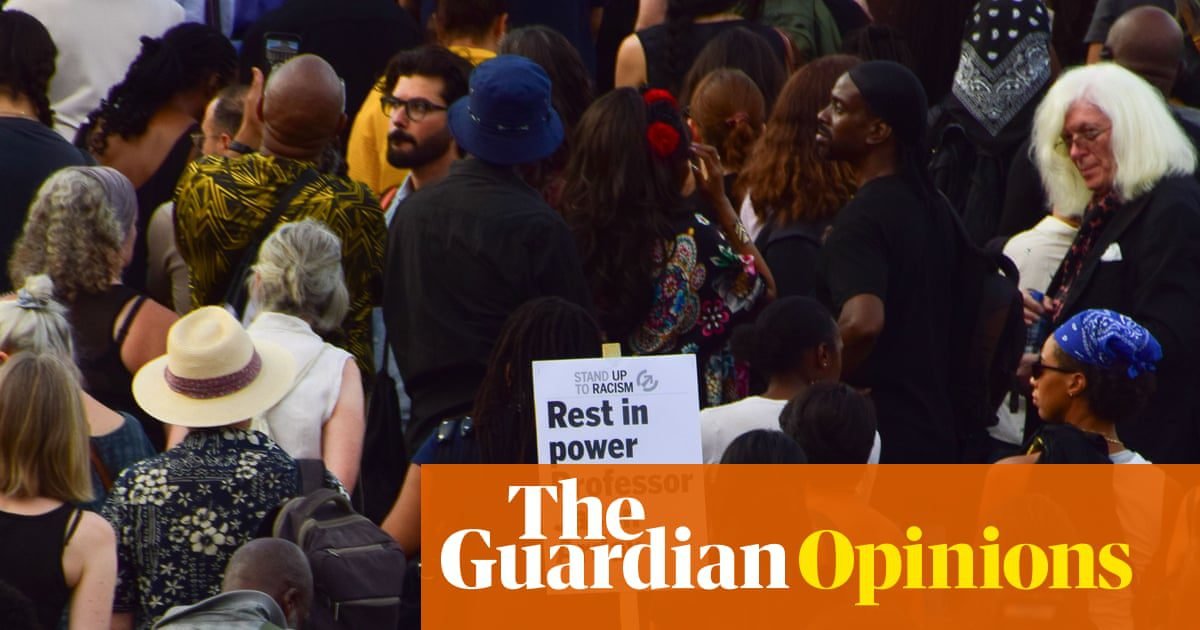
There is wide and profound grief and of course there is rage, focused and unfocused. Both were on display as thousands joined a protest vigil in Trafalgar Square on Monday evening.
His family – in a moving statement remembering an “amazing father, partner, brother, uncle and son” – has said he was “subjected to a campaign of sustained abuse for more than three years since he accepted the role of professor at Cambridge University by those who would leave no stone unturned in their quest to undermine him”. This we know. The right and far-right desire to identify and then defenestrate anyone or anything that could be seen as symbolic of progress is virtually pathological. The rightwing media, in a quiet summer – a quarry identified – led a charge that meant Prof Arday’s face was disobligingly displayed on almost every front page, every TV screen, for weeks. His family, who knew him best, are clear about what that ultimately meant for a man who was neurodivergent and by the end – according to reports – desolate. “The campaign of misinformation was too much for Jason, who was a gentle man and who always wanted to see the best in everyone.”
This stokes high emotions. A high-profile, successful black figure is something highly prized. Many attest to the professor’s kindness and the care he lavished on those he was responsible for and, through access programmes, on others he never really knew. Many others feel the very human protective emotion of anger, having witnessed a successful but vulnerable man manoeuvred into the crosshairs. They voiced their rage in Trafalgar Square. It bristles, too, on social media.
The culture-war right did what it does, but what of others in politics and other media? The right in its hostile, partisan pursuit nevertheless uncovered doubts about the professor’s academic work – accusations of plagiarism – that could not be satisfactorily dismissed. The professor himself made public claims about his life and achievements that could not be verified. Of course that was a good thing for those who, for racist and political reasons, sought to denigrate him, but wasn’t that also a legitimate concern for those who bore him no ill will – indeed cheered his ascent – but see the importance of integrity in academia and public life?
Amid the pain and understandable rage in recent days, there has been invective levelled at the right, but also a deal of social-media abuse levelled at progressive journalists – notably black journalists, and especially Guardian journalists who interrogated and reported on the claims made about and by the professor. There have been attempts to load them with at least partial responsibility for his death. Suggestions that, with their actions, they have betrayed their heritage: that they personally should be for ever haunted by his fate. One can try to be understanding and frame this as part of the outpouring of grief, but that makes those attacks no less corrosive, no less hurtful to the journalists themselves.
There is a particular tension to being a black or minority journalist in a white-majority culture, whether here or in the US, Europe or Australia. As a minority citizen, one shares the joys and pains and achievements of others. Very many in their work focus on the particular concerns of minorities coping and maybe thriving on challenging terrain. They are not fated to do so, but these matters interest them and many see who they are and what they know, juxtaposed with the skills they have as journalists, as an ideal way to make a contribution to society.
In my reporting career, I have covered domestic politics, international politics, international conflict – the whole gamut of journalistic subjects – but I drew great pride from being the recipient of the first Commission for Racial Equality Race in the Media award in the national newspaper category. I worked as a community affairs correspondent for the BBC for the duration of Sir William Macpherson’s landmark inquiry into the murder of Stephen Lawrence, explaining the intricacies of that historic event to millions on radio and TV. It is not a motivation exclusive to black journalists, but the vast majority I have known and worked with tend to hope that their professionalism will somehow make a positive difference to and for their communities, and to wider society’s understanding of their communities.
But here’s the thing: we are journalists. We are not activists. Often we work with activists and I am very proud to have done so. Often our hopes and agendas coincide, and when they do, injustices are exposed, wrongs are righted, sometimes laws and attitudes are changed, but we are adjacent, we are not the same. Activists vary, but almost by definition they seek a means to an end. A good journalist lays out facts. Sometimes those facts push that end further away; sometimes they are unpalatable.
And so, if it appears that a prominent figure – be they black or white – is being less than honest in ways that meet the test of public interest, those black journalists have a right, indeed a duty, to interrogate that. I know well some of those who did so in the case of Prof Arday, carefully and professionally, and are now, amid the anger, confusion and rage, being abused and castigated for it. They were not responsible for what Lord Chris Smith, the Cambridge University chancellor, called the “racist feeding frenzy”. They, in interrogating all the claims in a way we would expect professional, responsible, empathetic journalists to do, just did their jobs. As journalists. Even the bits that made them sad, that were unpalatable. And what if they hadn’t? Was all of the reporting and inquiry to be done by the right, by those who coveted a scalp, by culture warriors?
after newsletter promotion
There will be questions to ask in the weeks to come, about the institutions involved in Prof Arday’s career, about the claims that were made for and against him, about the media coverage – all of it – in its tone and scale, about whether there could and should have been more recognition of the professor’s vulnerability under the barrage of headlines and attention. There are calls for a public inquiry. We will all be soul-searching.
Those questions should be posed – a man has died – but we cannot yet know the answers. Those who seek them are right to. Those who mourn him should have space to respectfully do so. As for those who mark his passing by arbitrarily pointing the finger at others who also grieve his loss – don’t.
-
Hugh Muir is executive editor, Opinion
-
In the UK, the charity Mind is available on 0300 123 3393 and Childline on 0800 1111. In the US, call or text Mental Health America at 988 or chat 988lifeline.org. In Australia, support is available at Beyond Blue on 1300 22 4636, Lifeline on 13 11 14, and at MensLine on 1300 789 978
Source: https://www.theguardian.com/commentisfree/2026/aug/19/rightwing-witch-hunt-jason-arday-legitimate-journalism
About the Author