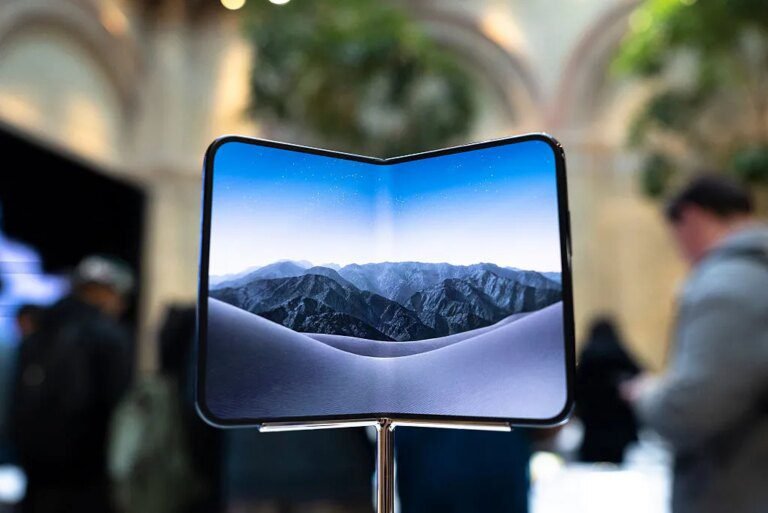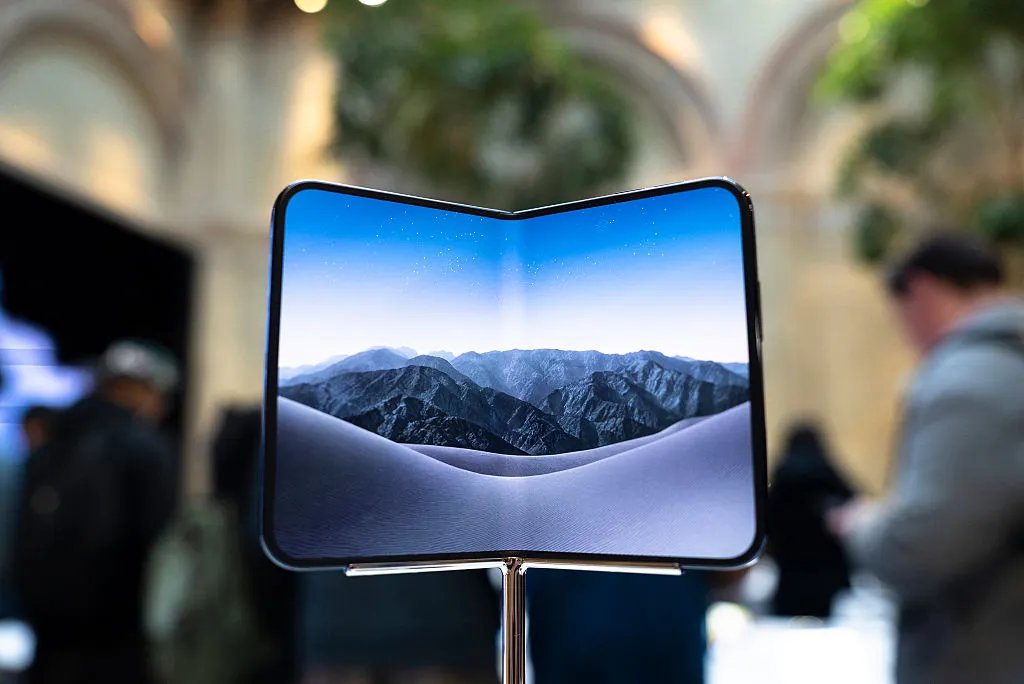
For years, the definition of a premium smartphone depended on its cameras, processors, and how light it felt when you stowed it in your pocket. The iPhone Duo challenges that concept by asking consumers to pay more for a fundamentally different smartphone experience, even if it means sacrificing what they’ve long thought of as high-end features.
In a little under a month of using the Duo, I’ve found that the trade-offs I was initially concerned about matter far less to me than I had expected. What’s been more interesting is how the Duo’s foldable form factor has changed my everyday habits, including how I interact with apps, which apps I use, and how I organize and personalize the phone itself.
I also easily forgot a number of my initial concerns about switching to the Duo. The apps, for the most part, are now optimized for the Duo; I’ve reacquainted myself with Touch ID; and I don’t miss the Pro Max camera on most days.
That’s not to say the Duo doesn’t have its shortcomings. I still miss that telephoto lens sometimes, and I’m still longing for Face ID — though not as much since Apple shipped a face unlock feature in the latest update. But after a month of using the Duo, I’ve found these compromises have had less of an impact on my day-to-day experience compared with the benefits that the new form factor brings.
Multitasking feels more natural
I was surprised by how much I’ve grown to appreciate the Duo’s multitasking capabilities. Initially, I didn’t think I’d regularly use it to view two apps side by side, given the still fairly limited screen space even while the phone is unfolded, especially compared with an iPad. But I’ve found myself snapping apps to both halves of the screen more often than I had imagined.
For starters, Apple has made this side-by-side mode incredibly intuitive and easy to use — you simply drag the app over to the left or right side of the screen and drop it into the target box that appears.
I have regularly taken advantage of this feature to do all sorts of things.

I really enjoy keeping X open as I read through the news, which allows me to switch back and forth between the article I’m reading and real-time reactions to it. Sometimes I’ll keep email or Slack open on the side while I’m working on something else so I don’t miss an important message or notification.
And much like the overstimulated members of Gen Z (which I am not), I sometimes like scrolling social media while engaging with some other media off to the side.
Case in point: I passively watched Netflix’s “Love is Blind” reunion while reading the gossipy tweets and Reddit posts about the main characters on the other side of the screen. This sort of TV watching behavior used to be called second-screen viewing, but now it’s morphing into something new. Everything is happening on one screen, so should we call it “Duo screen viewing,” perhaps? It makes me long for even more interactive TV experiences where commentary and content are combined.
It really is like having two phones
I’ve noticed another shift in my behavior since adopting the Duo as my main device. When I’m out and about, the Duo feels more like an (arguably heavier) iPhone mini. For those who still miss smaller iPhones, the Duo is the next best thing. Despite its weight, the phone feels small. You can cover it with one hand; you can type with a thumb; you can reach the top and bottom easily; and you can even fit it into your front and back pockets. The Pro Max now feels unbelievably strange in my hand — how was I ever comfortable wrangling this giant rectangle?
The Duo’s small screen works well when you’re on the go, especially for short interactions like responding to a quick text or pulling up directions to a destination. It’s not as great for mindless scrolling, which I appreciate, as it forces me to engage with the real world instead of killing every moment of boredom or unease by opening up apps.

But when you’re home or somewhere with time to kill, you can unfold the screen and enjoy your apps super-sized. It’s the best of both worlds.
I find that I instinctively unfold the phone when I’m preparing to watch videos, because the larger screen is best for that. It’s also unfolded if I’m shopping, as it’s more convenient for looking at products, zooming in to examine the details, or complete checkout forms.
Generally, I also unfold the Duo when I’m actively using apps. This setup has also allowed me to rethink my Home Screen layout: With the Duo closed, I prefer to see just widgets on the small screen with key information like weather, time, battery life, and so on. Meanwhile, the only app icons on the Home Screen are those in the dock.
The Duo apps are ready now
In the weeks since its launch, most of the apps that weren’t yet optimized for the Duo have been upgraded to support its foldable form factor. In mid-November, Apple said there were over 200,000 Duo-ready apps, and in my experience, that certainly feels true. A majority of my so-called “daily drivers” — with the glaring exception of key Google apps like Gmail and Drive — have dropped the black band on the side of the screen that was frustrating early testers of the phone.
Most apps now take advantage of the available space, whether that’s on the Duo’s small front screen or the wider, unfolded one.
I’ve also found it interesting to see the different interpretations developers have had for how to best optimize their app for Duo.
Some have used the form factor as a way to bring in some sort of novelty: there’s a note-taking app that opens and closes like a notebook, with pages you can write on with the Apple Pencil; a retro Walkman-like music player; a tiny typewriter; a gaming handheld; a game where you close the phone to make grilled cheese.

As much as I love the whimsy of this group of apps, I appreciate how my everyday apps feel better to use on the unfolded screen. Spotify, at last, feels less cluttered when it has more screen real estate. A number of note-taking, list-making, and calendar apps also feel somehow more usable when spread out.
The Netflix app is actually fantastic with its support for multiple viewing modes, which include playing video on the closed outer display, the “laptop” orientation with its big player controls, and the “tent” mode.

Other developers have similarly reimagined how their app would work if it had originally been designed for the Duo’s small and larger screens.
One good example of this is Sofa, a handy utility for organizing the books, movies, TV shows, podcasts, albums, and games you want to check out. When the Duo is closed, its navigation is tucked off to the right side in a vertical bar, while the main screen focuses on the items you’ve saved. But when the Duo is unfolded, the number of items displayed on the screen also expands into a two-column layout, with more of your items featured on the screen and your lists on the left side. It doesn’t feel like two different apps, but like you’ve opened up the app itself and given it more space to spread out.

In terms of your daily social media scroll, apps like TikTok and Instagram have been updated to be perfectly usable on the Duo, whether the phone is open or closed. When closed, TikTok now stretches the video to cover the screen, instead of showing the ugly black bar. Scrolling short-form videos on the Duo, while unfolded like a slightly smaller iPad mini, has become my preferred way to watch.

I’m reading more books
Here’s another surprise: I’ve spent less time with my Kindle, and am instead reading books on my Duo. Unfolded, the Duo is a decent enough replacement for an e-book reader, albeit it can be a bit more stimulating as it’s not an e-ink device. However, the matte inner screen isn’t quite as bright and distracting as your typical glossy OLED display. There’s less glare and softer reflections, but there’s also something about the display that just feels calmer than a smartphone, allowing you to more fully engage with a book’s text.
Unfolded and held vertically, reading on the Duo feels a lot like reading on the standard Kindle, at least in terms of hand-feel. And putting your phone into the “Do Not Disturb” focus mode can help you not be distracted by incoming notifications and messages while you read.

You can also unfold the device while keeping it in landscape orientation, with the screens bent slightly inward like a real book. For even more fun, you can turn on Kindle’s page-turn animation, which makes it seem as if you’re turning the page in a physical book. And I love how you can “performatively read” using an app like Book2Life or Actually Read — they display the book’s cover on the Duo’s outer screen as you read the text on the inner screen.
E-book readers will likely find they can carry one less device when they’re out and about, because the Duo can stand in for whatever Kindle or other reader you typically keep in your purse or bag. You can save the Kindle for other times, whether that’s at home, on long travel days, or when you don’t want to worry about sand getting into your $2,000 phone.
I don’t need a PopSocket
On the big-screened iPhone 17 Pro Max I used to carry, I tended to keep a PopSocket of some sort on the back because the phone was both heavy and large, which made it hard to hold for longer periods of time. The Duo is similarly heavy, but its shape makes it far easier to hold in one hand without the extra help.
Folded, you can do the usual one-handed hold where the bottom edge of the phone rests on your pinky, your other three fingers cradle the back, and your thumb is free to navigate the screen.
Unfolded, the Duo’s like using a small Kindle or iPad mini, where two hands are required. You also don’t need a PopSocket for balancing the phone on the side, because it can be propped up like a tent or opened like a tiny laptop. Or, if you prefer, Apple and others offer Duo cases with a built-in stand. (Apple’s case comes in navy and taupe, though, so if you’re not boring, you’ll probably want to shop from third-party vendors).

If you think you still might need a PopSocket at times, or you just aren’t ready to give it up, the brand now makes a slimmer version: its Low-Pro Grip. There are other competitors, like the OhSnap grips, which aren’t a bad alternative either.
It’s inspiring personalization
There’s something about the Duo that seems to have kicked off a new iPhone personalization trend, at least judging by what I’ve been seeing on social media.
Unlike a regular iPhone, where every phone case is simply a shell that offers a degree of protection based on the materials used, the Duo case lineup provides far more variety.
You can buy cases with and without built-in screen protectors, and some use adhesive to better stick to the outer screen, while others don’t. Some cases let you customize the band around the outer screen with a different color than the case that protects the rest of the phone.
Then you have cases that cover the hinge, while others leave it exposed. There are cases that offer holes where you can attach straps, wristlets, and charms. Some of those have attachment points at the bottom and others on the side.
Essentially, there are a lot of options for customizing how you want to carry the Duo and how you want to express your own style.
I’m also now starting to see whimsical cases that come with attached pens. (Thank goodness — most of the pen cases so far have been kind of plain!)

I also believe there’s something about the Duo that particularly appeals to women. Maybe because it’s small, or maybe it’s because you can attach a strap to its side and carry it like a little purse. Or maybe because, like a purse, you can deck it out with chains and charms — a choice that’s grown increasingly popular as young people have embraced whimsical, retro tech as a way to express their individuality and sense of fashion.
The Duo easily lends itself to this trend, perhaps even more than a regular iPhone. It becomes an accessory you want on display, not one buried in a bag.

Before switching to the Duo, I spent a lot of time thinking about what I’d be giving up by moving away from the Pro Max.
I’m surprised to find that, a month later, I only think about what I’d have to give up if I switched back to a traditional iPhone. It’s not just the extra space of the unfolded screen I’d miss — it’s all the little habits I’ve developed around having different screen sizes for different purposes.
The Duo makes me pause and think about how I want to use an app. That small moment of deliberation, before I even open the phone, has helped me break some of my more mindless smartphone habits, particularly around social media.
That’s not a benefit I could have anticipated if I’d judged the device by its specifications alone.
When you purchase through links in our articles, we may earn a small commission. This doesn’t affect our editorial independence.
Source: https://techcrunch.com/2026/11/26/a-month-with-the-iphone-duo-has-changed-how-i-use-my-phone/
About the Author