I didn’t have a reason for my terrible feeling of dread – and that was part of the problem. From the moment I arrived in Tajikistan with my boyfriend, Tim, to climb two 7,000-metre (23,000ft) peaks, something felt off. It wasn’t a fear I could name: it was more like a constant, unnerving low hum.
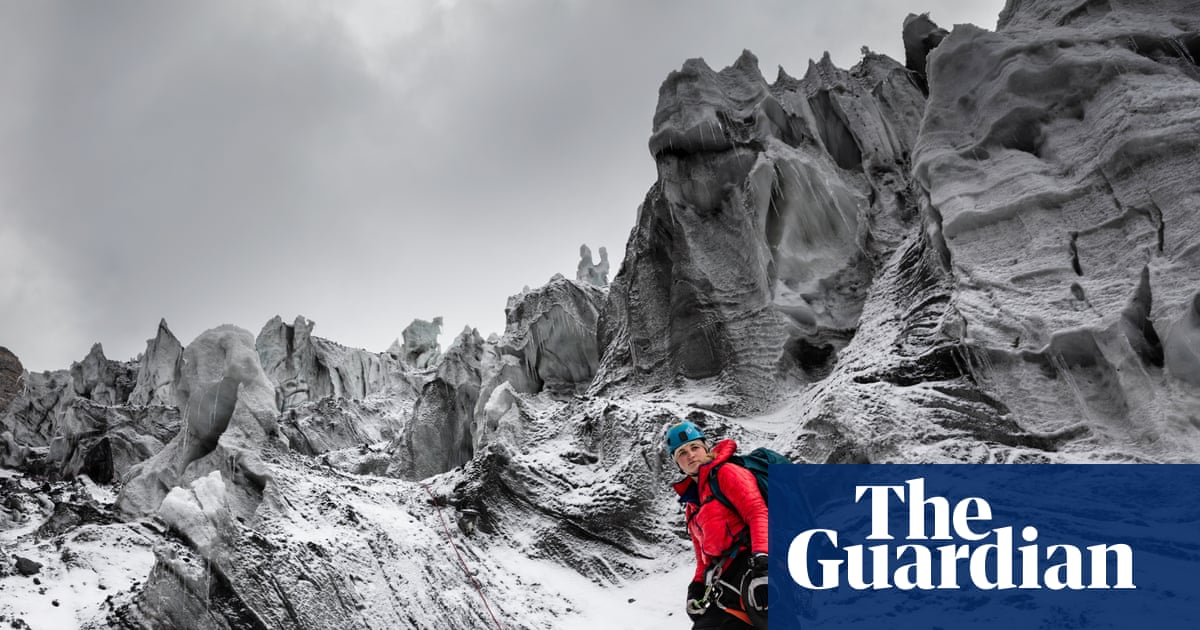
A helicopter dropped us off – landing on a jagged glacier that was to be our base camp and act as a refuge from avalanches from the towering peaks that surrounded it. The helicopter flew far too low, skimming the glacier ice that looked sharp enough to tear it open. You could see it from the helicopter because there was a gaping hole in the back – a part was missing because it was so old.
Once the helicopter left, we were alone with a handful of other climbers, to be collected a month later. It was 2018, and Tim and I had organised our expedition independently, something I do for most of my adventures. Doing it ourselves meant greater responsibility, but it also kept costs low. The Pamir mountains are not as well known as the Andes or Himalayas, but they are very remote and ticked all the boxes of what we look for in a climb.
On paper, the plan was simple. The reality was less so. The route was far more technical than we had been led to believe from the limited accounts and climbing logs we had read online. Every day involved steep ice climbing, unstable slope crevasses and a very real deadline – if you weren’t off certain ice walls by about 4pm, the land would start melting beneath you in a giant landslide. There were avalanches most days and rockfalls that narrowly missed us, although these are not uncommon when climbing. Even the fixed lines – ropes put in place to assist climbers – turned out to be unusable; they were more like garden twine. Luckily, we had brought our own rope and gear.
But it wasn’t just the difficult conditions that were spooking me. From the moment we were dropped off, something hadn’t felt right, and that feeling didn’t go away. It wasn’t fear of failure or letting other people down – I’d turned back or dropped out of climbs many times before. It was something quieter, harder to define. We were operating with more uncertainty than we had planned for, so every decision felt as if it carried more weight. Something was telling me we needed to get off the mountain.
I promised myself and Tim that we would climb cautiously. The first peak, Korzhenevskaya (known as Ozodi Peak since 2020), proved too dangerous to justify pushing on, and we turned back at about 6,800 metres. It just wasn’t worth it.
Back at base camp, we waited for the helicopter to pick us up, but the flight wasn’t booked until 12 August, five days away. I kept asking the local coordinators if we could leave early, but they were reluctant to make changes to the schedule. Most people spoke only Russian. We were isolated and tired, but I had to accept that we would just have to wait.
Then, the day before we were due to fly, we heard the distant thud of rotors. Another pickup was landing but not for us. I remember feeling deflated. Then someone shouted my name. Unexpectedly, they said that if we were quick, we could squeeze in.
We packed in a blur and ran. I was coughing hard with every step because of altitude sickness and general exhaustion. Even the base camp had been a brutal experience, with nothing in the way of creature comforts.
As we took off, the helicopter barely cleared the peak of the glacier where we had been stationed. Tim and I held hands during the entire flight, and when we landed safely, I felt something I hadn’t felt in weeks: safety and quiet.
The following day, the same helicopter went back to collect the remaining climbers. Devastatingly, we learned afterwards that it had never returned. The flight, the one we had been booked on, had crashed into the glacier, killing five people. The 13 survivors were discovered only after they had spent a terrifying night alone among the debris. Two of the people who tragically lost their lives had been sitting exactly where we’d sat: the back two seats. The tail had hit the edge of a tower of ice and come off, bringing those two seats with it, causing the aircraft to go into freefall.
Back in London, life continued for me and Tim. We had been on so many expeditions before that one, but I couldn’t help but reflect on how the trip to Tajikistan had felt different from the start.
Since then, I have learned to listen to my gut, no matter what. I know it’s normal to feel nervous before any adventure – in fact, it’s often a good thing. It steps up your senses and forces you to fill any knowledge gaps. But I have also learned that fear and intuition are not the same thing. Fear shouts and wants you to stop; gut instinct is often quieter and doesn’t always explain itself. It just asks you to pay attention.
These days, if something doesn’t feel right, I don’t ignore it. I know the importance of speaking up and taking action, even when it might seem illogical. You may not always get another chance.
Source: https://www.theguardian.com/lifeandstyle/2026/apr/15/moment-that-changed-me-desperate-get-off-mountain
About the Author