Key Takeaways
Iran protests escalate, posing critical government policy challenges to the regime. Explore analysis of global affairs, UK domestic policy shifts, and stakeholder perspectives for 2026.
Overview
Ongoing demonstrations across Iran have escalated significantly, marking the most profound domestic threat to the current regime in several years. Sparked by widespread economic woes, these protests present critical government policy challenges.
For News Readers, Policy Watchers, Informed Citizens, and Political Analysts, these developments underscore critical shifts in global affairs, testing governmental resilience against popular dissent and highlighting complex international dynamics.
Protests began two weeks ago, resulting in an intensified violent crackdown and a national internet shutdown, now in its second day, raising diplomatic concerns and limiting information flow.
This analysis explores immediate reactions, stakeholder perspectives, and potential long-term policy implications of these unfolding political events, alongside domestic policy shifts in the UK.
Detailed Analysis
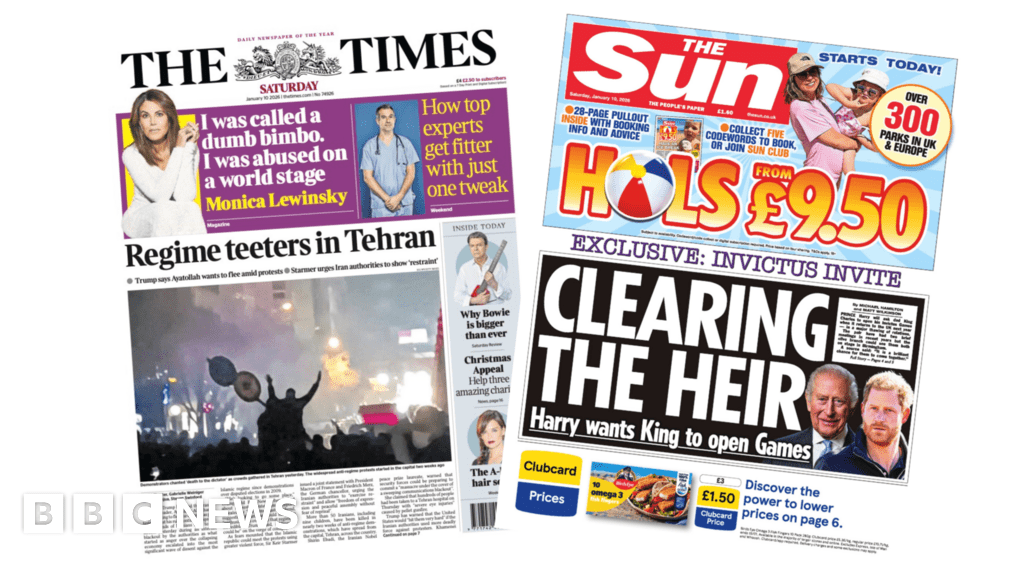
The political landscape in Iran faces unprecedented challenges as widespread protests continue to escalate, threatening the stability of the long-standing regime. These demonstrations, ignited approximately two weeks ago by deep-seated economic grievances, have quickly evolved into a significant domestic crisis for Ayatollah Ali Khamenei’s government. Unlike previous, more localized uprisings, the current unrest appears to pose ‘the biggest domestic threat to the regime in several years,’ according to the Financial Times. This escalating unrest draws parallels with historical instances of state-led suppression of dissent, yet its scale and the direct challenge to the Supreme Leader’s authority present unique considerations. Newspaper headlines, such as the Times’ assertion that the ‘Regime teeters in Tehran,’ reflect the perceived vulnerability of the current administration, indicating a critical juncture for Iran’s governance. The initial economic impetus for the protests has broadened into a wider expression of discontent, compelling a robust state response.
Detailed analysis reveals a hardening stance from Tehran amidst escalating protests. The Guardian reports Iran preparing for ‘violent clashes,’ with scenes of protesters amidst burning buildings and vehicles. This aligns with Supreme Leader Khamenei, who explicitly warned authorities will ‘not back down,’ signaling an ‘intensified violent crackdown.’ Financial Times coverage notes Tehran’s escalated suppression tactics, alleging protesters ‘working for Trump,’ and warning of ‘maximum punishment.’ US President Donald Trump’s controversial remarks about Khamenei ‘looking to flee’ underscore international speculation. Diplomats are particularly concerned the ongoing ‘internet blackout,’ now spanning two days, could cover more severe measures, limiting information and international oversight. This cutoff obscures the crackdown’s full extent, making ground realities difficult for News Readers. Political Analysts watch for defections within armed forces or police, a fear reportedly held by Khamenei, which could significantly alter regime control.
The Iranian crisis, while geographically distinct, shares common challenges in government policy responses to domestic unrest. Its direct challenge to the Supreme Leader’s authority is notable, echoing historical instances of state suppression. Concurrently, UK domestic political dynamics reveal evolving policy implications for policy watchers. Shadow justice secretary Robert Jenrick’s critique on police impartiality, alongside the Labour government’s new Islamophobia definition, sparks debates on free speech and law enforcement. Additionally, the Home Office’s confirmed plan to evict asylum seekers from hotels signifies substantial shifts in UK immigration policy. These disparate developments collectively underscore the intricate challenges of modern governance in addressing internal dissent, civil liberties, and policy implementation under public and political scrutiny.
For News Readers, Policy Watchers, Informed Citizens, and Political Analysts, the Iranian protests represent a critical test of regime stability against popular dissent, with vast policy implications. These range from potential shifts in Iran’s geopolitical alignment to long-term impacts on its human rights record and economic recovery. Monitoring for signs of defections within Iranian armed forces or police will be crucial, as such developments could significantly alter the regime’s capacity for control. In the UK, the implementation of new policies regarding policing, free speech, and immigration will shape social and political fabric. Informed Citizens should track policy impacts on affected communities, alongside public and parliamentary debates. The coming months will be pivotal in observing how both nations navigate their respective governance challenges and policy transformations.
About the Author