Key Takeaways
Escalating Iran protests and US intervention threats pose significant geopolitical risks. Analyze the impact on crude oil prices, global markets, and Indian investment strategy.
Overview
Heightened geopolitical tensions surrounding Iran’s domestic protests and former US President Donald Trump’s intervention warning introduce significant uncertainty into global financial markets. Iran’s foreign minister condemned Trump’s “reckless and dangerous” remarks, signaling a diplomatic escalation with potential repercussions for international trade and investment flows.
For retail investors, swing traders, and finance professionals across the NSE and BSE, these international developments necessitate a re-evaluation of portfolio risk. Geopolitical instability often triggers volatility in commodity prices, particularly crude oil, impacting market sentiment and capital allocation, influencing the Sensex and Nifty.
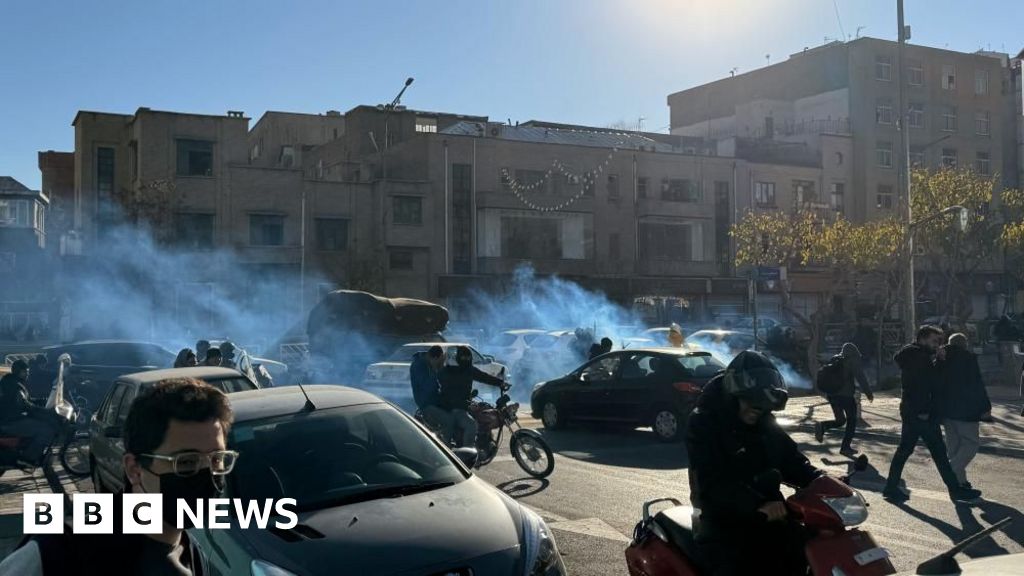
The protests, initiated by a “sharp fall in the value of the Iranian currency against the US dollar,” have intensified, resulting in reported clashes and at least “eight people reported to have died.” This internal unrest, combined with external threats, shapes a complex risk landscape for investment.
Investors must closely monitor these evolving dynamics for implications on global supply chains, energy markets, and broader financial analysis, which is crucial for informed investment and trading decisions in the Indian Stock Market.
Detailed Analysis
Geopolitical events, particularly involving major oil-producing nations and global powers, profoundly influence international financial stability. While Iran’s immediate concerns revolve around domestic unrest, the ripple effects invariably impact crude oil prices, global trade, and investor confidence, including for the Stock Market India. The current week-long protests in Iran, as reported, stem from deep economic discontent, initially among Tehran shopkeepers angered by a “sharp fall in the value of the Iranian currency against the US dollar on the open market.” This economic trigger underscores underlying vulnerabilities within the Iranian economy, a factor that, when combined with political instability, often fuels broader social unrest.
The demonstrations rapidly escalated beyond economic grievances. University students joined, and protests spread to several cities, with participants chanting against the country’s clerical rulers. This progression from economic protest to political challenge amplifies the perceived risk. The protests are described as the “most widespread since an uprising in 2022,” signaling sustained internal pressures that can deter foreign investment and disrupt economic activity, a crucial factor for any global financial analysis. At least “eight people are reported to have died” during the week-long unrest, further highlighting the severity of the situation and the potential for prolonged instability.
The situation gained an international dimension with former US President Donald Trump’s assertive threat to intervene, warning Iran’s authorities and stating Washington “will come to their rescue.” This direct rhetoric, despite not being current US policy, introduces speculative risk regarding future international relations. Iran’s Foreign Minister, Abbas Araghchi, responded sharply, calling Trump’s promise “reckless and dangerous” and forcefully rejecting any “interference in their internal affairs.” This diplomatic standoff significantly elevates the geopolitical risk premium for global investment and trading strategies, particularly those assessing regional stability and energy market dynamics within the Indian financial ecosystem.
The detailed financial implications of the escalating situation in Iran are multifaceted, affecting internal Iranian economic conditions and, by extension, global and Indian markets. The primary cause for the initial protests—a “sharp fall in the value of the Iranian currency against the US dollar”—is a critical financial indicator of severe domestic economic distress. Rapid currency depreciation can erode purchasing power, fuel inflation, and discourage foreign investment, creating a cycle of economic hardship within Iran. While specific depreciation data is not disclosed, its role in triggering widespread unrest signals a substantial economic shock, demanding close scrutiny from finance professionals analyzing regional stability.
Indirectly, the main channel impacting global finance and the Stock Market India is crude oil. Iran is a significant oil market player, and any instability or threat of intervention in the Middle East invariably leads to heightened volatility and potential price spikes for crude oil. India, heavily reliant on oil imports, is particularly vulnerable. Higher crude oil prices inflate the nation’s import bill, widen the current account deficit, and exert upward pressure on domestic inflation. This, in turn, can prompt the Reserve Bank of India (RBI) to adopt a tighter monetary policy, impacting borrowing costs, corporate earnings, and overall NSE and BSE equity market performance, a key consideration for investment strategies.
Investor sentiment and risk aversion form another crucial impact channel. Geopolitical flare-ups typically trigger a flight to safety, with investors divesting from perceived risky assets, such as emerging market equities, towards safe havens. This could result in Foreign Institutional Investor (FII) outflows from India, pressuring equity indices. Swing traders and long-term investors must factor in this elevated risk premium. Statements from Iranian officials, including warnings against turning “unrest into chaos” and promises of a “decisive response,” indicate a firm government stance, sustaining market uncertainty. The diplomatic escalation, with Iran’s UN Ambassador calling for Security Council condemnation of Trump’s statements, further complicates the outlook. Finance professionals should, therefore, closely monitor key macroeconomic metrics and market indicators like Brent and WTI crude oil prices, the USD-INR exchange rate, and FII flows for comprehensive financial analysis.
Analyzing the potential market ramifications of the current Iran situation necessitates drawing parallels with historical geopolitical flashpoints. Past crises, such as the Gulf Wars or the 2014 Russia-Ukraine conflict, have consistently demonstrated common financial themes including significant spikes in crude oil prices, a broad flight to safety among investors, and widespread concerns over supply chain disruptions. During such periods, the global investment community typically reallocates capital from growth-oriented, emerging market assets to more stable, developed market government bonds or precious metals like gold. This behavioral shift can induce substantial volatility in equity markets globally, including the NSE and BSE, and exert depreciation pressure on emerging market currencies, exemplified by the Indian Rupee, impacting investment and trading strategies.
Within the Indian financial ecosystem, specific sectors exhibit varying degrees of sensitivity to geopolitical risks emanating from the Middle East. The Energy Sector faces a dichotomy: upstream companies, such as ONGC or Oil India, might see increased revenue from higher crude oil prices. Conversely, downstream entities like Indian Oil Corporation (IOC) or Bharat Petroleum Corporation (BPCL) could face significant margin pressures due to increased input costs that cannot always be fully passed on to consumers. The Logistics and Aviation sectors are also directly exposed, as fuel costs constitute a substantial portion of their operational expenditures. Any sustained increase in crude prices would compress their profitability margins and potentially lead to tariff hikes, which could dampen demand, affecting market performance.
Beyond direct commodity price impacts, broader macroeconomic stability is at stake. Inflationary pressures stemming from higher oil prices can lead to a tightening of monetary policy by the Reserve Bank of India (RBI), affecting interest rates and, consequently, credit growth and corporate investment across all sectors, including banking and manufacturing. This could translate into a drag on overall economic growth. Furthermore, the Information Technology (IT) sector, while less directly impacted by oil, could experience ripple effects from a global slowdown in economic activity if risk aversion becomes prolonged. Companies with robust hedging strategies or diversified sourcing and supply chains are often better positioned to navigate such turbulence, showcasing a crucial aspect of operational resilience that investors value during uncertain times. [Suggested Line Graph: Illustration of Brent Crude Oil Price Volatility during Major Geopolitical Events (e.g., 2014 Crimean Crisis, 2022 Russia-Ukraine Conflict) against a baseline trend, showcasing the magnitude and duration of price shocks, to analyze potential future scenarios based on similar geopolitical escalations.] This comparative analysis underscores the necessity for investors to understand sector-specific sensitivities.
For retail investors, the paramount takeaway from the unfolding geopolitical situation in Iran is the reinforcement of diversification and a long-term perspective. While immediate market volatility can be unnerving, panic selling during such periods often leads to suboptimal outcomes. Instead, retail investors should review their portfolio’s exposure to sectors highly sensitive to crude oil prices and global trade disruptions. Considering a modest allocation to defensive sectors like pharmaceuticals or utilities, which tend to be less correlated with international commodity shocks, can enhance portfolio resilience. This approach aligns with core investment principles, focusing on risk mitigation rather than chasing speculative gains in highly volatile environments within the Stock Market India.
Swing traders, by their very nature, thrive on volatility, and the current scenario presents both heightened risks and potential opportunities. Monitoring the immediate reactions of oil-sensitive stocks and benchmark indices like the Nifty and Sensex for technical levels—support, resistance, and momentum indicators—becomes crucial. Rapid price movements in energy, logistics, and chemical stocks, driven by news flow regarding Iran, could offer short-term trading avenues. However, the inherent unpredictability of geopolitical events demands stringent risk management protocols, including strict stop-loss orders and cautious position sizing, to protect capital from abrupt reversals. The focus should remain on disciplined execution informed by dynamic market analysis and technical levels.
Long-term investors should utilize this period of uncertainty for a deeper reassessment of their asset allocation strategy. Such geopolitical events underscore the importance of holding a truly diversified portfolio, potentially including a strategic allocation to gold as a traditional hedge against inflation and geopolitical risk. Evaluating companies with robust balance sheets, strong pricing power, and diversified revenue streams can identify those best positioned to weather external shocks. A critical part of long-term investment strategy involves understanding a company’s resilience to macroeconomic headwinds, particularly those stemming from energy cost volatility and currency fluctuations, which are central to the current financial analysis.
Finance professionals must engage in comprehensive scenario analysis and stress-testing of portfolios. Modeling the impact of various crude oil price trajectories and concurrent INR depreciation on corporate earnings, debt servicing, and valuations is essential. Implementing sophisticated risk management frameworks, including hedging strategies for commodity exposure or currency risks, becomes vital. The immediate risk factors include a full-scale military intervention, severe disruption to global oil supplies, or a prolonged period of escalated tensions. Investors should closely monitor upcoming statements from US and Iranian leadership, any UN Security Council discussions, and daily movements in Brent and WTI crude oil futures. Updates on internal security within Iran will also provide critical insights for informed investment and trading decisions.
About the Author