Key Takeaways
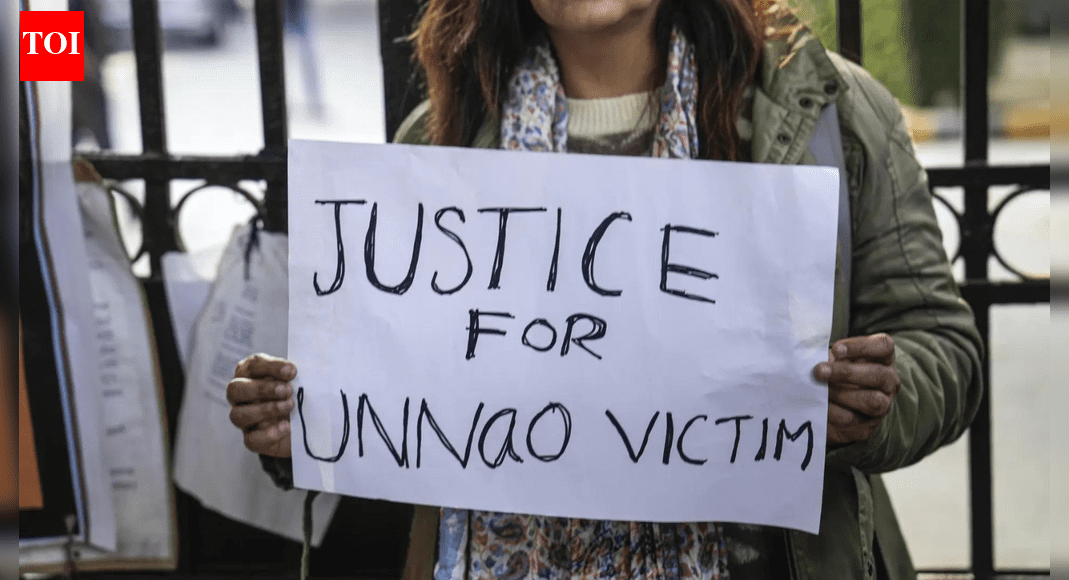
Unnao rape victim voices fears for children after Sengar’s sentence suspended. SC hearing on Dec 29 to decide justice. Understand implications for victim safety.
Overview
The Unnao rape victim has voiced grave fears for her children’s safety following the Delhi High Court’s decision to suspend the life sentence of expelled BJP leader Kuldeep Singh Sengar. Her urgent plea comes just ahead of a critical Supreme Court hearing scheduled for December 29, underscoring a pressing concern for justice in India.
This development reignites national conversations around judicial processes and victim protection in high-profile cases. The survivor emphasizes her faith in the Supreme Court to overturn the High Court’s order, seeking comprehensive justice for herself and her family, a key focus for current affairs in India.
Sengar, convicted in December 2019 and sentenced to life imprisonment, received a bail grant in the rape case but remains in jail due to a separate 10-year sentence. The High Court imposed a personal bond of Rs 15 lakh and strict conditions.
Observers now keenly await the Supreme Court’s decision, which will review the CBI’s petition against the High Court’s order, setting crucial legal precedents for future cases.
Detailed Analysis
The Unnao rape case, which first came to national prominence in 2017, has once again captured public attention, highlighting persistent concerns over victim safety and the trajectory of justice in India. The survivor’s recent impassioned plea, stating her children are “unsafe at home,” underscores the profound personal impact of legal decisions. This urgent appeal arises in the wake of the Delhi High Court’s December 23 order, which suspended the life sentence of former BJP leader Kuldeep Singh Sengar. Sengar, who received conviction in December 2019 for the rape, had already served seven years and five months in prison. This suspension, pending his appeal against conviction, has ignited a fresh wave of anxiety and calls for review. The Central Bureau of Investigation (CBI) quickly responded, filing a petition before the Supreme Court on December 26, setting the stage for a crucial hearing on December 29. This chronological sequence of events brings to the forefront critical questions about legal accountability and the protection afforded to victims and witnesses in sensitive criminal cases across India.
The Delhi High Court’s decision to suspend Sengar’s life sentence involved specific judicial reasoning, noting the time already served. However, the conditions imposed with his bail in the rape case are stringent, demanding a personal bond of Rs 15 lakh with three sureties and a strict prohibition against entering a 5-km radius of the survivor’s Delhi residence or threatening her or her mother. Critically, despite this suspension, Sengar will remain incarcerated, serving a separate 10-year sentence in a CBI case linked to the custodial death of the victim’s father. His appeal and plea for sentence suspension in that case also remain pending. The survivor’s powerful statement to news agency ANI revealed her deep disappointment with the CBI’s handling, asserting that earlier action would have ensured justice and Sengar’s bail rejection. She highlighted devastating personal losses, including the death of her father and other family members, along with the removal of security and her husband’s job loss, painting a grim picture of the ongoing struggle for safety and justice in today’s updates.
This case resonates deeply within the broader context of judicial review concerning high-profile criminal convictions in India. The CBI’s decision to challenge the High Court’s order in the Supreme Court, reportedly citing the “Advani judgment,” underscores the legal battle over established precedents for bail suspension. Such interventions are crucial in reaffirming public trust in the judiciary, particularly when a perpetrator holds significant political influence. The outcome of the Supreme Court’s hearing will inevitably be scrutinized for its implications on the balance between legal provisions for bail and the paramount need for victim and witness protection. It also draws attention to the effectiveness of existing safeguards designed to prevent intimidation or coercion against those seeking justice, setting a benchmark for future legal proceedings involving powerful figures in India news.
For general readers and news consumers, the upcoming Supreme Court hearing represents more than just a legal formality; it is a test of the justice system’s commitment to protecting the most vulnerable. The Unnao rape victim’s renewed plea highlights the enduring emotional and physical risks faced by survivors and their families, even years after initial convictions. Citizens should closely monitor the Supreme Court’s proceedings on December 29, as its ruling will not only determine the immediate fate of Kuldeep Sengar but also establish significant legal precedents for similar cases across India. This case brings into sharp focus the imperative for robust legal frameworks and vigilant enforcement to ensure that justice is not merely pronounced but effectively delivered, fostering a safer environment for all, an essential aspect of current affairs.
About the Author