Key Takeaways
Delhi’s Environment Minister announces permanent GRAP-4 curbs: no fuel without PUCC, restricts non-BS6 vehicles. Understand policy impact and new environmental initiatives.
Overview
Delhi Environment Minister Manjinder Singh Sirsa announced significant policy changes, making two key restrictions under the Graded Response Action Plan (GRAP-4) permanent to combat the city’s severe air pollution. This move solidifies the government’s long-term commitment to environmental regulation, impacting daily life and vehicle compliance across the capital.
These permanent **Delhi pollution curbs** are crucial for News Readers, Policy Watchers, Informed Citizens, and Political Analysts monitoring India’s environmental governance. The enforcement of these rules signals a stricter regulatory environment for vehicular emissions, a major contributor to the city’s deteriorating air quality.
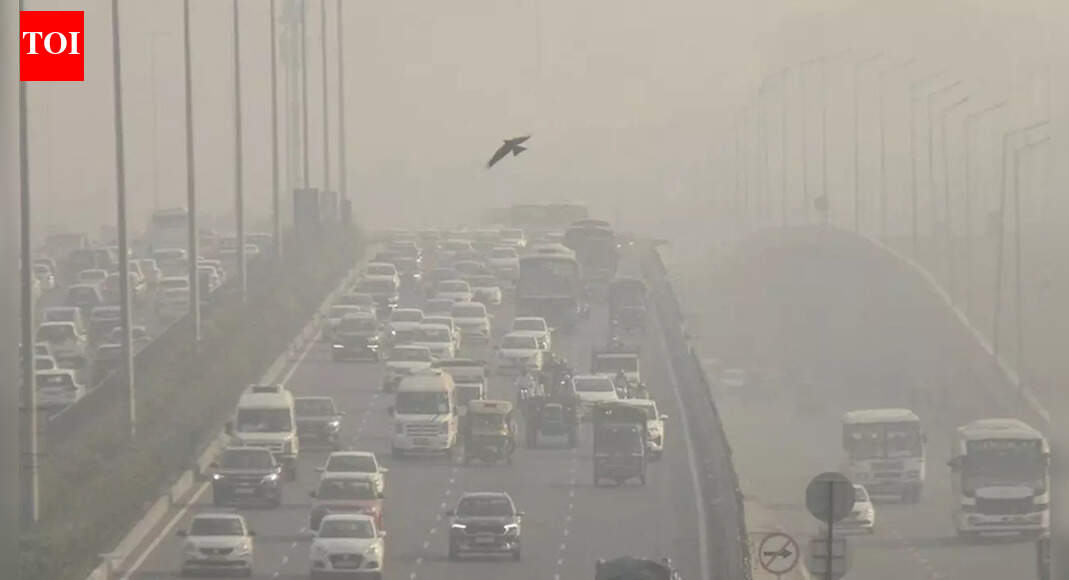
Effective immediately, vehicles will not receive petrol without a valid Pollution Under Control Certificate (PUCC). Additionally, non-Bharat Stage VI (BS6) compliant vehicles from outside Delhi face entry restrictions. The Air Quality Index (AQI) was recorded at 390 (‘Very Poor’ category) on Saturday.
Beyond vehicular norms, the Delhi Cabinet, led by Chief Minister Rekha Gupta, approved Rs. 100 crore for water body rejuvenation and established Delhi’s first 11.5-acre E-Waste Park, indicating a broader environmental strategy for the upcoming year.
Key Data
| Environmental Initiative | Key Metric | Status / Allocation | Date / Context |
|---|---|---|---|
| Air Quality Index (AQI) | Current Reading | 390 (‘Very Poor’) | Saturday, 6 PM |
| Water Body Rejuvenation | Budget Allocation | Rs. 100 Crore | Approved by Delhi Cabinet |
| E-Waste Park Establishment | Area/Size | 11.5 Acres | First in Delhi, Holambi Kalan |
Detailed Analysis
Delhi’s struggle with debilitating air pollution has been a recurrent policy challenge, leading to the periodic implementation of the Graded Response Action Plan (GRAP) to mitigate severe episodes. Historically, GRAP measures, including restrictions on construction and industrial activities, along with vehicular norms, have often been temporary, lifting once air quality improved. The Environment Minister’s announcement marks a pivotal shift: moving from reactive, seasonal responses to proactive, permanent policy enforcement. This reflects an evolving understanding within the Delhi government of the chronic nature of the pollution crisis, demanding enduring structural changes rather than transient fixes. The persistent ‘Very Poor’ AQI levels underscore the urgency driving these long-term commitments, as weather patterns, like the Western Disturbance, are continuously monitored for their potential to exacerbate conditions.
The detailed implications of the new permanent policy are far-reaching. The ‘No Fuel Without PUCC’ rule mandates that all vehicle owners maintain up-to-date Pollution Under Control Certificates, ensuring continuous emission checks. This shifts the onus onto individual vehicle owners for compliance, aiming to remove the most polluting vehicles from circulation. Concurrently, the restriction on non-BS6 vehicles entering Delhi from outside its borders directly targets older, higher-emission vehicles. Bharat Stage VI standards represent a significant leap in emission control technology, and limiting non-compliant vehicles acknowledges the cross-border nature of air pollution. Beyond these vehicular measures, the Delhi Cabinet’s approval of Rs. 100 crore for rejuvenating 160 government-jurisdiction water bodies out of approximately 1,000 across the city, under the directive of Chief Minister Rekha Gupta, signals a holistic approach. The establishment of India’s first 11.5-acre E-Waste Park at Holambi Kalan, designed for zero pollution and waste, further illustrates a comprehensive environmental governance strategy.
When viewed against national environmental policies, Delhi’s decision to make GRAP-4 measures permanent positions it at the forefront of aggressive urban pollution control. While other major Indian cities also contend with severe air quality issues, Delhi’s legislative move to embed previously temporary restrictions as permanent policy sets a precedent. This contrasts with approaches that might rely more heavily on incentivizing cleaner technologies without direct punitive measures for non-compliance. The dual focus on vehicular emissions and broader environmental infrastructure, such as water body rejuvenation and e-waste management, suggests a multi-pronged strategy that could inform similar policy discussions in other high-pollution urban centers. This permanent shift underscores a governmental recognition that piecemeal solutions are insufficient for a crisis of this scale, advocating for a robust and sustained policy framework.
For News Readers, Policy Watchers, Informed Citizens, and Political Analysts, these developments underscore a critical juncture in India’s environmental policy. The permanent Delhi pollution curbs will impact millions of commuters and businesses, necessitating widespread compliance and potentially driving demand for BS6-compliant vehicles and PUCC services. Key metrics to monitor include the sustained impact on Delhi’s average AQI, the efficiency of PUCC enforcement, and the progress of the water body rejuvenation and E-Waste Park projects. Policy watchers should observe how these permanent measures are implemented and whether they face legal or logistical challenges, especially concerning interstate vehicle movement. The government’s declared priority is to minimize resident hardships, but the long-term effectiveness hinges on rigorous enforcement and public cooperation, shaping a new paradigm for urban environmental accountability in India.
About the Author