Key Takeaways
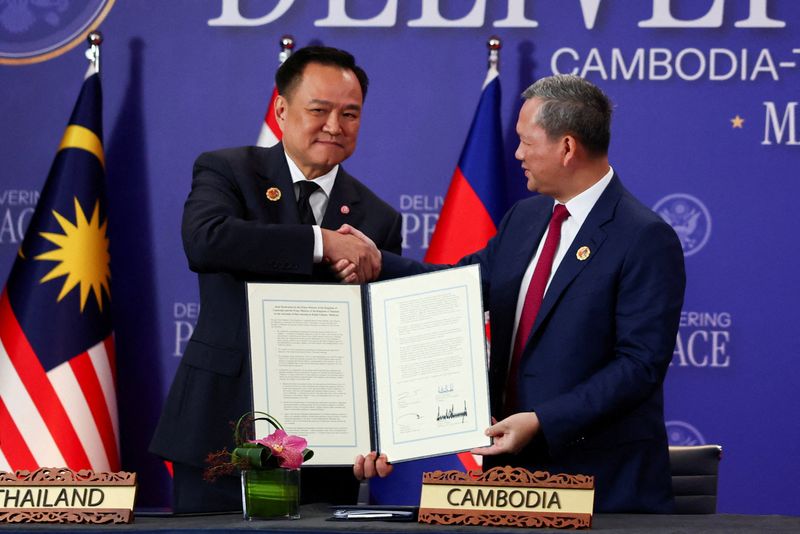
Thailand and Cambodia sign a crucial truce, halting their fierce border conflict in late 2025. Understand the implications for regional stability, trade, and future diplomatic efforts.
Overview
Thailand and Cambodia have officially signed a truce, agreeing to an immediate halt to their fierce border conflict. This significant diplomatic breakthrough, announced in late 2025, marks a pivotal moment for regional stability and a clear pathway towards lasting peace.
For general readers, this current affairs development is crucial. It eases tensions in a strategically important Southeast Asian region, promising a reduction in humanitarian impact and fostering stronger bilateral relations.
Specific terms regarding troop disengagement or future boundary demarcation were not immediately disclosed in this breaking news. The commitment to halt hostilities is the immediate, primary outcome.
This news update sets the stage for a deeper analysis into the short, medium, and long-term implications for both nations.
Detailed Analysis
The recent announcement in late 2025 regarding a truce between Thailand and Cambodia signifies a profoundly important moment, interrupting a pattern of contentious border disputes that have plagued relations for decades. The heart of this prolonged contention frequently revolved around sovereignty over contested territories, most notably the area surrounding the 11th-century Preah Vihear temple, a UNESCO World Heritage site. While the International Court of Justice ruled in 1962 that the temple itself belonged to Cambodia, the precise demarcation of the surrounding borderland remained a persistent source of friction. This ambiguity has repeatedly led to fierce armed clashes, transforming a historical claim into a humanitarian crisis for communities residing near the frontier. Villagers on both sides have endured displacement, disruption to livelihoods, and the constant threat of violence, undermining regional stability and trust. Previous attempts at de-escalation, often brokered through ASEAN or other international diplomatic channels, proved largely ephemeral, with agreements frequently collapsing under renewed tensions. Such historical fragility underscores the gravity and potential long-term significance of this latest truce. It reflects a compelling need for both nations to move beyond a cycle of conflict, recognizing that sustained prosperity and development are contingent upon a stable and predictable shared border. For general readers, understanding this deeply entrenched history of territorial disagreement is crucial to appreciating the magnitude of any agreement aimed at halting hostilities. The region, a vibrant economic and cultural hub, has often seen its potential hampered by these simmering disputes, making this today updates a beacon of cautious optimism for a more peaceful future.
A truce, in its essence, represents a temporary cessation of hostilities, a critical first step towards de-escalation. For the Thailand-Cambodia border conflict, this agreement implies an immediate halt to all military engagements, artillery exchanges, and troop movements that could provoke further confrontation. While specific details such as zones of disengagement, monitoring mechanisms, or timelines for troop withdrawals were not immediately disclosed, the commitment itself carries significant weight. Historically, such truces require robust communication channels between military commands and clear operational guidelines to prevent accidental breaches. The success of this 2025 accord will depend heavily on the willingness of both Cambodian and Thai defense ministries to enforce strict compliance on the ground. For general readers, this means a significant reduction in immediate physical danger for border communities, allowing residents to return to normal life and rebuild shattered infrastructure without the constant specter of violence. Furthermore, a truce often paves the way for deeper diplomatic engagement. It transforms the environment from one of active conflict to one where bilateral dialogue can genuinely flourish. This might involve establishing joint border commissions, initiating technical surveys for demarcation, or agreeing on specific confidence-building measures such, as joint patrols in agreed-upon areas or information sharing. The shift from battlefield clashes to negotiation tables is a profound diplomatic achievement, signaling a mutual recognition that military solutions are unsustainable. This current affairs development represents not an end to the underlying dispute, but a crucial pivot point towards managing it through peaceful, structured means. The immediate focus is on sustaining the peace, preventing any relapse into violence, and creating a stable platform for future, more comprehensive resolutions to be discussed and implemented.
This Thailand-Cambodia truce, announced in late 2025, offers a compelling case study when viewed against the backdrop of other complex border disputes across the globe. Unlike some conflicts that remain intractable for decades, this agreement demonstrates a diplomatic capacity within Southeast Asia to address deep-seated issues. Regionally, this development bolsters the credibility and efficacy of the Association of Southeast Asian Nations (ASEAN) as a platform for conflict resolution, even if the direct mediation details were not explicitly cited. ASEAN’s underlying principle of non-interference combined with a push for regional stability often encourages member states to seek peaceful settlements. The cessation of a fierce border conflict between two prominent members contributes significantly to the overall stability of the bloc, allowing greater focus on shared economic and security challenges. Economically, prolonged instability along the border has undeniably deterred foreign direct investment and hampered cross-border trade, impeding the full economic potential of both Thailand and Cambodia. A sustained truce opens channels for increased trade volumes, facilitating the movement of goods and people, and boosting vital sectors like tourism. International confidence in the region as a safe and reliable destination for business and leisure activities will likely improve. From a geopolitical standpoint, reduced tensions in this part of Southeast Asia can subtly shift regional dynamics. Major powers like China and the United States, who maintain significant economic and strategic interests in the region, generally prefer stability to unpredictable conflicts. This truce aligns with broader aspirations for a peaceful and prosperous Indo-Pacific, potentially allowing both nations to engage more effectively on their own terms with these external influences without the immediate distraction of internal border conflicts. This is a vital update for India news consumers, highlighting regional peace efforts.
For general readers, particularly those in India keeping abreast of current affairs, the Thailand-Cambodia truce signifies more than just a local agreement; it represents a positive trajectory for broader regional stability and security in Southeast Asia. This development can indirectly influence economic ties, trade routes, and even tourism prospects for visitors from India to these nations, as a stable region is generally more conducive to travel and investment. While the immediate risk of fierce conflict is now halted, it is crucial to recognize that truces are often preliminary steps. The enduring success of this agreement hinges on diligent implementation, transparent communication, and sustained diplomatic engagement between Bangkok and Phnom Penh. Readers should closely monitor official statements regarding the establishment of joint working groups, any progress on definitive border demarcation, and the consistency of troop disengagement protocols. The opportunities stemming from this truce are substantial: enhanced economic cooperation between Thailand and Cambodia, fostering a more vibrant cross-border economy, and potentially paving the way for joint infrastructure projects that benefit local populations. It also presents an opportunity for both nations to reallocate resources from military expenditures towards social and economic development, improving living standards for their citizens. However, a degree of caution is warranted; the history of this particular border conflict, and indeed many others globally, shows that truces can be fragile without robust mechanisms for dispute resolution. The focus now shifts from merely stopping hostilities to building a foundation of lasting trust and mutual respect. This breaking news offers a moment of hope, suggesting that even deeply entrenched conflicts can yield to sustained diplomatic efforts, ultimately benefiting millions across the region by ushering in an era of greater predictability and shared prosperity, a vital component of today updates.
About the Author