Key Takeaways
Bangladesh faces deepening unrest as another man is lynched, days after Hindu worker Dipu Chandra Das’s killing. Understand the implications for minority safety and law enforcement in 2025.
Overview
Recent events in Bangladesh underscore profound concerns over public safety as another man, Amrit Mondal, faced lynching. This incident closely follows the brutal killing of Hindu worker Dipu Chandra Das, drawing widespread condemnation regarding minority community safety in the South Asian nation.
The recurrence of such violence, amidst ongoing unrest, raises serious questions among general readers about law and order, particularly concerning attacks on religious minorities and institutional integrity.
Locals alleged Mondal was involved in extortion, returning from hiding in India. Separately, Das’s killing followed a mob accusation of blasphemy in Mymensingh district.
The interim government condemned these acts, pledging accountability. This report examines the implications of these growing tensions.
Detailed Analysis
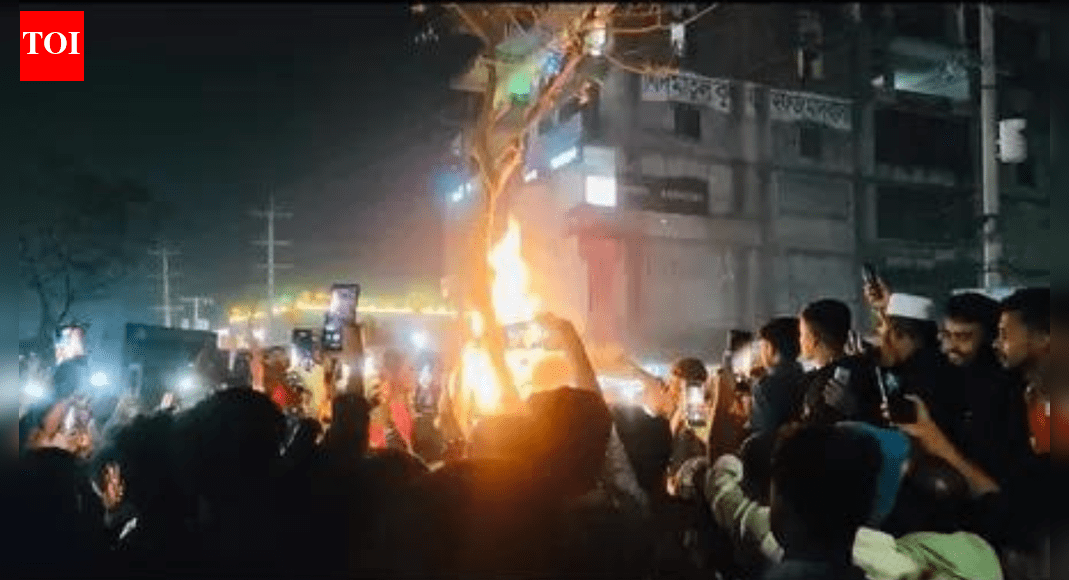
The recent lynching of Amrit Mondal in Bangladesh, occurring merely days after the tragic killing of Hindu worker Dipu Chandra Das, casts a stark light on the escalating tensions and profound challenges to law and order within the South Asian nation. These incidents are not isolated occurrences but rather symptomatic of broader unrest that has gripped the country, frequently impacting religious minorities and media institutions. The killing of Das, where a mob accused him of blasphemy before lynching him and setting his body on fire in Mymensingh district, immediately triggered widespread criticism and calls for enhanced protection for vulnerable communities. The subsequent swift condemnation from the interim government, led by Mohammed Yunus, signaled official recognition of the gravity of the situation, with a public commitment to hold perpetrators accountable and ensure ‘no space for such violence in new Bangladesh.’
The details surrounding Amrit Mondal’s lynching offer a different, yet equally disturbing, facet of public vigilantism. According to local accounts, Mondal, also known as Samrat, had a history of forming a criminal gang and engaging in extortion. After a period of hiding in India, he reportedly returned and allegedly demanded money from a village resident, Shahidul Islam. When Mondal and his group attempted to collect the money, an alarm was raised, leading locals to beat him, while his associates fled. One individual, Selim, was caught with weapons. This contrasts with Das’s case, where the accusation was blasphemy, a highly sensitive charge often inciting mob violence. The interim government’s statement, posted on X, unequivocally condemned the Mymensingh lynching, stressing that ‘the perpetrators of this heinous crime will not be spared.’ These incidents, regardless of the immediate catalysts, reveal a troubling pattern of communities resorting to extreme forms of informal justice.
While both incidents involve mob justice, the underlying accusations differ significantly. Dipu Chandra Das was targeted under the grave accusation of blasphemy, a charge historically known to fuel sectarian violence and public outrage in the region. Amrit Mondal’s lynching, conversely, stemmed from allegations of criminal activity and extortion. This distinction highlights that mob violence in Bangladesh is not solely confined to religiously charged issues but also manifests in response to perceived local criminality, often by a desperate populace taking matters into their own hands. The phenomenon reflects a broader challenge to the rule of law and the effectiveness of formal justice systems. Comparisons to similar incidents across South Asia often point to a breakdown of trust in state institutions, compelling citizens to enforce their own form of retribution, with often tragic and irreversible consequences for the accused.
For general readers and news consumers, these repeated lynchings signal a critical period for Bangladesh’s internal stability and human rights landscape. The immediate risk lies in the erosion of legal processes and the potential for a culture of vigilantism to take deeper root. The implication for religious minorities, already a vulnerable demographic, is a heightened sense of insecurity, impacting their daily lives and societal participation. Key metrics to monitor include the progress of investigations and prosecutions in both cases, the government’s implementation of measures to protect minorities, and any legislative actions to curb mob violence. The challenge for the interim government is to restore public faith in the justice system, demonstrating that accountability, not mob rule, will prevail in Bangladesh’s pursuit of a more stable and just society.
About the Author