Key Takeaways
Navi Mumbai Airport launches with 30 domestic flights, creating a vital second gateway for Mumbai air travel. Understand its impact on connectivity and regional growth.
Overview
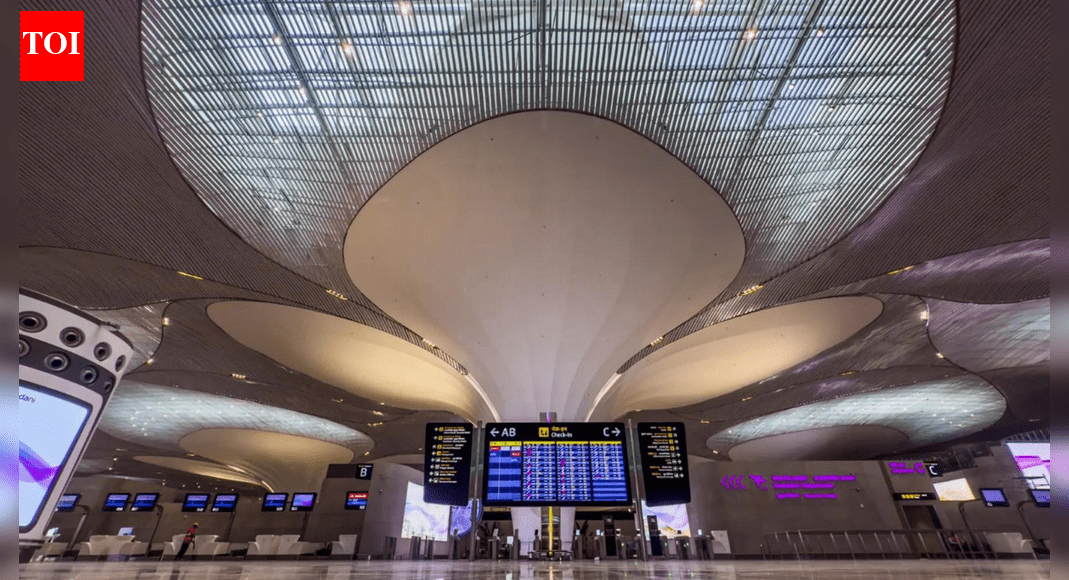
The Navi Mumbai International Airport (NMIA) commenced commercial operations on Thursday, December 25, 2025, opening a vital second gateway for air travel in the Mumbai region. This is a significant India News update, easing congestion.
For general readers, this launch means more flight options and improved accessibility. It provides a crucial alternative to the existing Mumbai airport, a key current affairs development.
Initially, NMIA handles about 30 domestic flights from four airlines, connecting nine destinations. Operating 8 am to 8 pm, it targets 24-hour services by February 2026, with 15 scheduled departures today.
This breaking news offers immediate insights into Mumbai’s evolving travel infrastructure, with today’s updates promising major regional impact.
Detailed Analysis
The inauguration of Navi Mumbai International Airport (NMIA) marks a watershed moment for India’s aviation sector and urban development. Mumbai, a pivotal financial hub, has long grappled with severe air traffic congestion at its sole Chhatrapati Shivaji Maharaj International Airport (CSMIA). This bottleneck hampered economic growth and traveller convenience. The vision for a second airport in the Mumbai Metropolitan Region (MMR) emerged decades ago due to escalating air travel demand. NMIA’s journey faced numerous hurdles like land acquisition and environmental clearances, leading to multiple missed deadlines. Its operational launch today signifies not just a new airport opening but the culmination of protracted efforts to bolster critical infrastructure, addressing a long-standing need for enhanced connectivity in one of the world’s busiest airspaces, a crucial India News update.
NMIA begins commercial operations with approximately 30 domestic flights on its inaugural day. Four key airlines – IndiGo, Air India Express, Akasa Air, and Star Air – will service nine destinations across India, facilitating 15 scheduled departures. The airport’s initial operating window of 8 am to 8 pm, capable of managing up to 10 aircraft movements per hour, outlines a methodical ramp-up. An NMIA spokesperson confirmed passenger services will leverage modern technology, offering Digi Yatra-enabled contactless processing alongside conventional check-in. Retail and food and beverage offerings emphasize affordability and local preferences. The airport’s initial phase includes Terminal 1 and a single operational runway, designed to handle 20 million passengers annually. Its strategic location, 35-50 km from various parts of Mumbai, positions it as a practical alternative for efficient air travel, crucial for Today Updates.
The opening of NMIA dramatically alters Mumbai’s aviation landscape, creating a dual-airport system like major global cities. This shift provides crucial capacity and competition, potentially leading to more competitive fares and expanded route networks for airlines previously constrained at CSMIA. Its progressive scaling, reaching 24-hour services by February 2026, integrates it into India’s burgeoning aviation sector. This phased expansion aligns with broader infrastructure trends, focusing on sustainable growth and regional connectivity. As a greenfield airport, NMIA boasts modern design and technology, including Digi Yatra, offering a smoother passenger experience. Its operational efficiency and strategic location will redefine air travel for millions, a critical development in Current Affairs.
For general readers, NMIA’s launch brings increased convenience and improved connectivity. Commuters from Navi Mumbai and eastern suburbs will experience significantly reduced travel times to the airport, easing the arduous journey to CSMIA. This new gateway offers more direct and diverse flight options. Economically, its full operational scaling and projected 20 million passenger capacity by mid-2026 positions it as a catalyst for regional growth, attracting investments and creating employment. Monitoring its transition to 24-hour operations by February 2026 will be key. This strategic project unlocks Mumbai’s potential, enhances resident quality of life, and bolsters India’s global aviation standing. A positive story within Today’s Updates.
About the Author