Key Takeaways
NYC Mayor-elect Mamdani’s appointees linked to anti-Zionist groups trigger investor risk concerns. Understand potential global financial implications for 2025.
Overview
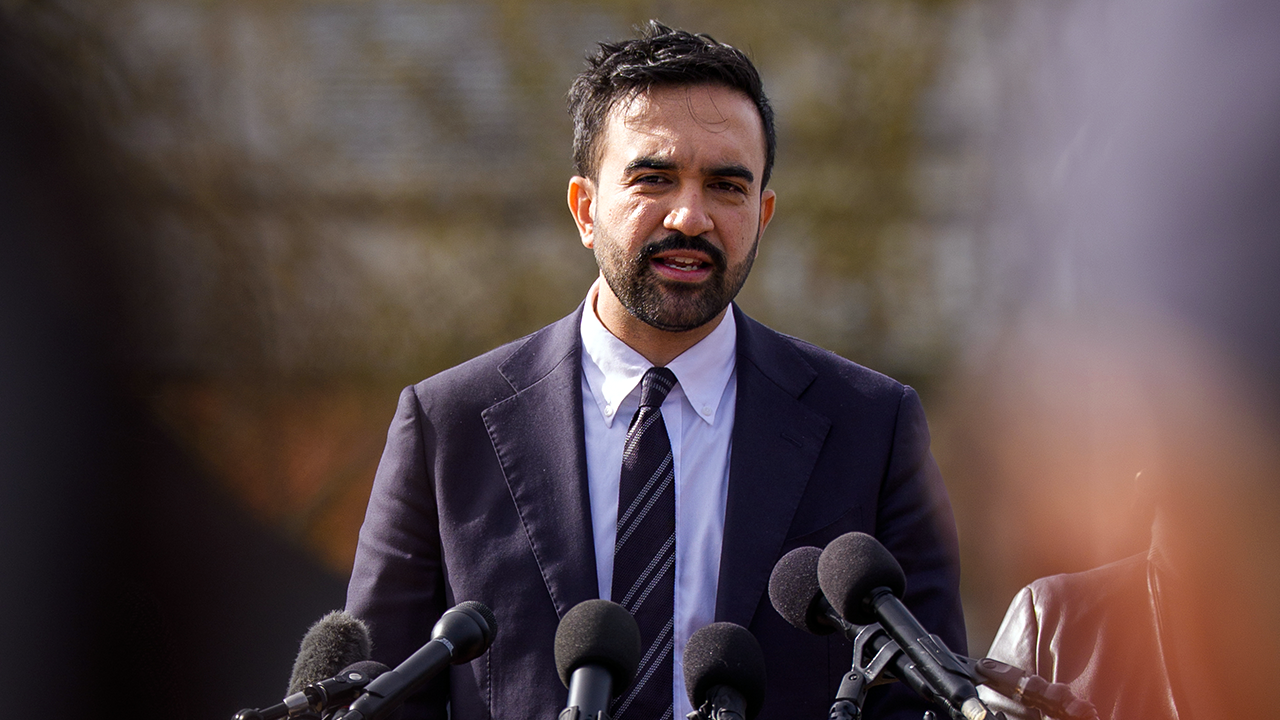
Recent revelations surrounding New York City Mayor-elect Zohran Mamdani’s administrative appointees have introduced a new dimension to geopolitical risk assessment for global investors. A Monday report by the Anti-Defamation League (ADL) indicates that at least 20 percent of his more than 400 transition and administrative appointees have documented ties to groups characterized as anti-Zionist or a history of anti-Israel statements. This development, while political in nature, bears significant implications for investor sentiment and perceived stability in a key global financial hub.
For Retail Investors, Swing Traders, Long-term Investors, and Finance Professionals, understanding political dynamics in major economic centers like NYC is crucial for comprehensive risk assessment. Such controversies can indirectly influence the investment landscape, affecting capital flows, reputational standing, and the broader appeal of local market opportunities, especially in sectors sensitive to governance perception.
The ADL report highlights that over 80 individuals are implicated, with ties to groups like Students for Justice in Palestine and Jewish Voice for Peace, and some linked to Louis Farrakhan. Several appointees allegedly made statements supporting or justifying violence against Israel and the Oct. 7 attacks, including expressions equating Zionism with racism or Jewish supremacy.
This detailed financial analysis explores the potential indirect investor implications of these political appointments, urging a vigilant approach to global urban economics and political risk within investment strategies. Investors should monitor upcoming administrative actions and public discourse for broader economic sentiment shifts.
Detailed Analysis
The political landscape of major global cities often serves as an underlying current for investor confidence, subtly influencing long-term capital deployment and risk perception. While direct financial metrics are not immediately available from the recent Anti-Defamation League (ADL) report concerning NYC Mayor-elect Zohran Mamdani’s appointees, the nature of the allegations – specifically ties to anti-Zionist groups and instances of controversial public statements – introduces elements of political and social risk that finance professionals and astute investors monitor. Historically, cities perceived as stable, inclusive, and free from significant social friction tend to attract and retain more capital. Any development that challenges this perception, even if initially non-financial, can lead to shifts in investor outlook, particularly for those with significant exposure to urban development funds, municipal bonds, or local business ventures.
The ADL’s detailed findings reveal a multifaceted concern. Beyond the headline figure of 20% (over 80 individuals) of appointees with such ties, specific examples include links to Students for Justice in Palestine, Jewish Voice for Peace, and Within Our Lifetime – the latter known for protests outside synagogues. Further, at least four appointees reportedly have ties to Louis Farrakhan, an antisemitic leader, with one cited for attending a conference where Farrakhan denounced “the Jews and their power.” More gravely, several individuals allegedly made statements that supported or justified violence, including remarks post-October 7 that “Resistance are Justified when people are occupied,” or direct accusations like “Zionism is racism,” “ideologically founded on Jewish supremacy,” “Zionism’s genocidal ideology,” and even “Zionists are worse than … Nazis.” One appointee was cited for allegedly displaying an inverted red triangle, a symbol associated with Hamas, alongside “LONG LIVE THE RESISTANCE.” Such highly contentious views, particularly when held by incoming administrative personnel in a city with a significant and diverse economic and social fabric, could escalate social tensions. This environment may deter certain investments or prompt a reassessment of long-term growth prospects due to perceived instability or shifts in governance priorities away from fostering broad economic harmony.
When assessing investment opportunities in global financial centers, finance professionals typically compare cities based on factors beyond just economic growth, including political stability, regulatory predictability, and social cohesion. A situation like NYC’s, where a significant number of incoming administration officials are linked to groups or statements perceived as divisive, could be compared to other instances of political friction in global hubs. While the source does not provide direct financial comparisons, the potential for reputational damage to New York City as an inclusive international business destination is a factor investors might weigh against its otherwise robust economic fundamentals. A prolonged period of political or social unrest, even at a local level, could subtly impact property values, tourism, and the operational environment for businesses. This calls for a nuanced qualitative assessment, as direct quantitative metrics are not yet available. [Suggested Matrix Table: Comparison of Major Global Cities – Political Stability, Social Cohesion Index, Foreign Direct Investment Trends (Hypothetical, as specific data is not in source)]
For Retail Investors and Swing Traders, monitoring such political developments in a key global market like NYC adds a layer to macroeconomic analysis. While direct impact on Indian stock market indices (NSE, BSE, Sensex, Nifty) is not immediate, the interconnectedness of global finance means that shifts in investor confidence in one major hub can create ripple effects or serve as a bellwether for broader sentiment. Long-term Investors and Finance Professionals should incorporate political risk analysis into their global portfolio management, especially for assets sensitive to urban governance and international relations. Specific metrics to monitor would be local economic sentiment surveys, commercial real estate trends, and any potential shifts in municipal bond ratings or international capital flows into NYC. This event underscores the importance of a diversified investment strategy that accounts for varied geopolitical and social risks across different geographies.
About the Author