Key Takeaways
South Korean prosecutors seek death penalty for former President Yoon Suk Yeol in unprecedented insurrection trial. Understand constitutional implications and judicial precedent.
Overview
South Korean prosecutors have made an unprecedented demand for the death penalty against former president Yoon Suk Yeol, citing his failed martial law declaration in December 2024. This marks the first insurrection trial of a Korean head of state in three decades, sending significant ripples through South Korean politics and international governance circles.
The case, characterized as a “serious destruction of constitutional order by anti-state forces,” underscores the fragility of democratic institutions when faced with executive overreach. It highlights critical questions for news readers, policy watchers, and political analysts regarding accountability and the rule of law in a mature democracy.
Charges against Yoon Suk Yeol carry three possible sentences: the death penalty, life imprisonment with labour, or life imprisonment without labour. The Seoul central district court expects to deliver its verdict on 19 February, with other verdicts for Yoon and his wife pending.
This development necessitates a deep dive into the historical context of political accountability in South Korea, stakeholder perspectives, and the profound policy implications for its constitutional framework.
Key Data
| Trial | Defendants | Key Allegation | Prosecutorial Demand | Historical Outcome (for comparison) |
|---|---|---|---|---|
| Yoon Suk Yeol Trial (2026) | Yoon Suk Yeol Kim Yong-hyun |
Failed martial law declaration & insurrection; Conspiracy | Death Penalty Life Imprisonment with Labour |
Verdict pending 19 Feb |
| Chun Doo-hwan & Roh Tae-woo Trial (1996) | Chun Doo-hwan Roh Tae-woo |
1979 coup & Gwangju massacre | Death Penalty Life Imprisonment |
Convicted, sentences reduced, pardoned |
Detailed Analysis
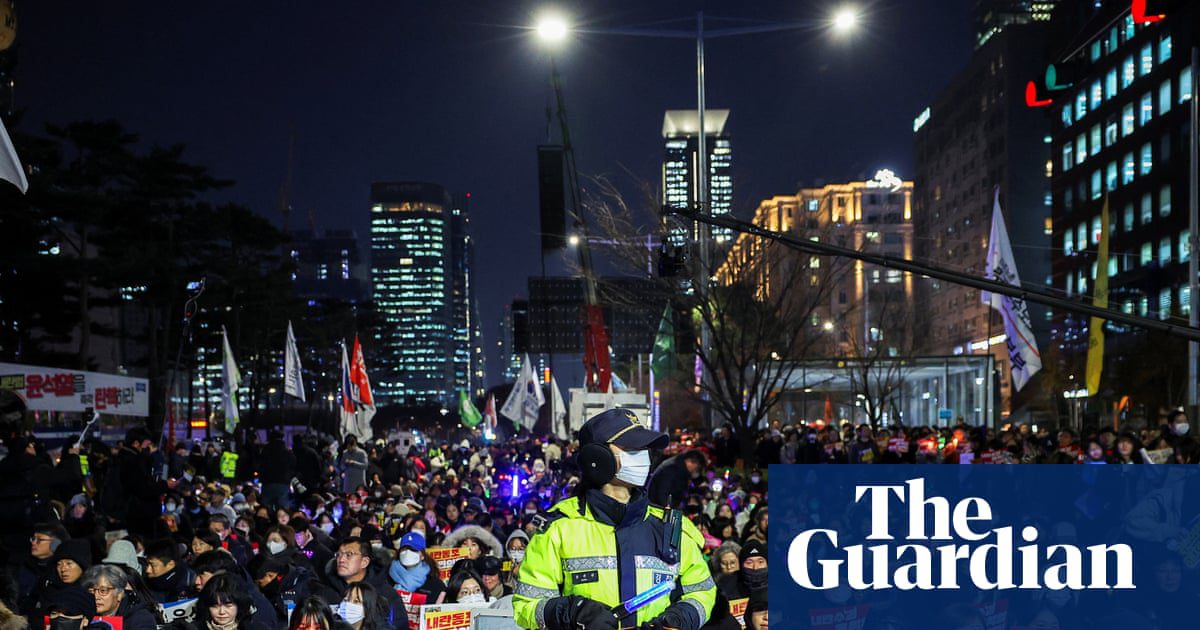
The demand for the death penalty against former South Korean President Yoon Suk Yeol for his alleged role in the December 2024 martial law declaration represents a profound moment in the nation’s political history. This accusation of attempting to subvert constitutional order places his trial among the gravest legal proceedings against a former head of state globally. The seriousness of the charges, encompassing the “serious destruction of constitutional order by anti-state forces,” underscores the deep commitment within South Korea to safeguard its hard-won democratic institutions. The immediate context revolves around the swift and dramatic events of December 3, 2024, when Yoon allegedly deployed troops to the National Assembly, reportedly ordering them to prevent lawmakers from voting to lift his martial law declaration. The six-hour crisis was averted only when 190 Members of Parliament broke through military cordons, passing an emergency resolution that ultimately forced Yoon to retreat. This sequence of events, followed by his impeachment on December 14 and constitutional removal in April 2025, vividly illustrates the resilience of South Korea’s democratic checks and balances against potential executive overreach. The trial carries the weight of past political struggles, drawing comparisons to earlier periods of authoritarianism and raising critical questions about civilian control over the military and the limits of presidential power in a consolidated democracy.
Prosecutors have meticulously detailed a campaign of alleged premeditation, asserting that Yoon initiated planning for the martial law operation before October 2023. This planning reportedly included strategically placing military personnel in key positions well in advance of the declaration, indicating a calculated effort to “monopolise power through long-term rule.” Evidence presented in court, including notebooks and mobile phone memos, painted a disturbing picture of the alleged plans: preparing to torture election officials into confessing to fabricated election fraud and cutting power and water to critical media outlets. These revelations, if proven, highlight a comprehensive strategy to dismantle democratic processes and silence opposition, rather than a mere misjudgment of authority. The prosecution also heavily criticized senior officials who allegedly “chose loyalty to Yoon and greed for power-sharing,” asserting that if even a single cabinet member had alerted external authorities, the martial law implementation would have been “realistically impossible.” Furthermore, Yoon’s complete lack of remorse, his consistent blaming of the then-opposition, and the incitement of his supporters who subsequently engaged in violent protests outside the courthouse, served as significant aggravating factors cited by the prosecutors. His background as a former prosecutor general, the prosecution argued, implied a full awareness of the unconstitutionality of his actions, elevating the perceived culpability.
The current legal proceedings against Yoon Suk Yeol draw immediate and stark parallels to the landmark 1996 trial of former military dictators Chun Doo-hwan and Roh Tae-woo. That historic trial addressed their roles in the 1979 coup and the subsequent Gwangju massacre, with prosecutors also demanding the death penalty for Chun and life imprisonment for Roh. While both were convicted, their sentences were later reduced and ultimately pardoned, a decision reflecting a complex interplay of justice and political reconciliation in post-authoritarian South Korea. This historical precedent shapes current perceptions, highlighting a recurring pattern of high-ranking political figures facing severe legal consequences for undermining the state, yet also introducing the question of potential clemency later. However, a key distinction lies in the context: the 1996 trial confronted the legacy of military rule, whereas Yoon’s trial addresses an alleged attempt by a democratically elected president to subvert established constitutional order. This distinction is crucial for understanding the evolving threats to South Korean democracy. Moreover, the demand for the death penalty is particularly notable given South Korea’s status as a “de facto abolitionist” state, having not executed anyone since 1997. This stance adds another layer of complexity, raising questions about the finality of the prosecutorial demand and its alignment with contemporary human rights principles, even for crimes of such gravity.
For News Readers, Policy Watchers, Informed Citizens, and Political Analysts, the Yoon Suk Yeol trial is a litmus test for the robustness of South Korean democracy and its commitment to accountability at the highest levels of government. The verdict, due on February 19, will not only determine the fate of a former president but also set a crucial precedent for executive conduct and the limitations of presidential power in a constitutional republic. Policy watchers will scrutinize the judicial reasoning, examining how it interprets constitutional provisions regarding martial law and the separation of powers. The widespread public and political scrutiny surrounding this trial underlines the informed citizenry’s demand for transparency and justice, reflecting an active engagement with democratic processes. The risk factors for the nation include potential political polarization and renewed social unrest, particularly given the historical context of passionate public reactions to political trials and the ongoing support among some factions for Yoon Suk Yeol. However, there is also an inherent opportunity for South Korea to strengthen its democratic norms and reaffirm judicial independence as a bulwark against future abuses of power. Citizens will keenly watch the verdicts not only for the insurrection charge but also for Yoon’s other eight criminal trials—including charges from abuse of power to election law violations—and his wife, Kim Keon Hee’s, stock manipulation and bribery trial on January 28, with his arrest obstruction case verdict expected on January 16. These collective legal outcomes will define accountability, shaping the trajectory of South Korean governance and reinforcing constitutional safeguards for decades to come, sending a powerful message about the indivisibility of law and leadership.
About the Author