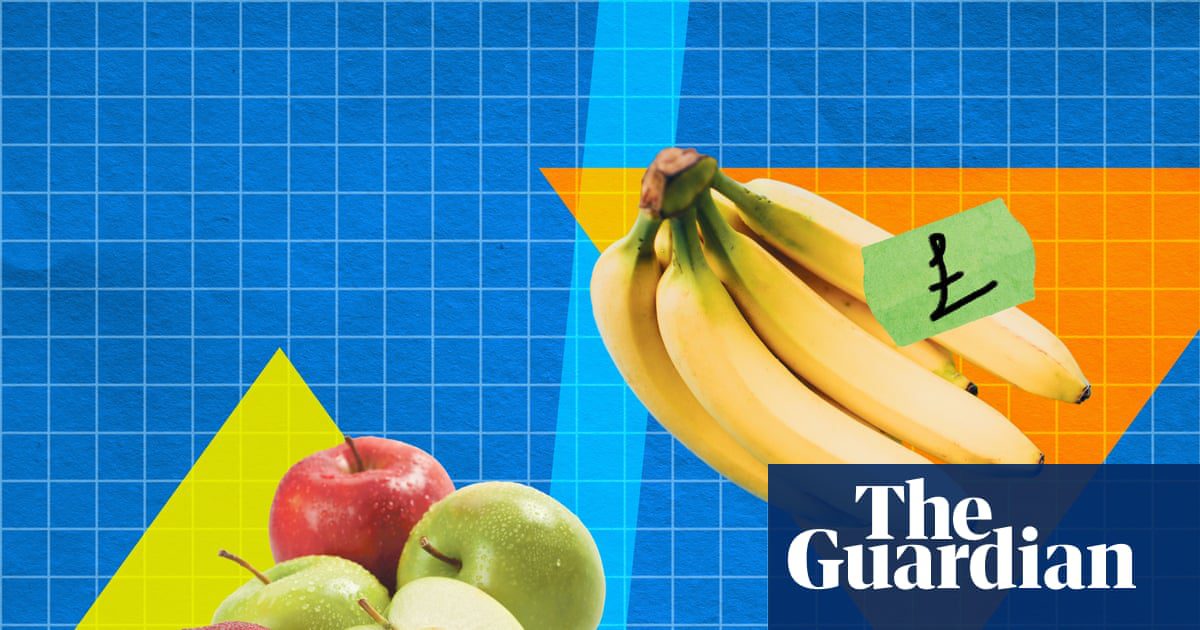
Why have apples increased so much in price in the UK? They seem much more expensive than bananas, even though many are homegrown, and so don’t have to travel halfway around the world.
It seems bananas (sorry) that fruit grown in the country where it is being sold costs more than produce which has been shipped thousands of miles. But, unlike other goods, such as petrol, the price we pay at the supermarket for fresh food has become detached from the cost of getting it there.
“It’s not like in the old days, where supermarkets would look at each product and what margin they wanted on it,” says Ali Capper, a grower and the executive chair of the trade body British Apples & Pears. “They’ll take a mix of products and look at their margin as a whole.”
Bananas are retailers’ top-selling fresh product in many parts of the world. Alistair Smith, executive director of not-for-profit campaign group Banana Link, says that in countries that consume bananas, “nine households out of 10 buy them, so [retailers] fight very hard to keep the prices down”. Sometimes, bananas have been used as loss leaders, being sold below cost, as a way to win custom.
Figures from the Office for National Statistics show that, since 2000, the price of a kilo of dessert apples has been consistently higher than the price of a kilo of bananas. The data, which ends in January 2025, shows that, at that point, the average price of a kilo of dessert apples was £2.14, while the same weight of bananas cost £1.02. Figures from the UK government show that the average wholesale price of homegrown apples was £1.23 a kilo on 20 January last year, while the wholesale price of bananas was 98p. The difference in markup is clearly much higher with apples, but the shop prices include imported fruit, as well as UK-grown varieties.
Almost 60% of the apples sold in the UK come from overseas, and some have travelled even further than bananas, as New Zealand is a core provider. That’s a trip of more than 11,000 miles, while from Latin America and the Caribbean, from which many bananas are imported, the trip is about half that.
You might think that could account for why apples cost more, but those overseas fruits are not necessarily more expensive than those from the UK. Capper says UK producers struggle to compete with some overseas importers. Two years of above-inflation rises in the minimum wage have made processing apples more expensive, and Capper says the workforce is about 50% of the cost of getting the apple to the farm gate. UK growers have a struggle to compete with those in countries such as South Africa, where wages are much lower.
Banana and apple categories are also hard to compare because they are vastly different sizes: typically, you can choose how your banana has been farmed and bought – some supermarkets offer an organic option, and, while Waitrose, Sainsbury’s and the Co-op only sell Fairtrade-certified ones, other retailers offer that as a choice. In contrast, apple fans have lots of decisions to make.
On the Waitrose website this week, there were three packs of bananas ranging from £1 for five in its Essentials range to £1.95 for six Duchy Organic Fairtrade fruits. In the virtual apple aisle there were 21 packs to choose from, from six Essential British mini ones at £1.30 to a “minimum of four” pack of Duchy Organic Pink Lady apples at £3.75.
Data from Worldpanel by Numerator, an organisation that gathers and tracks shop prices, shows that the average cost of packaged apples at UK supermarkets has risen by 17% since 2021. Meanwhile, the average price of a pack of bananas has increased by 6%.
Since 2021, there has also been shrinkflation in apple pack sizes. At Tesco, for example, several varieties, including Tesco’s own Pink Ladies, Granny Smith and Braeburn, are sold in minimum of five packs when they used to come in sixes (the pictures on the website still show six fruit).
Worldpanel’s data takes this into account – it records unit prices, and the company confirms there are fewer six packs on sale than in 2021, although consumers are more likely to be seeking them out. “Apple prices have risen sharply compared with bananas, and shoppers are clearly feeling it,” says Clara Tucker, consumer insight director at Worldpanel.
“With fewer larger packs available and prices continuing to climb, shoppers are increasingly looking for value – trading into bigger or value packs where they can, and in some cases leaving apples out of their baskets altogether.”
Capper says when the world opened up again after Covid, “we saw input costs increase – fertiliser, energy, plant protection products, even the cost of trees – everything started to go up”.
The energy crisis that followed the Ukraine war pushed up costs for a sector that pays a lot to create the right conditions to store fruit – and there is more to come, says Capper. Electricity transmission fees will rise by more than 60% from April for UK businesses that have high intensity use. Although farmers may only need the extra power over the winter, they will pay the standing charge all year round.
Many of the same cost increases apply to bananas. Anna Pierides from the Fairtrade Foundation says costs for producers have been going up, and they have faced pressures from the climate crisis. There have been floods in Peru and droughts in the Dominican Republic, countries that produce the most bananas. She says it’s “not a pretty picture in banana production globally” and 30% of farmers in the Dominican Republic have left the sector.
Smith says bananas are “undervalued, underpriced” and that, in the UK, where they are now about £1 a kilo typically, if they were priced to make sure everyone in the production chain got what they should, they would be £1.50. Fairtrade has helped tens of thousands of workers to get a living wage, but producers and workers outside that system are still losing out as the price we pay is not enough.
“The sustainability of the industry rests on a revaluing. It doesn’t make sense that something that has come 5,000 miles is cheaper than an apple that’s come from 10 or even 100 miles away,” says Smith.
While the shelf price of apples has gone up, Capper says it’s still “not to the same extent that growers’ input costs have gone up”, and her organisation is lobbying for retailers to pay “fair, sustainable returns”.
Which suggests that, even after price rises, we should be paying more.
Source: https://www.theguardian.com/lifeandstyle/2026/feb/23/why-have-apples-increased-so-much-in-price-in-the-uk
About the Author