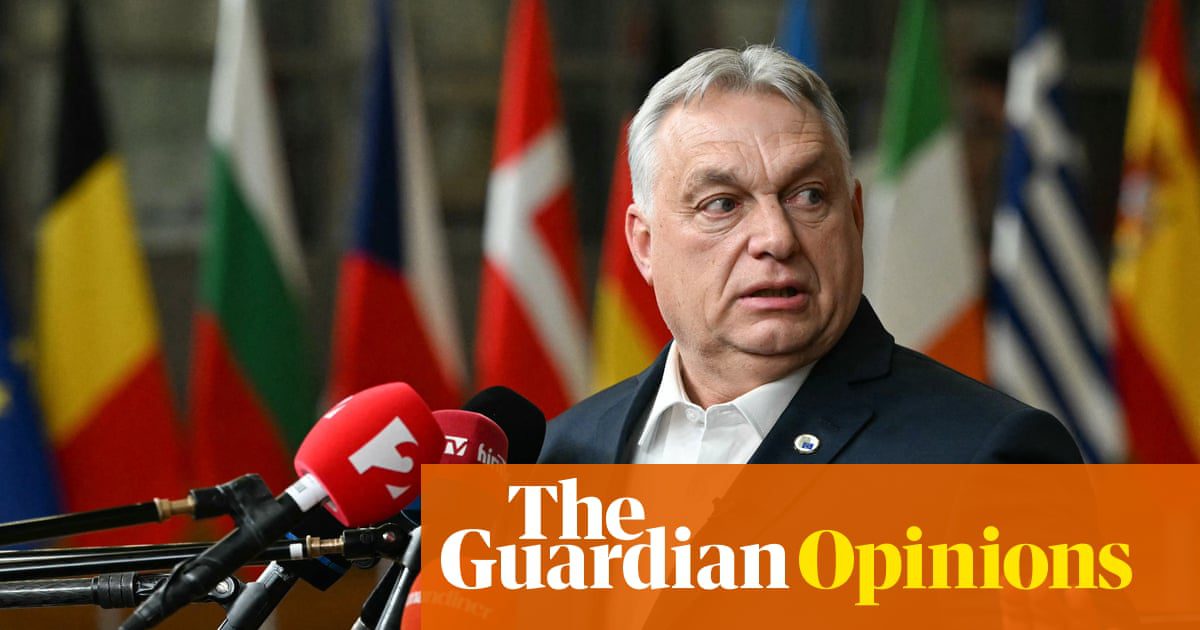
On 3 March, Viktor Orbán held a phone conversation with Vladimir Putin. According to official Hungarian reporting, the discussion focused on “energy issues” and other routine matters. What followed was anything but routine. Within days, the Hungarian foreign minister, Péter Szijjártó, had flown to Moscow, and returned with two freed prisoners of war, dual citizens of Ukraine and Hungary.
Hungary is not part of the military conflict in Ukraine, but the message was unmistakable. With his PoW diplomacy, Putin was not only signalling goodwill towards Hungary, he was effectively endorsing Orbán’s re-election on 12 April.
From reports of Russian operatives assisting Orbán’s campaign to promises of cheap energy and a disinformation operation to portray the Hungarian opposition as run by Ukraine, a coordinated effort by the Kremlin to influence the outcome is widely suspected. An official communique from the Russian foreign intelligence service last August made little secret of its preference, citing an alleged Brussels plot to bring opposition challenger Péter Magyar to power. In recent days there have been allegations – denied by Szijjártó – that the foreign minister briefed the Kremlin on the proceedings of confidential EU meetings.
But Orbán is not receiving support only from the east. From across the Atlantic, he is enjoying similarly visible backing. Marco Rubio, when visiting Hungary in February, talked about a “golden age” in the relationship between the US and Hungary, and emphasised that strong personal ties between Donald Trump and Orbán would ensure stable bilateral relations. US conservative networks have become increasingly active inside Hungary: campaign consultants are reportedly advising Orbán’s team, JD Vance is expected in Budapest ahead of the vote – and Trump himself has signalled his endorsement. The recent staging in Hungary of a gathering of global hard-right leaders (the Conservative Political Action Conference) further underlined Orbán’s transatlantic alliances.
Rarely have elections in central and eastern Europe attracted such intense global attention or seen a race in which the US and Russian political camps openly align behind the same candidate. Orbán’s strong appetite for obstruction within the EU is the appeal for both Putin, for whom the EU is an enemy supporting Ukraine, and for Trump, who regards the union as a rival.
Orbán needs the global attention. After 16 years in power, his campaign lacks domestic achievements to showcase. It is almost entirely built around foreign policy narratives. Ukraine, in particular, has been reframed as an existential threat to Hungary. Government slogans suggest that Kyiv seeks to “colonise” Hungary – a claim that jars with previous governmental messaging about Ukraine being a failed state.
And it is not just rhetoric. Hungary has restricted energy cooperation with Ukraine and provoked diplomatic tensions. Pro-government media now routinely warn of imminent threats: headlines claim that Ukraine, in coordination with Brussels, could “attack Hungary at any time”. In a world already shaken by multiple conflicts, Orbán casts himself as the “safe choice” – the leader who can guarantee peace through his connections to great powers. Magyar is portrayed as unstable, inexperienced and a puppet of Kyiv, Berlin and Brussels.
Yet despite the international backing and Orwellian information campaign, the strategy, so far, does not appear to be working. Reliable polling suggests Orbán is on the ropes, with a widening gap – as much as 15 percentage points – between the governing party and the opposition. Even in Hungary’s skewed electoral system, this is a polling deficit that will be difficult to overcome. Polls also show that voters are much more concerned about the domestic topics (inflation, corruption, healthcare) the opposition is focused on than the geopolitical battles that Orbán talks up.
Foreign support, it seems, can be a double-edged sword. It may reinforce Orbán’s image as a global player, but risk alienating voters who are wary of external interference. The war in Iran is controversial in Hungary, exposing tensions within the government over its self-proclaimed “pro-peace” stance. In that context, Vance’s expected visit comes at a sensitive moment. Anything short of a direct visit from Trump – something Orbán has long hoped for – may prove insufficient to pull undecided voters towards Orbán’s party, Fidesz.
European governments, increasingly alarmed by Hungary’s obstructionism within the EU and Nato, have also entered the game. Media reports – often citing information from unnamed European intelligence services – have detailed alleged Russian influence operations, the presence of GRU (Russia’s military intelligence service) operatives and even an alleged plot for a staged assassination. Such disclosures have a dual effect: they inform the public, but they also disrupt covert operations.
Interestingly, even Orbán’s most powerful backers seem to have their doubts about his prospects. Reporting by the Washington Post suggested that Russian intelligence considered drastic measures to tilt the vote in Orbán’s favour precisely because they feared he might lose. Trump, for his part, may be reluctant to expend political capital coming to Budapest to promote a candidate who seems set for defeat, despite Orbán’s persistent invitations and previous hints that the US president would fly in.
In the remaining fortnight, the campaign may yet take darker turns. Leaked kompromat targeting Magyar, intensified voter intimidation, disinformation on an unprecedented scale and more aggressive vote-buying efforts cannot be ruled out.
Instead of repeating a single coherent narrative, the government’s communications strategy now generates a relentless stream of contradictory messages, creating confusion and information overload – seemingly in an effort to nudge voters towards the incumbent as the best option in a world of chaos.
It makes for an unprecedented election in the EU, but it also makes voter intention in the final weeks harder to predict, even if turnout is expected to be higher than ever before.
Since the fall of communism and the advent of free elections, we have not seen a campaign in Hungary so full of lies, dirty tricks and fearmongering. But the international stakes have never been higher either, with Hungary facing a historic decision: stay in democratic Europe or join Russia’s sphere of influence. Hungary has become a geopolitical battleground.
-
Péter Krekó is a political scientist, behavioural scientist, economist and director of the independent thinktank the Political Capital Institute in Budapest
Source: https://www.theguardian.com/commentisfree/2026/mar/31/viktor-orban-us-russian-support-hungary-iran-war-voters
About the Author