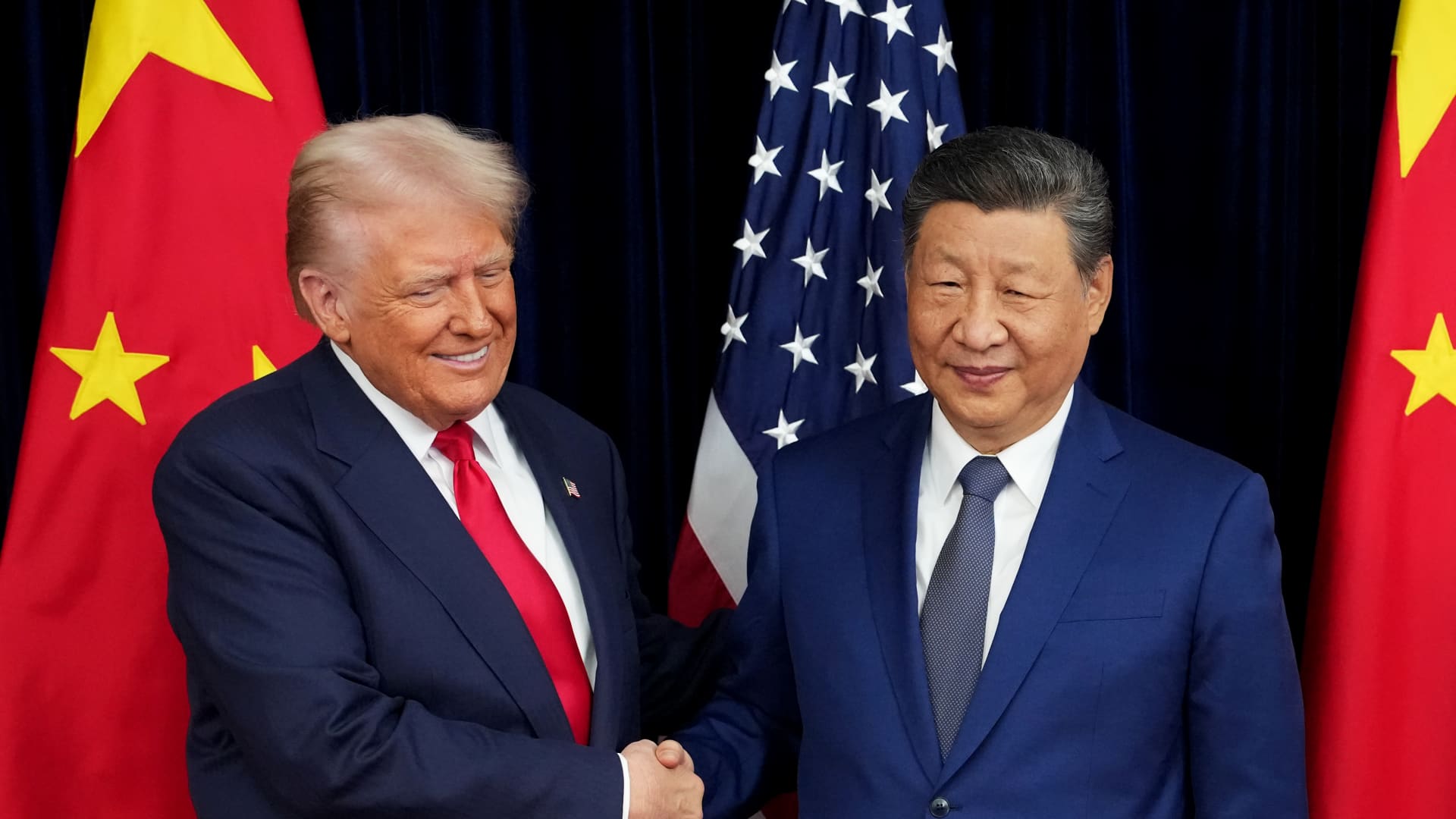
US-China trade relations face a critical juncture on October 30, 2025, as President Xi Jinping meets U.S. President Donald Trump. Discussions aim to alleviate trade and tariff concerns, crucial for stabilizing the global economy amidst geopolitical friction.
Investors are closely monitoring this high-stakes summit for de-escalation signals, given the impact of trade tensions on global markets and investor confidence.
Key metrics like soybean purchases and export controls are under scrutiny. Market analysts anticipate cautious optimism pending concrete agreements. As of market close, October 25, 2025, major indices showed increased volatility.
Our analysis delves into investor implications and the outlook for bilateral trade.
Expert Market Analysis
The upcoming meeting between U.S. President Donald Trump and Chinese President Xi Jinping in Busan on October 30, 2025, marks a significant juncture in the protracted trade dispute. Historically, U.S.-China trade relations have seen intense negotiations interspersed with strained diplomacy. The current trade war, characterized by escalating tariffs and export controls, has injected substantial uncertainty into global financial markets, creating a volatile environment for investors. This summit, occurring after the commencement of Trump’s second term in January 2025, offers a critical opportunity for de-escalation. Xi Jinping’s conciliatory tone ahead of the meeting signals a potential willingness from Beijing to engage in a more cooperative atmosphere, which could be a precursor to easing tensions and fostering a more predictable trading landscape for global businesses. Experience in navigating such diplomatic complexities suggests that progress, while challenging, is attainable with sustained engagement.
From a fundamental analysis standpoint, the core issues include persistent trade imbalances, disputes over intellectual property rights, contentious technology transfer policies, and market access challenges for foreign companies. Investors are meticulously monitoring any potential shifts in U.S. tariff policies and China’s reciprocal responses, including its purchasing patterns for key commodities like U.S. soybeans, which have recently shown signs of recovery. While specific financial metrics such as EBITDA margins or free cash flow are not directly quantifiable outcomes of this diplomatic engagement, the potential for more favorable trade terms could indirectly bolster corporate earnings across a wide spectrum of sectors. Technical analysis of major market indices would likely reveal increased volatility directly reacting to news and pronouncements emanating from this summit. The perceived management guidance from both leadership delegations will be paramount in interpreting the long-term economic outlook. Expertise in financial modeling can help quantify these potential impacts.
A comparative analysis of the economic strategies employed by the U.S. and China reveals that both nations possess considerable global influence. The existing trade friction extends beyond their bilateral trade, creating ripple effects across global supply chains and significantly impacting emerging markets. Sectors such as technology, agriculture, and manufacturing are particularly susceptible to these disruptions. While China’s role in regional geopolitical dynamics and its own initiatives in promoting peace talks are acknowledged, the primary focus remains on achieving greater economic cooperation. Key considerations for investors include potential regulatory impacts, such as anticipated U.S. bans on software-powered exports to China and China’s own strategic export controls, which could reshape market share and competitive positioning for firms in both nations. Authority in regulatory analysis is crucial for understanding these dynamics.
The expert takeaway from this critical meeting suggests that while headline-grabbing agreements are often sought after, the true long-term value will be derived from the sustained implementation and faithful fulfillment of any commitments made. For both retail and institutional investors, the prevailing environment necessitates a cautious and adaptable approach, carefully balancing the inherent risks associated with ongoing trade disputes against the potential opportunities that a successful de-escalation could unlock. Key events to closely monitor will include any official joint statements released by both parties, any immediate changes in tariff announcements, and discernible shifts in bilateral trade data. Consequently, entry and exit strategies for investments should remain fluid, ready to adapt to the continually evolving geopolitical and economic landscape. Trust in established financial principles is key for navigating these uncertain times.
Related Topics:
US-China trade war, Xi Trump meeting 2025, Global trade outlook, Busan summit, Tariff negotiation, Economic diplomacy, Geopolitical risk, Market analysis 2025, Trade tensions, Bilateral relations
About the Author