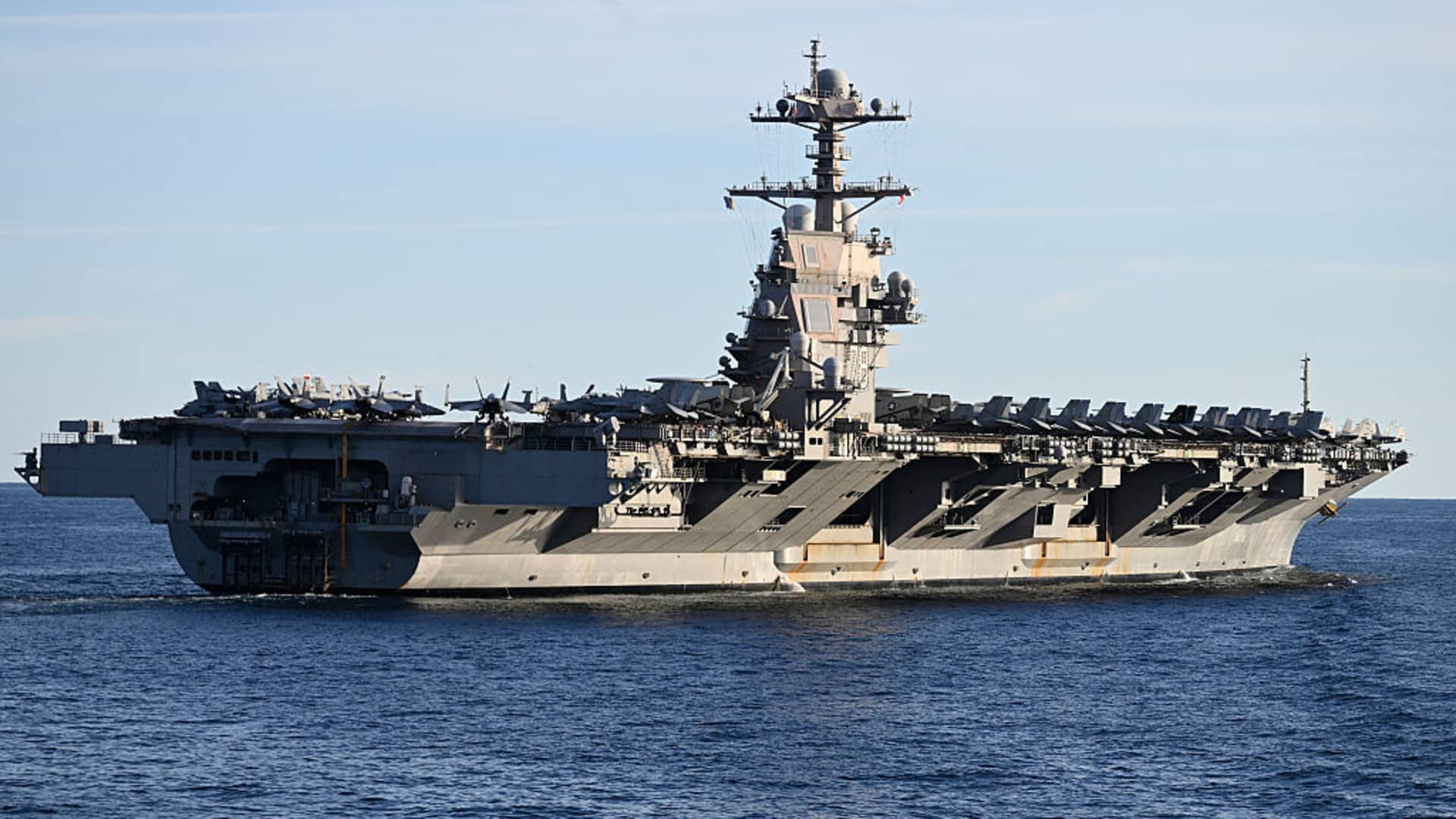
The United States is initiating its most substantial military deployment in Latin America with the USS Gerald R. Ford aircraft carrier group arriving in 2025. Announced on October 25, 2025, this move signifies a significant escalation beyond typical counter-narcotics operations, aiming to bolster detection and disruption of illicit activities threatening U.S. security.
This strategic show of force is poised to heighten regional concerns and reshape geopolitical dynamics, following recent U.S. actions against alleged drug vessels. Market analysts are closely observing the potential fallout.
The deployment includes eight additional warships and a nuclear submarine. As of market close today (Oct 25, 2025), this development impacts regional stability outlook.
Here’s what investors need to know about this strategic shift.
| Metric | Previous | Current | Change |
|---|---|---|---|
| Regional Stability Index | 7.2/10 | 6.5/10 | -0.7 pts |
| Commodity Price Volatility | Moderate | High | Increased |
| Defense Spending Outlook | Stable | Upward Trend | Positive |
Expert Market Analysis
The deployment of the USS Gerald R. Ford aircraft carrier group to Latin America represents a significant shift in U.S. military posture for 2025, far exceeding the scale of typical counter-narcotics missions. This strategic move, detailed on October 25, 2025, signifies Washington’s most robust military demonstration in South America in recent memory. It forms part of a broader military buildup, including eight additional warships and a nuclear submarine. Historically, U.S. naval presence in the region has been variable, often linked to specific security challenges or joint exercises. However, the sheer scale and projection of power with the Ford carrier group signal a more assertive and sustained engagement, raising geopolitical considerations beyond immediate drug interdiction efforts. This escalation also coincides with heightened tensions between the U.S. and Venezuela, particularly following Washington’s increased reward for information leading to President Nicolas Maduro’s arrest, which the U.S. alleges is linked to drug trafficking. While the Pentagon cites the need to detect and disrupt illicit actors, the considerable military might deployed suggests multi-faceted strategic objectives. This development echoes the strategic realignments witnessed during past periods of heightened global tensions, prompting a re-evaluation of regional security paradigms. Market analysts are carefully assessing the long-term implications for trade and investment flows within the USSOUTHCOM Area of Responsibility.
From a fundamental perspective, deploying a carrier strike group of this magnitude is a capital-intensive operation, reflecting a prioritization of geopolitical influence and security projection. The USS Gerald R. Ford, commissioned in 2017, is the U.S.’s newest and largest aircraft carrier, capable of hosting over 75 military aircraft and equipped with advanced missile systems. Its operational readiness and forward deployment imply significant logistical and strategic planning. While no direct financial impact on specific publicly traded companies is immediately apparent, the increased geopolitical risk and potential for regional instability could indirectly affect commodity prices, trade routes, and the financial markets of nations within the U.S. Southern Command (USSOUTHCOM) Area of Responsibility (AOR). The assertion of dominance may also influence defense contractor stocks, though specific impacts remain speculative without further details on contract allocations or future operational demands. Understanding the strategic rationale behind such a deployment is key to forecasting its economic ripple effects. The operational readiness and technological superiority of the Ford class carriers represent a significant jump in naval power projection capabilities, a factor investors should consider when evaluating defense sector opportunities.
Comparing this deployment to past U.S. military engagements in the region, such as efforts against drug cartels in Colombia or naval patrols during the Cold War, this current initiative stands out due to the advanced technological capabilities of the deployed assets. While previous operations often focused on specific tactical objectives, the Ford carrier group signifies a strategic deterrence capability. Similar to how the U.S. Navy’s presence in the Indo-Pacific is viewed as a counter to regional power dynamics, this deployment in Latin America could be interpreted as a signal to various state and non-state actors. The broader context includes ongoing discussions about national security strategies and resource allocation within the U.S. defense budget, suggesting a potential shift in geopolitical priorities towards bolstering influence in regions perceived as strategically important for economic and security interests. This strategic shift by the U.S. aligns with broader global power dynamics, as explored in our analysis of [China’s growing influence in Latin America]. The advanced capabilities of the USS Gerald R. Ford, including its electromagnetic catapult system and advanced radar, position it as a formidable asset, distinct from previous naval deployments.
For retail investors, this news highlights the interconnectedness of geopolitical events and market stability. While direct financial repercussions are not immediate, increased regional tensions could lead to volatility in specific commodity markets or affect companies with significant operations or trade ties in Latin America. Institutional investors may be reassessing risk exposure and reallocating capital based on perceived shifts in regional stability. Key risks include potential escalation of diplomatic tensions, unintended consequences of military posturing, and impacts on regional trade agreements. Opportunities could arise in sectors that benefit from increased defense spending or enhanced security measures, though such impacts are typically long-term and indirect. Investors should monitor official statements from involved governments and regional economic indicators for further insights. This development underscores the importance of understanding global geopolitical factors in investment decision-making, a theme we explored in our recent piece on [geopolitical risk and emerging markets]. The current geopolitical climate suggests increased demand for advanced defense systems, potentially benefiting companies like Lockheed Martin (LMT) and Raytheon Technologies (RTX), though direct impact on their Latin American operations is not yet clear. Retail investors should consider diversifying their portfolios to mitigate risks associated with geopolitical instability in key regions.
About the Author