Key Takeaways
Donald Trump meets María Corina Machado amid shifting US-Venezuela relations. Understand the delicate diplomacy, stakeholder positions, and policy implications.
Overview
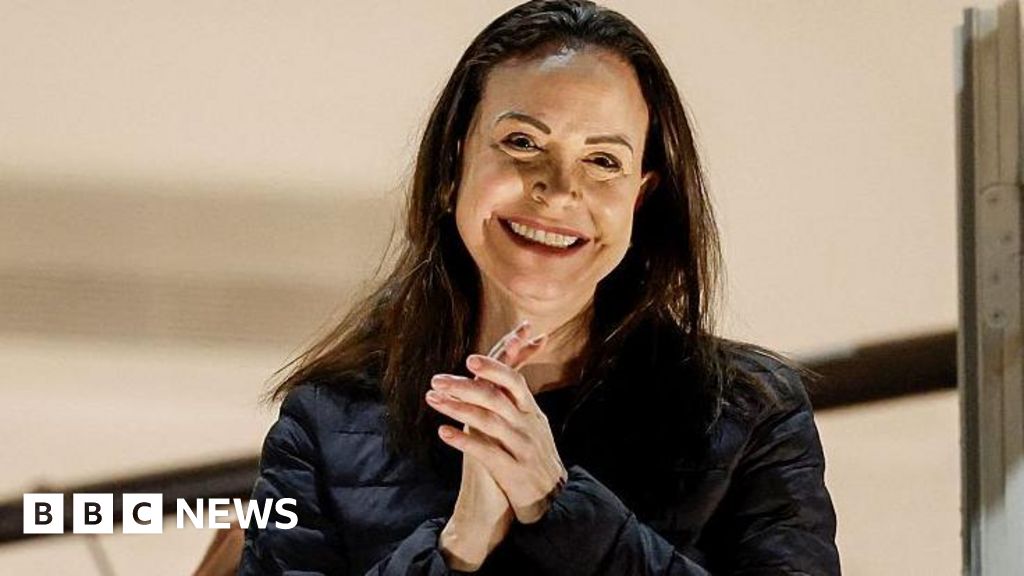
A key diplomatic meeting is confirmed: Venezuelan opposition leader María Corina Machado will meet President Donald Trump on Thursday. This White House announcement follows the recent apprehension of Venezuelan President Nicolás Maduro by US forces, highlighting fluid US-Venezuela relations.
For News Readers and Policy Watchers, this meeting offers insight into Washington’s evolving leadership stance. The US had previously supported Delcy Rodríguez, Maduro’s former vice-president, over Machado, whose movement claimed victory in the 2024 elections.
Machado plans to thank Trump for the action against Maduro, offering her Nobel Peace Prize. Trump acknowledged the “great honour,” though the Nobel Committee clarified the prize’s non-transferability.
Analysts will closely watch this dialogue for implications regarding US foreign policy in Latin America and Venezuela’s complex political future.
Detailed Analysis
The upcoming meeting between Donald Trump and María Corina Machado unfolds against a backdrop of escalating US involvement in Venezuelan politics. Historically, external interventions in Latin American internal affairs have often redefined regional power dynamics. The recent apprehension of Venezuelan President Nicolás Maduro by US forces, hailed by Machado as a crucial step towards “restoring prosperity and rule of law and democracy,” directly precedes this high-level White House dialogue. This action, coupled with Washington’s subsequent endorsement of Delcy Rodríguez as Venezuela’s interim president—a move that bypasses Machado’s opposition movement—adds layers of strategic complexity to the US’s long-term vision for the nation. Trump’s earlier public reservations about Machado’s internal support further contextualize the nuanced nature of the discussions.
The core of this political development rests on the divergent positions of key stakeholders. María Corina Machado, a Nobel Peace Prize recipient whose movement claimed victory in the 2024 contested elections, views herself as Venezuela’s legitimate leader and endorses US military action. Her intent to thank Trump and offer her Nobel Prize highlights her pursuit of direct US endorsement. Conversely, the US administration, via President Trump and White House Press Secretary Karoline Leavitt, has publicly described Delcy Rodríguez as an “ally” and “very cooperative.” This overt support for Maduro’s former vice-president signals a strategic US calculation, possibly prioritizing immediate stability and cooperation over an immediate Machado-led transition. Trump’s prior skepticism regarding Machado’s internal “support within, or the respect within, the country” further emphasizes this pragmatic stance. Rodríguez, meanwhile, firmly asserts that “The Venezuelan government rules our country, and no-one else does,” challenging any perception of external control.
The US’s Venezuelan strategy reveals a comparative choice between two transition paths. Backing Delcy Rodríguez signals a pragmatic cooperation, engaging an individual formerly tied to the Maduro regime but now labeled an “ally.” This contrasts with Machado’s push for a complete break and democratic transition under her leadership. The US non-endorsement of Machado, despite her opposition standing, suggests a preference for a controlled transition, prioritizing regional stability. Trump’s reservations about Machado’s internal support reinforce this. The ideological gap between Machado’s demand for absolute control (“absolutely be in charge”) and Rodríguez’s assertion of national sovereignty (“no-one else does”) highlights the profound challenges in Venezuela’s political future. [Suggested Matrix Table: Comparison of Key Stakeholder Positions – Leaders (María Corina Machado, Delcy Rodríguez) | US Endorsement Status | Claimed Internal Support | Stance on US Intervention | Vision for Venezuela]
For News Readers, Policy Watchers, and Political Analysts, the Trump-Machado meeting is a critical juncture. It offers insights into the evolving US foreign policy in Latin America, especially regarding post-Maduro Venezuela. Citizens should monitor how this dialogue influences Washington’s backing of Rodríguez versus any reconsideration of Machado’s role. The immediate risk involves potentially exacerbating internal divisions if US signals remain ambiguous. Opportunities could emerge for a more unified international approach to Venezuela’s challenges, though signals suggest a complex path. Key metrics include post-meeting statements, White House pronouncements on interim leadership, and reactions from both camps. The long-term implications depend on whether this engagement fosters genuine stability or deepens existing power struggles.
About the Author