Key Takeaways
A devastating crane collapse in Thailand caused a passenger train derailment, killing 22 and injuring 64. Read the latest on this tragic incident and ongoing investigation.
Overview
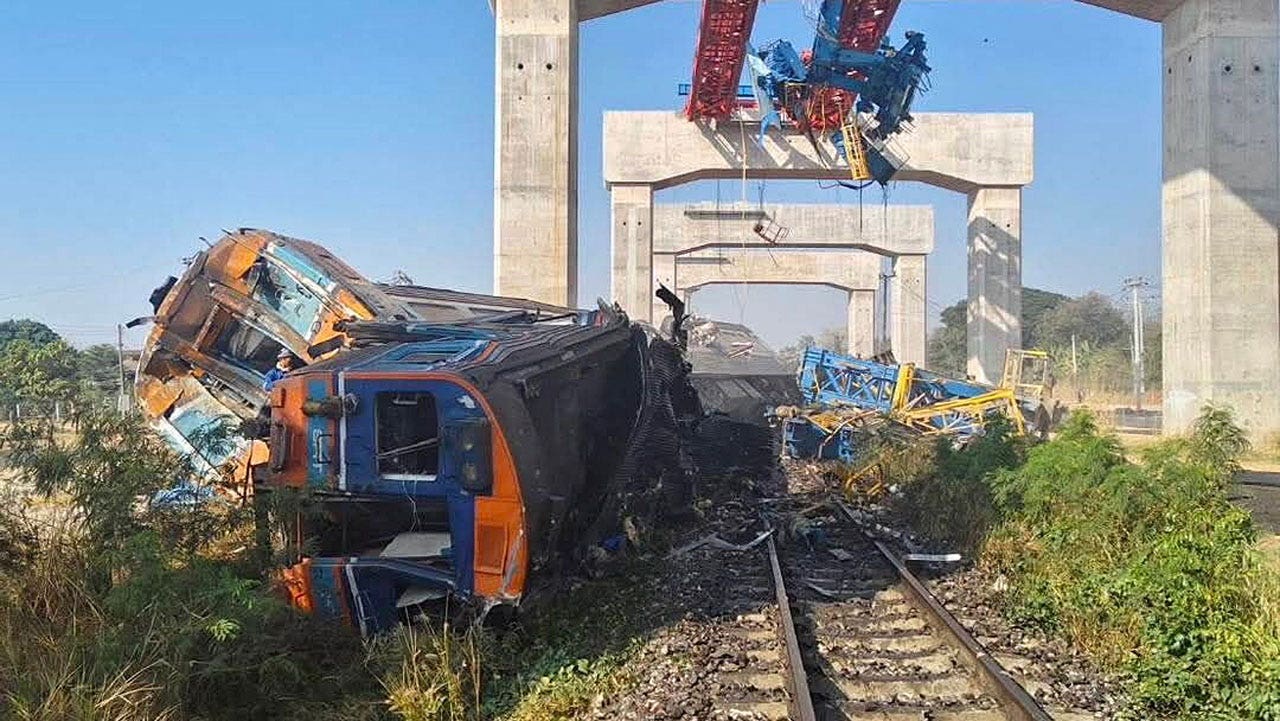
A tragic incident in Thailand has sent shockwaves across the region and beyond, involving a fatal crane collapse onto a moving passenger train. This Thailand train accident, reported on Wednesday, Jan. 14, 2026, resulted in a significant loss of life and numerous injuries, immediately becoming a major international current affairs update.
The devastating event occurred in Nakhon Ratchasima province, as a construction crane toppled onto a train traveling from Bangkok to Ubon Ratchathani. This immediate disruption highlights the critical importance of safety protocols in infrastructure projects near active public transportation.
Officials confirmed at least 22 people were killed and 64 injured in the collision, which caused the train to derail and subsequently catch fire. Nearly 200 individuals were estimated to be on board at the time of the catastrophe.
As search and rescue operations continue for those believed trapped inside, an urgent investigation is now underway to determine the cause and prevent such deadly occurrences from happening again, shaping today’s breaking news cycle.
Detailed Analysis
The sudden and catastrophic crane collapse onto a passenger train in Thailand’s Nakhon Ratchasima province marks a profound tragedy, underscoring the constant vigilance required in construction and transportation safety. The incident, unfolding on January 14, 2026, saw a heavy construction crane strike a moving train, triggering derailment and a subsequent fire. This devastating chain of events left 22 people dead and 64 injured, initiating a large-scale emergency response and a nationwide conversation on infrastructure safety. The sheer force of the impact and the ensuing chaos have made recovery efforts challenging, with authorities confirming that several individuals remain trapped within the wreckage.
Initial reports from the province’s Public Relations Department indicated that the fire, which erupted after the derailment, was eventually brought under control. However, the complexity of the scene, particularly the shifting position of the fallen crane, has hampered rescue teams attempting to extract bodies from the damaged train carriages. Police Col. Thatchapon Chinnawong noted that 19 bodies were recovered, but others remained inaccessible, primarily from two of the three carriages directly impacted by the crane. With nearly 200 passengers on board the train, which was en route from Bangkok to Ubon Ratchathani, the scale of the disaster is considerable. Transport Minister Piphat Ratchakitprakan confirmed an investigation is actively underway, aiming to uncover the precise factors that led to this deadly accident and prevent future recurrences.
This Thailand train accident draws stark attention to the safety protocols surrounding large-scale construction projects, especially those situated in close proximity to active railway lines. While specific comparative data is not available, similar incidents globally highlight the inherent risks when heavy machinery operations intersect with public transit infrastructure. The immediate focus remains on rescue and recovery, yet the medium-term implications will undoubtedly involve a thorough review of construction safety standards, equipment maintenance, and operational oversight across Thailand’s infrastructure development projects. This incident may prompt a re-evaluation of current practices, pushing for stricter regulations and enhanced monitoring to safeguard both workers and the public.
For general readers and news consumers following India News and Current Affairs, this tragedy serves as a poignant reminder of the vulnerabilities within essential public services and infrastructure. The immediate concern is for the victims and their families, as rescue efforts continue and the investigation unfolds. In the longer term, the outcomes of the official inquiry will be critical, potentially leading to policy changes that could impact safety standards not only in Thailand but also influence practices in other developing nations. Monitoring the progress of the investigation and any subsequent reforms in construction and railway safety will be key in understanding the broader implications of this devastating event for future public safety.
About the Author