Key Takeaways
Thailand rail incident highlights infrastructure project risks. Analyze potential impact on construction stocks, project finance, and investment strategies for Indian market.
Overview
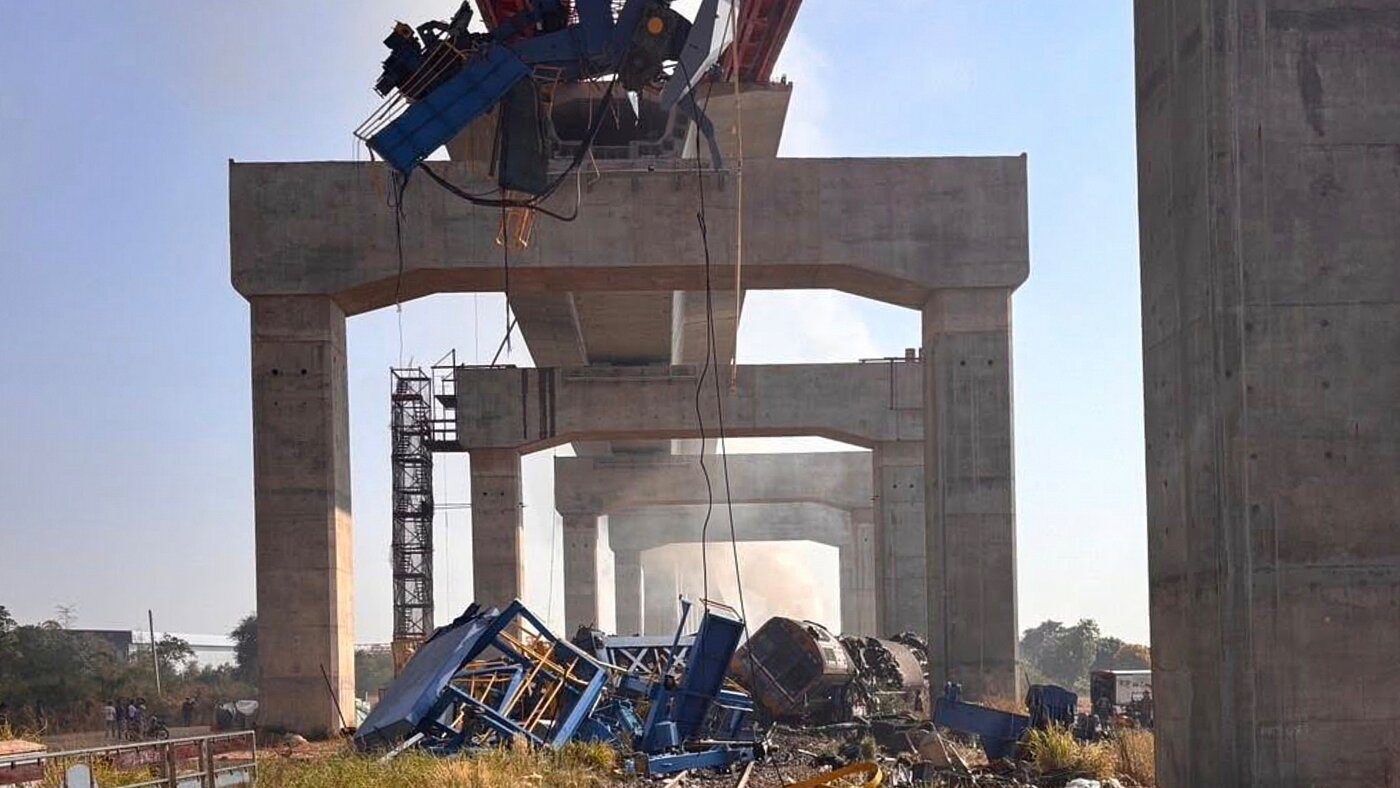
A recent catastrophic incident in Thailand, where a construction crane collapsed onto a moving passenger train, highlights significant inherent risks within large-scale infrastructure projects, especially for the global construction sector and associated investment opportunities. This event, occurring on a critical segment of the Thai-Chinese high-speed rail project, resulted in 22 fatalities and 64 injuries, demanding immediate investor scrutiny of safety protocols and project management in emerging markets.
For Retail Investors, Swing Traders, and Long-term Investors, such incidents underscore the volatility and potential liabilities affecting publicly traded construction, engineering, and rail infrastructure companies. The sheer scale of the 520 billion baht ($16.8 billion) project, linked to China’s Belt and Road Initiative, magnifies the financial and operational fallout.
The accident, which involved construction equipment falling onto a train traveling from Bangkok to Ubon Ratchathani in Nakhon Ratchasima province, prompts a re-evaluation of risk premiums and due diligence practices across the investment landscape.
This analysis delves into the short-term market reactions, medium-term sector impacts, and long-term strategic shifts investors should monitor in the Indian and global infrastructure investment space.
Key Data
| Metric | Tunnel Collapse (Aug 2024) | Crane Incident (Jan 2026) | Project Context |
|---|---|---|---|
| Fatalities | 3 workers | At least 22 people | Increased Severity |
| Injuries | Not disclosed | 64 people | Significant Public Impact |
| Estimated Project Cost | >520 Billion Baht ($16.8B) | >520 Billion Baht ($16.8B) | High-Speed Rail Project |
| Train Occupancy | N/A (construction site) | 195 people | Direct Public Risk |
Detailed Analysis
The recent tragic incident in Nakhon Ratchasima, Thailand, where a massive construction crane implicated in the Thai-Chinese high-speed railway project fell onto a passenger train, has cast a somber light on the inherent complexities and risks associated with ambitious infrastructure development. This railway, an integral part of Beijing’s expansive Belt and Road Initiative (BRI), seeks to forge crucial connectivity between China and various Southeast Asian nations, including Thailand and Laos. With a staggering total investment exceeding 520 billion baht (approximately $16.8 billion), the project represents a significant endeavor in regional economic integration and trade facilitation. However, the Wednesday derailment, which claimed at least 22 lives and injured 64 others, serves as a stark reminder of the multifaceted challenges that accompany such large-scale undertakings, from operational safety to project execution.
Historically, mega-infrastructure projects, particularly those traversing diverse geographies and involving multi-national stakeholders, have been susceptible to unforeseen complications. These can range from environmental hurdles and land acquisition disputes to financial irregularities and, critically, safety failures. The Thai-Chinese high-speed railway, envisioned as a two-stage project linking Bangkok to Nong Khai, bordering Laos, epitomizes the intricate layers of planning, engineering, and risk management required. The incident occurred on an elevated section under construction, highlighting the delicate interplay between active rail operations and ongoing heavy construction work. This confluence of activities inherently elevates operational risks, demanding stringent safety protocols and meticulous coordination.
The accident is not an isolated event in the project’s history; a railway tunnel on the planned route, also in Nakhon Ratchasima, collapsed in August 2024, resulting in three fatalities. That earlier incident, potentially exacerbated by heavy rainfall, further underscores the recurring safety and operational challenges. For investors, this pattern of safety incidents within a flagship infrastructure program signals potential systemic issues beyond a singular mishap. It prompts a deeper examination of the project’s risk profile, the contractors involved, and the broader governance framework overseeing such ventures. The Thai Transport Minister Piphat Ratchakitprakan has ordered an investigation, a customary response that will inevitably scrutinize safety procedures, equipment maintenance, and adherence to engineering standards, all of which have direct financial implications for the entities involved.
From an investor’s perspective, the Thailand rail incident, while geographically distant from Indian stock markets, generates crucial insights into the risk landscape of global infrastructure investment, including projects in India and those undertaken by Indian companies abroad. The immediate financial impact on the specific contractors involved in the Thai project, whose identities were not disclosed in the source material, would typically manifest in several ways: a halt in construction, which leads to project delays and cost overruns; potential legal liabilities from the loss of life and injuries, requiring significant compensation; and increased insurance premiums for future projects. Moreover, such incidents often trigger comprehensive safety reviews, leading to additional compliance costs and a slowdown in project timelines, directly impacting profitability and cash flow. For public sector entities or state-backed construction firms, this could translate into a hit on government budgets or state railway balance sheets, indirectly affecting sovereign risk perception.
The accident’s specific context—a crane falling from an elevated railway segment onto an operational line—exposes a heightened level of engineering and logistical complexity. This scenario is particularly relevant for Indian infrastructure companies involved in similar projects, such as urban metro expansions, dedicated freight corridors, or high-speed rail lines, many of which involve construction activities near active public thoroughfares or existing rail networks. Key metrics to consider for Indian firms with exposure to similar high-risk construction environments would include their safety track record, the robustness of their project management frameworks, and the adequacy of their liability insurance coverage. While specific financial data from the Thai incident is not disclosed in the source, the fundamental principles of impact remain universal.
Investors should also evaluate the potential for a negative sentiment spillover. Even if an Indian company is not directly involved, a major global infrastructure accident can trigger broader market cautiousness towards the construction and capital goods sectors. This could lead to a re-rating of risk profiles for companies perceived to have similar operational exposures, potentially impacting stock valuations. Technical analysis might show increased volatility for sector-specific indices like the Nifty Infrastructure or Nifty Realty, as traders react to heightened perceived risks. Longer-term investors would need to scrutinize company balance sheets for contingent liabilities related to ongoing projects and assess the quality of project execution capabilities, particularly in complex, multi-modal environments. The incident serves as a stress test for risk management frameworks across the entire construction value chain.
Comparing the recent Thailand rail accident to similar high-profile infrastructure failures globally provides valuable lessons for investors assessing risk in the construction and transportation sectors. While the source does not provide specific peer financial data, the conceptual impact on companies in these sectors is often consistent. For instance, companies involved in large-scale projects, whether in India or internationally, are increasingly scrutinized for their Environmental, Social, and Governance (ESG) performance, with safety records forming a critical component of the “S” factor. A major accident can significantly dent a company’s ESG score, potentially deterring institutional investors and impacting access to capital or borrowing costs. The prior tunnel collapse on the same Thai-Chinese rail project, for example, illustrates a recurring pattern of safety concerns, which for any publicly listed company would necessitate a reassessment of its operational risk profile against industry benchmarks.
From a peer comparison standpoint, Indian construction giants or engineering firms bidding on or executing major railway and highway projects face similar operational challenges. These include managing large labor forces, deploying heavy machinery, and navigating complex logistical environments, often in densely populated areas or challenging terrains. Investors typically compare these companies based on their safety incident rates, project completion times, and overall operational efficiency. A negative event in a peer market, even if geographically distant, can set new industry precedents for safety regulations and compliance costs, which could then ripple through the entire sector, including the Indian infrastructure space. Regulatory bodies, both domestic and international, tend to tighten oversight following such high-profile incidents, leading to increased scrutiny on ongoing and future projects.
The broader impact on the Belt and Road Initiative itself, as indicated by the Thai project’s association, is also a critical factor. Investors with exposure to companies heavily reliant on BRI contracts or operating in countries deeply integrated into the initiative must weigh the potential for increased project delays, funding re-evaluations, or heightened political risk. The accident could prompt a re-evaluation of project financing structures, contract terms, and the allocation of risk between host nations and foreign contractors. This dynamic could affect the investment attractiveness of other mega-projects under the BRI umbrella, potentially leading to revised valuations for companies participating in such ventures. Ultimately, the incident underscores the need for robust risk assessment models that factor in not just financial metrics but also operational safety, regulatory adherence, and geopolitical stability, particularly in complex cross-border infrastructure development.
For Retail Investors, Swing Traders, Long-term Investors, and Finance Professionals, the Thailand rail incident provides a compelling case study on the often-underestimated risks in the infrastructure and construction sectors. While specific Indian equities were not directly impacted by this event, the broader implications for project management, safety standards, and liability management are universally applicable. Investors should therefore conduct enhanced due diligence on companies within their portfolios or target lists that have significant exposure to large-scale infrastructure projects, both domestically and internationally. This includes scrutinizing their balance sheets for contingent liabilities, assessing the robustness of their insurance coverage, and reviewing their historical safety records and project execution efficiency. Companies with a demonstrably strong safety culture and comprehensive risk management frameworks are likely to exhibit greater resilience in the face of unforeseen operational challenges.
Swing traders might monitor short-term sentiment shifts in infrastructure-related indices (e.g., Nifty Infrastructure, Nifty Realty, or even Nifty Metal if material suppliers are affected) for potential volatility following any major global safety incident. Long-term investors, conversely, should focus on the strategic implications: will this lead to stricter regulatory environments, higher project costs due to enhanced safety requirements, or a shift in investment preferences towards companies with superior ESG credentials? The tragic events in Nakhon Ratchasima serve as a critical reminder that while ambitious infrastructure development promises significant economic returns, it also carries substantial operational and financial risks that must be meticulously factored into investment decisions. Key metrics to monitor next include any official reports from the investigation into the accident, regulatory responses from relevant authorities, and any public statements from companies operating in similar high-risk construction segments regarding enhanced safety protocols. This will provide critical forward-looking insights into the evolving risk landscape for infrastructure investment.
About the Author