Key Takeaways
Thai PM demands accountability after crane collapse kills 32 on China-backed rail project. Explore policy implications and infrastructure safety.
Overview
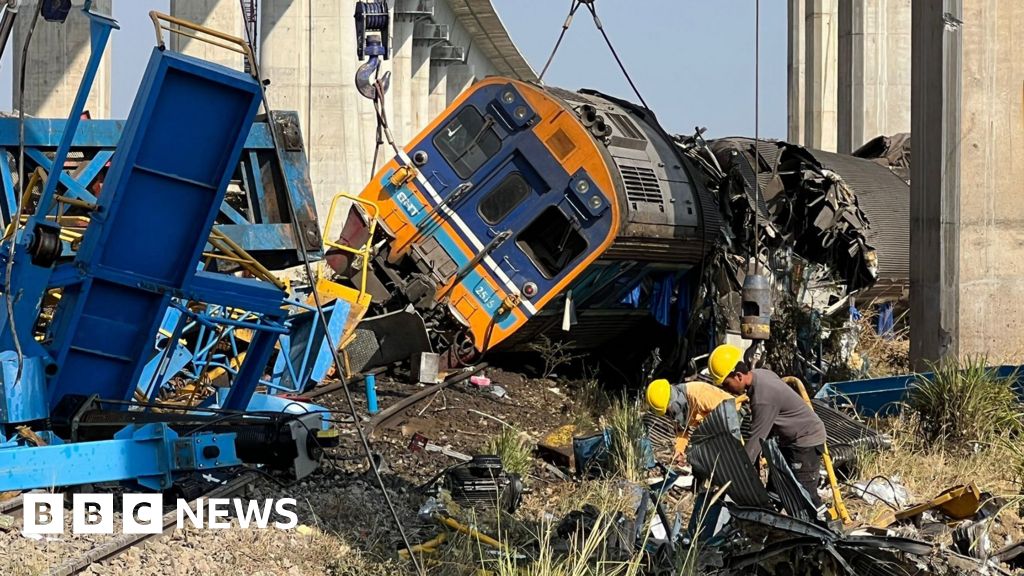
A tragic incident in north-eastern Thailand has led to at least 32 fatalities and 66 injuries after a construction crane collapsed onto a moving train. This severe accident, impacting a China-backed high-speed rail project, immediately triggered a strong government response, highlighting critical policy implications regarding infrastructure safety and corporate accountability in major national developments.
For News Readers, Policy Watchers, Informed Citizens, and Political Analysts, this event underscores the complexities of large-scale public works, particularly in nations striving for rapid infrastructure growth. The incident’s aftermath raises pertinent questions about regulatory oversight, enforcement standards, and the political will to hold responsible parties accountable.
Authorities reported 171 passengers were onboard the train. The State Railway of Thailand has initiated a legal investigation against Italian-Thai Development Public Company Limited, citing initial damages to train carriages exceeding 100 million baht (US$3.1 million).
The focus now shifts to the ongoing investigation and the Thai Prime Minister’s firm stance, setting a precedent for how such critical policy failures might be addressed and what measures will follow to prevent future occurrences, offering lessons for India Politics in similar contexts.
Detailed Analysis
The recent construction crane collapse in Thailand, which resulted in significant loss of life and injury, transcends a mere accident, evolving into a critical juncture for policy examination and governance. This catastrophic event occurred on a segment of the ambitious US$5.4 billion China-backed Bangkok-Nong Khai HSR Development, a project intended to enhance regional connectivity between Thailand and Laos. The incident brings to the forefront longstanding concerns regarding the enforcement of safety standards within large-scale infrastructure initiatives, a challenge not unique to Thailand but prevalent across rapidly developing economies.
Historical context reveals that Thailand has faced a persistent struggle with construction safety, marked by what officials identify as weak enforcement of existing regulations. This pattern of incidents includes a 2023 freight train collision that killed eight, and approximately 150 fatalities over seven years on a single road improvement project. These statistics paint a sobering picture of systemic vulnerabilities in oversight and regulatory compliance, particularly when balancing developmental urgency with worker and public safety. The political response, notably Prime Minister Anutin Charnvirakul’s unequivocal call for accountability and punishment, signals an elevated governmental focus on these deficiencies, moving beyond simple investigations to demands for clear responsibility.
The detailed analysis of the incident underscores specific failures. The crane, operated by Italian-Thai Development Public Company Limited—one of Thailand’s largest contractors—was engaged in lifting a substantial concrete section when it collapsed onto the passing train. The company’s immediate expression of regret and promise of compensation does not mitigate the severe implications for its operational integrity and the government’s trust in its contractors. Notably, this is not the first high-profile incident involving Italian-Thai Development; the company faced professional negligence charges after a Bangkok skyscraper collapsed during an earthquake last March. Such a recurring pattern suggests deeper issues that require rigorous policy review, potentially encompassing revised contract clauses, enhanced independent auditing, and stricter liability frameworks to safeguard public projects.
Comparing this incident with Thailand’s documented history of construction accidents reveals a critical gap between policy formulation and practical enforcement. The State Railway of Thailand’s decision to pursue legal action against the contractor, alongside the Prime Minister’s strong directive, illustrates an urgent governmental attempt to address perceived negligence. This situation offers important insights for News Readers, Policy Watchers, and Political Analysts globally, including those observing India Politics, where large infrastructure projects are also pivotal. The Thai government’s firm stance can be seen as a crucial step towards strengthening a culture of safety and accountability in public and privately-managed projects. The challenge lies in translating this immediate political resolve into sustained, systemic reforms that genuinely improve safety standards and enforcement mechanisms across the construction sector. Upcoming policy discussions, parliamentary reviews of infrastructure safety protocols, and the judiciary’s handling of the legal proceedings against the responsible firm will be key metrics to monitor for all informed citizens and policy analysts.
About the Author