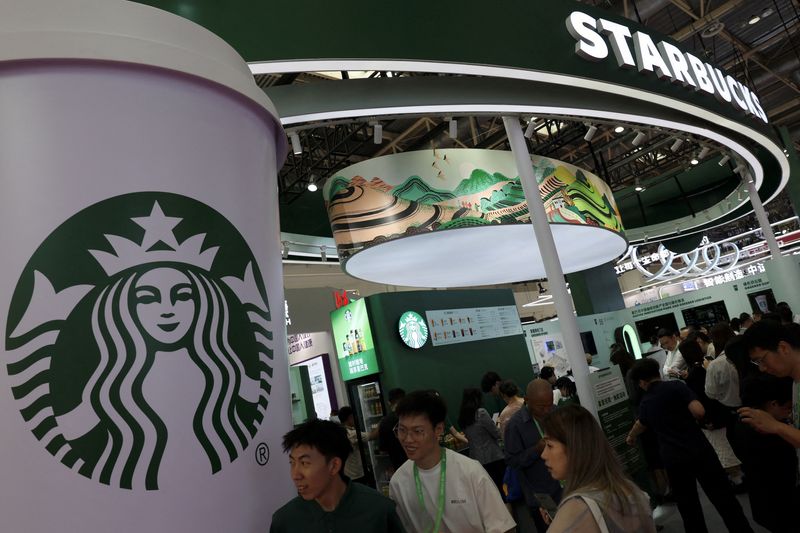
Starbucks is selling control of its China business to Boyu Capital for $4 billion, a strategic move for accelerated growth in one of its most vital territories. This divestment signals a pivot towards localized expertise and market agility, potentially unlocking new revenue streams and improved operational efficiency.
This partnership is pivotal for investors, offering a pragmatic approach to maximize potential within China’s fiercely competitive coffee sector. Analysts anticipate it will drive significant future performance improvements.
The transaction values Starbucks China at approximately $4 billion. Market analysts foresee enhanced store footprint expansion and digital integration, impacting future profit margins.
This analysis delves into the strategic implications and the 2025 growth outlook.
Expert Market Analysis
Starbucks’ strategic decision to sell controlling interest in its China operations to Boyu Capital for an estimated $4 billion marks a pivotal moment, echoing trends of multinational corporations seeking to re-energize growth in competitive markets. Historically, China has been a high-growth market for Starbucks, contributing significantly to its international revenue. This realignment aims to inject fresh capital and local market expertise, drawing parallels to past market entry and exit strategies that prioritize localized success. Industry analysts view this as a pragmatic step to unlock greater potential by partnering with a local powerhouse, rather than solely relying on a top-down expansion model, especially amidst evolving consumer preferences and sophisticated domestic competition within China’s vast coffee sector. This move is critical for navigating dynamic Asian market trends and ensuring long-term market share.
From a fundamental perspective, this transaction is designed to empower Starbucks China with greater agility and local decision-making capabilities, crucial for navigating the dynamic Chinese market. The infusion of capital from Boyu Capital is expected to fuel a more rapid expansion of store footprint and digital integration, key drivers for revenue growth and margin enhancement. While specific metrics such as EBITDA margin or free cash flow for the China division are not immediately public, the strategic intent points towards a focus on increasing store density and optimizing operational costs. This partnership may also lead to a re-evaluation of Starbucks’ overall valuation, with investors keen to understand the long-term impact on profitability and market share, particularly concerning its free cash flow generation and revenue streams. The digital transformation initiatives will be closely watched.
Comparing Starbucks’ China strategy to its peers, companies like McDonald’s and Yum China have also embraced significant local partnerships to drive growth and localization efforts. For instance, Yum China’s (owner of KFC and Pizza Hut) success in the region is partly attributed to its deep understanding of local tastes and extensive franchise network. Starbucks’ move can be seen as an attempt to emulate such localized success. Regulatory shifts and a heightened focus on data security within China also play a role, making a strong local partner like Boyu Capital increasingly valuable for navigating these complexities and maintaining market access, impacting overall market share in the global coffee market.
Expert takeaway suggests that while this deal might lead to short-term adjustments, the long-term outlook for Starbucks in China, under Boyu’s enhanced control, appears promising for accelerated growth. Retail investors may see this as a move to de-risk Starbucks’ direct exposure while still benefiting from the market’s potential through a strategic alliance. However, risks include the execution of the growth strategy and potential dilution of brand control. Key events to watch will be the announcement of specific expansion targets and the financial performance of the new joint venture in upcoming quarters. Institutional investors will be closely monitoring its impact on Starbucks’ global revenue and profit margins, especially regarding its Q4 outlook.
Related Topics:
Starbucks China, Boyu Capital, SBUX Stock Analysis, Global Coffee Market, Emerging Market Growth, China Business Deals, Starbucks 2025 Outlook, Starbucks Control Sale, Asia Market Trends
About the Author