Key Takeaways
India mandates quick commerce firms to drop 10-minute delivery. Analyze the financial impact on Zomato’s BlinkIt, Swiggy, and Zepto, affecting stock valuations and investment strategy for 2026.
Overview
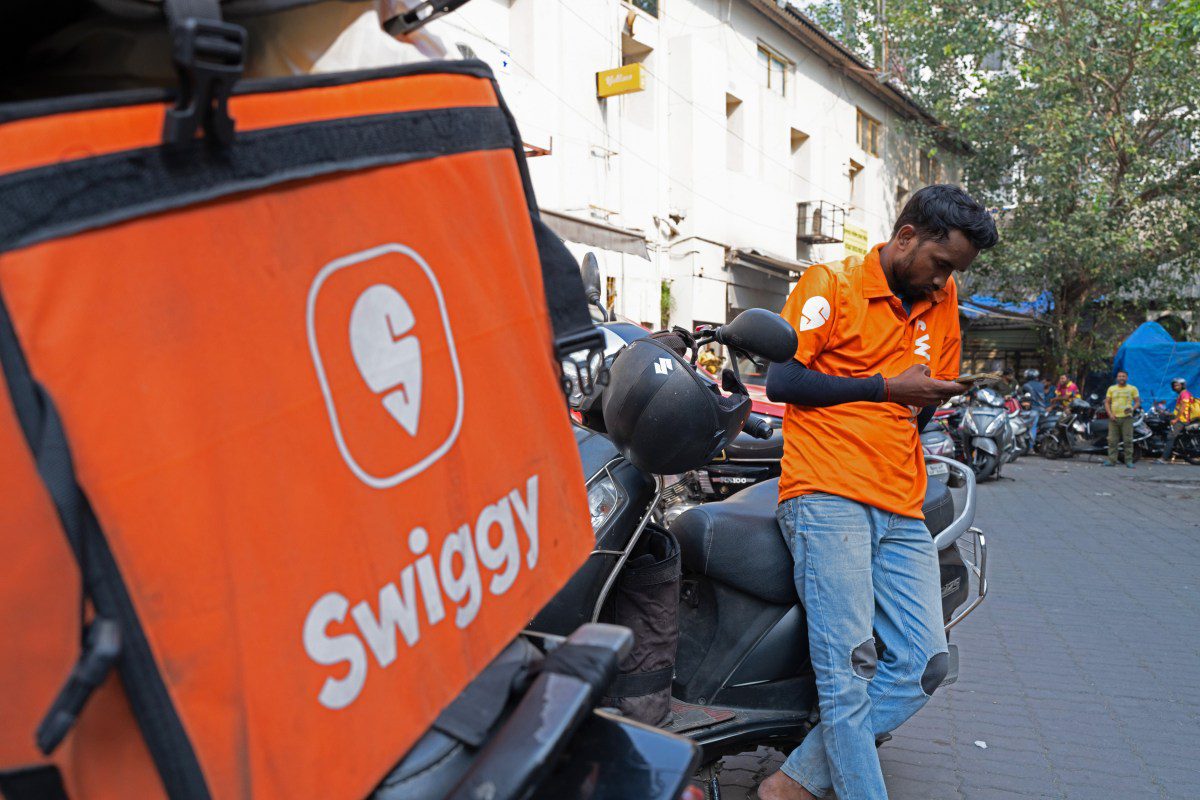
India’s quick commerce sector faces a significant operational pivot as the labor ministry reportedly urges companies like Zomato’s BlinkIt, Swiggy’s Instamart, and Zepto to discontinue their aggressive 10-minute delivery promises. This directive underscores a growing emphasis on gig worker safety and welfare within the rapidly expanding **Indian investment** landscape.
This regulatory intervention holds substantial implications for **Retail Investors**, Swing Traders, Long-term Investors, and Finance Professionals tracking the **Stock Market India**. A shift in core business promises directly affects unit economics, operational costs, and ultimately, the valuation multiples of these growth-focused firms.
Following discussions with Minister Mansukh Mandaviya, BlinkIt has already removed the 10-minute delivery messaging, with rivals expected to follow. This comes little over a month after India granted legal status to gig workers, mandating aggregators contribute 1-2% of annual revenue to a social security fund.
Understanding these new parameters is crucial for assessing the short, medium, and long-term financial stability and growth prospects of quick commerce in India.
Key Data
| Policy Aspect | Pre-Regulation Status | Post-Regulation Shift | Financial Implication (Indicative) |
|---|---|---|---|
| Delivery Promise | Aggressive 10-15 minute marketing | Drop 10-minute messaging (BlinkIt, others expected) | Potential for slower growth, increased logistical costs to maintain speed without risk. |
| Gig Worker Legal Status | Historically undefined | Granted legal status under new labor laws | Increased compliance burden, foundation for additional worker benefits. |
| Social Security Fund Contribution | None (implied) | 1-2% of annual revenue (capped at 5% of worker payments) | Direct increase in operating costs, impacting profitability. |
Detailed Analysis
India’s quick commerce sector has surged into prominence, distinguishing itself as a robust market despite instant delivery models faltering in other global regions. Fueled by substantial investments, often running into hundreds of millions of dollars, companies like Zepto, Zomato’s BlinkIt, and Swiggy’s Instamart meticulously established extensive ‘dark store’ networks. These strategically located discrete warehouses, coupled with an aggressive deployment of delivery personnel, enabled the promise of deliveries within 10 to 15 minutes, catering to the urban consumer’s demand for instant gratification, from groceries to electronics. This rapid growth, however, has drawn scrutiny regarding the sustainability and ethical implications of such high-speed operational demands on gig workers, setting the stage for the recent governmental intervention that now reshapes the sector’s outlook.
The labor ministry’s reported directive to abandon the 10-minute delivery promise, already evident with BlinkIt’s swift compliance, signifies a pivotal shift in the operational paradigm. This change directly impacts logistics planning, potentially increasing delivery times or necessitating a more distributed and thus costlier delivery fleet to maintain competitive speed. Investors must note that this directly affects the unit economics of quick commerce, a model already characterized by wafer-thin margins due to high operational costs associated with maintaining dark stores, inventory, and a large delivery workforce. Furthermore, the new labor laws defining gig workers necessitate aggregators contribute 1% to 2% of their annual revenue—capped at 5% of payments made to such workers—to a government-managed social security fund. This introduces a recurring, direct operating expense, immediately eroding profitability and delaying the path to positive adjusted EBITDA for these entities.
In a comparative analysis, quick commerce, with its compressed delivery windows and higher logistical intensity, inherently carries greater operational complexities than traditional e-commerce or standard food delivery services. The additional cost burden from labor regulations disproportionately impacts this segment, where every percentage point of margin is critical. For publicly listed entities like Zomato, a parent company with quick-commerce exposure, this regulatory shift could trigger a re-evaluation of its quick-commerce segment’s contribution to consolidated financials and overall valuation. Companies with superior capital efficiency, optimized dark store networks, and robust technology platforms to manage slower delivery times without significant customer churn are likely to fare better. The regulatory environment now forces a maturation of the sector, moving it from a ‘growth at all costs’ mentality to one demanding sustainable and compliant expansion, a trend observed in other developing markets.
For **Swing Traders**, monitoring immediate stock reactions of listed players (e.g., Zomato on the **NSE** and **BSE**) to official announcements or revised corporate guidance remains critical, with potential for short-term price volatility. **Long-term Investors** and **Finance Professionals** should fundamentally reassess valuation models, incorporating increased labor costs and potentially moderated growth projections. The viability of **quick commerce India** now hinges on companies’ ability to innovate beyond just speed, perhaps focusing on higher average order values or premium subscription models to absorb additional expenses. Key metrics to watch include adjusted EBITDA margins, customer retention rates, and the evolution of the competitive landscape. This development also underscores the growing importance of ESG factors in the **Indian investment** ecosystem, signaling a future where worker welfare significantly influences market dynamics and corporate valuations.
About the Author