Key Takeaways
Powell probe sparks US Dollar drop, Gold surge. Analyze Fed independence concerns, market risks, and investor implications for Stock Market India in 2026.
Overview
An unprecedented criminal investigation into Federal Reserve Chair Jerome Powell by the US Department of Justice has sent immediate shockwaves through global financial markets, significantly weakening the US Dollar. This critical development profoundly impacts the Stock Market India and broader investor sentiment.
For Retail Investors, Swing Traders, and Finance Professionals, this raises acute questions regarding Federal Reserve independence, a cornerstone of financial stability, injecting political risk into monetary policy considerations.
Immediately following the news, the Dollar Index dropped by 0.2%, while safe-haven Gold surged over 1.5% to a new high of $4,600 an ounce. Sterling also gained 0.5 cents against the dollar.
This situation demands immediate Financial Analysis for optimal Trading and Investment decisions, anticipating significant shifts across the NSE and BSE ahead of 2026.
Key Data
| Metric | Previous | Current | Change |
|---|---|---|---|
| US Dollar Index | Prior Day Close | Down | -0.2% |
| Gold Price (per ounce) | Below $4,600 | New High | +1.5% (approx) |
| GBP/USD | Below $1.3440 | $1.3440 | +0.5 cents |
Detailed Analysis
The initiation of a criminal investigation into Federal Reserve Chair Jerome Powell by the US Department of Justice represents an extraordinary escalation of political pressure on America’s central bank, unmatched in modern history. This development, ostensibly focused on a $2.5 billion renovation of the Fed’s headquarters and Powell’s related Senate testimony, transcends a mere administrative inquiry. It directly challenges the fundamental principle of the Federal Reserve’s institutional independence, a cornerstone safeguarding monetary policy from short-term political interference. The historical context reveals the Fed frequently navigating political currents, yet criminal probes into its leadership for purported administrative issues while actively steering economic policy represent a qualitative shift. Such actions risk undermining the credibility and stability the Fed has built, especially critical as Powell’s term expiry in May 2026 approaches.
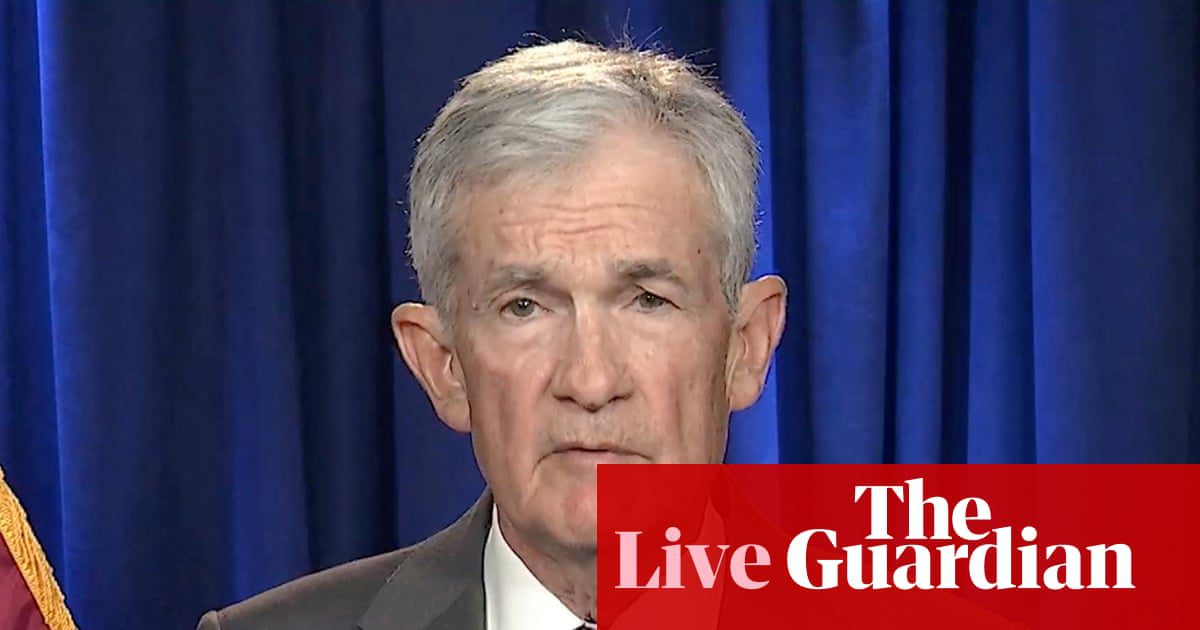
Powell himself, in a video address, firmly articulated that the criminal charges are a direct “consequence of the Federal Reserve setting interest rates based on our best assessment of what will serve the public, rather than following the preferences of the president.” This powerful statement underlines the gravity of the situation, where legal mechanisms appear weaponized for political intimidation. Michael Brown, a senior research strategist at Pepperstone, echoed this sentiment, categorizing it as a “Trumpian distraction and bullying tactic” aimed squarely at undermining the Fed’s policy independence. The immediate market reaction reflected this heightened uncertainty. The US dollar, a global reserve currency, noticeably weakened against a basket of currencies, with the Dollar Index dropping 0.2%. Conversely, gold, traditionally the ultimate safe-haven asset, surged over 1.5% to a record high of approximately $4,600 an ounce. This flight of capital into gold provides crucial insights for Swing Traders monitoring short-term technical levels and market sentiment for Trading opportunities. Furthermore, Sterling’s gain against the dollar points to a broader flight from the greenback, indicating a lack of confidence spreading across G10 currencies.
The implications of such a probe extend far beyond immediate market fluctuations, demanding a comparative analysis against periods of heightened political tension impacting central banks. While no direct historical parallel exists for a criminal probe of this nature against a sitting Fed Chair, episodes of strong executive pressure, such as those seen in the 1970s, illustrate how political interference can destabilize market expectations and complicate inflation fighting efforts. This situation contrasts sharply with the widely accepted norms of central bank independence practiced by peer institutions like the European Central Bank or the Bank of England, where policy decisions generally remain insulated from direct political reprisal. The erosion of this independence in the US could make its monetary policy an outlier, potentially weakening the appetite for the US dollar and US bonds, as noted by Ipek Ozkardeskaya of Swissquote. This shift could trigger significant re-evaluation of portfolio allocations among Finance Professionals globally. For Stock Market India participants, especially those involved in the NSE and BSE, such global capital flow realignments are critical. A weaker dollar could reduce foreign investment appeal in US dollar-denominated assets, potentially redirecting capital towards emerging markets or other stable economies. This dynamic could create unforeseen volatility, especially for interest-rate-sensitive sectors in India, which are indirectly affected by global interest rate trajectories and currency valuations. Monitoring the sentiment around US bond yields will be paramount, as sustained investor skepticism could drive yields higher, impacting global borrowing costs. [Suggested Matrix Table: Global Central Bank Independence Index Comparison (Hypothetical) and their respective currency stability.]
For Retail Investors and Long-term Investors, the potential compromise of Fed independence introduces a layer of systemic risk previously considered minimal. Future interest rate decisions might become unpredictable, dictated by political cycles rather than economic fundamentals, demanding a more defensive Investment strategy. Investors should meticulously analyze their exposure to US dollar-denominated assets and consider diversifying into historically resilient safe-haven assets like gold, which has demonstrably performed well in this climate. For Swing Traders, this environment presents amplified volatility and technical levels that require precise entry and exit strategies; monitoring the Dollar Index (DXY) and key commodity prices like gold will be crucial indicators. Finance Professionals must undertake rigorous stress testing of portfolios, factoring in increased geopolitical risk and potential currency devaluations. Strategic asset allocation should account for weakened appetite for US bonds and the US dollar, potentially favoring alternative sovereign debt or commodities. Key metrics to monitor include public statements from US political figures, any further developments from the Department of Justice, and crucially, future Federal Reserve communications regarding monetary policy. The trajectory of this investigation and its lasting impact on Financial Analysis and investment strategies will undoubtedly shape global capital markets well beyond Powell’s term, potentially necessitating fundamental shifts in long-term portfolio construction and risk management. The resilience of the Fed’s institutional framework against political headwinds remains the ultimate determinant of future market stability.
About the Author