Key Takeaways
Largest Roman villa in Wales discovered near Port Talbot. Explore the potential economic surge for local tourism and regional investment opportunities.
Overview
The recent discovery of the largest Roman villa ever found in Wales, located within Margam Country Park near Port Talbot, presents a unique, long-term opportunity for regional economic growth. While not directly tied to immediate market indices like NSE or BSE, this archaeological find carries significant implications for local tourism, infrastructure development, and indirect investment avenues. Finance professionals and long-term investors tracking regional development should note the potential.
This “amazing discovery” could transform Port Talbot’s economic landscape, leveraging cultural heritage to attract substantial visitor traffic. Retail investors eyeing local business growth, particularly in hospitality and support services, may find this development noteworthy for future planning. The pristine preservation of the 572 sq m Roman villa, found less than a metre below ground in a historical deer park, underscores its potential as a major attraction.
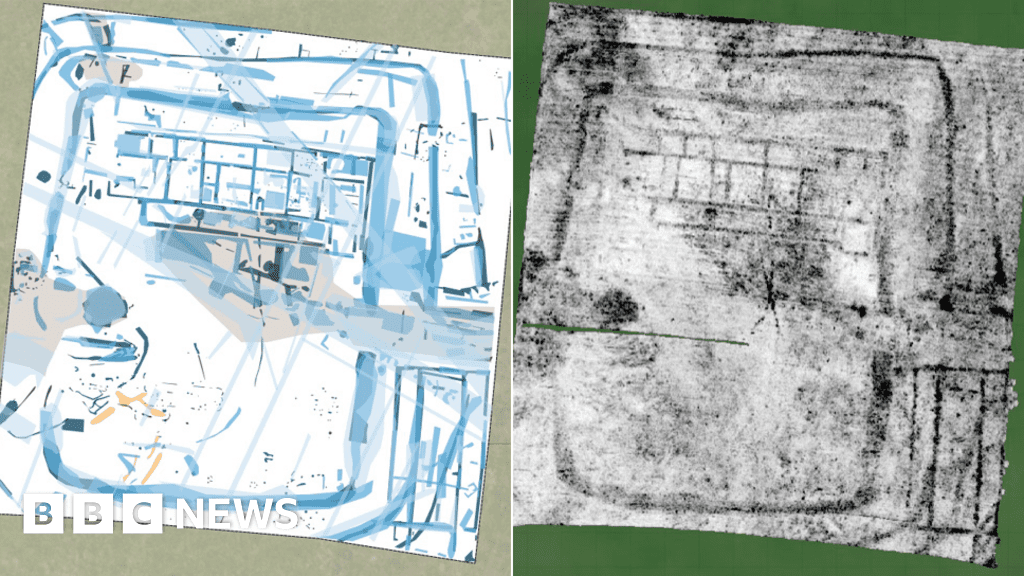
Key details include the villa’s 572 sq m footprint, a 43m (141ft) length, and an associated 354 sq m aisled building. These dimensions suggest a significant site. The lack of prior ploughing contributes to exceptional preservation, hinting at rich archaeological data.
This analysis will delve into the potential economic multiplier effects and investment implications, offering a forward-looking perspective for strategic investors and local stakeholders.
Detailed Analysis
The unearthing of the largest Roman villa in Wales marks a pivotal moment for regional economic prospects, particularly in Port Talbot. This discovery challenges prior historical understandings of Romano-British Wales, suggesting a more sophisticated and centrally important region than previously believed. From an investor’s standpoint, such a revelation transcends mere historical curiosity; it establishes a significant new cultural asset. The villa’s location within Margam Country Park, a site already rich with historical features like an Iron Age hillfort and a 12th-century abbey, amplifies its potential. This addition creates a more compelling destination cluster, enhancing the park’s overall value proposition. The exceptional preservation, attributed to the land’s history as a deer park, implies a higher likelihood of successful long-term development and visitor engagement compared to less intact sites, underpinning its intrinsic value as a heritage investment.
Detailed geophysical surveys, employing ground-penetrating radar, revealed a substantial 572 sq m Roman villa, complete with a defensive enclosure and a 354 sq m aisled building, possibly a barn or meeting hall. Dr. Alex Langlands described it as a “really impressive and prestigious” structure, indicative of a major local dignitary. This suggests a former hub of agricultural and administrative activity, capable of supporting a significant population. While specific financial metrics or investment returns are not directly disclosed in the initial findings, the sheer scale and preservation level imply a substantial opportunity for cultural tourism revenue. The comparison to “Port Talbot’s Pompeii” highlights the project’s potential for attracting global attention and visitor influx. Such an influx would generate indirect economic benefits across multiple sectors, including hospitality, retail, and local services, directly impacting the local economy.
Comparing this find to other heritage sites, the Margam villa could become a significant economic driver, much like established archaeological parks in other regions. While direct peer comparison on financial metrics is premature without further excavation and visitor projections, the existing Margam Country Park already draws visitors, providing a ready-made infrastructure base. The integration of this villa could dramatically increase visitor numbers, necessitating additional infrastructure spending and creating job opportunities. For instance, increased visitation typically correlates with higher demand for accommodation, dining, and ancillary services, which could benefit local businesses and even spur new ventures. This regional development initiative, supported by Swansea University, Neath Port Talbot council, and Margam Abbey Church, signals a concerted effort to capitalize on the discovery for broader economic uplift and regional branding.
For retail investors and finance professionals, this archaeological discovery opens up a unique lens on long-term regional investment. Opportunities may arise in local real estate, particularly in the tourism and hospitality sectors, anticipating a sustained increase in visitor numbers. Swing traders might monitor local business sentiment and infrastructure spending announcements related to the park for potential short-term gains in related public sector or construction contracts. Long-term investors could evaluate the socio-economic multiplier effect, considering how a strengthened tourism industry contributes to stable regional employment, enhanced local tax revenues, and a positive brand image for Port Talbot and Wales. Key metrics to monitor moving forward include public and private funding allocations for the project, projected visitor numbers post-excavation, and the growth of local tourism-dependent businesses. This discovery underscores how cultural assets, when strategically developed, can become robust engines for economic rejuvenation and sustainable regional growth, offering a distinct investment narrative beyond traditional market indicators.
About the Author