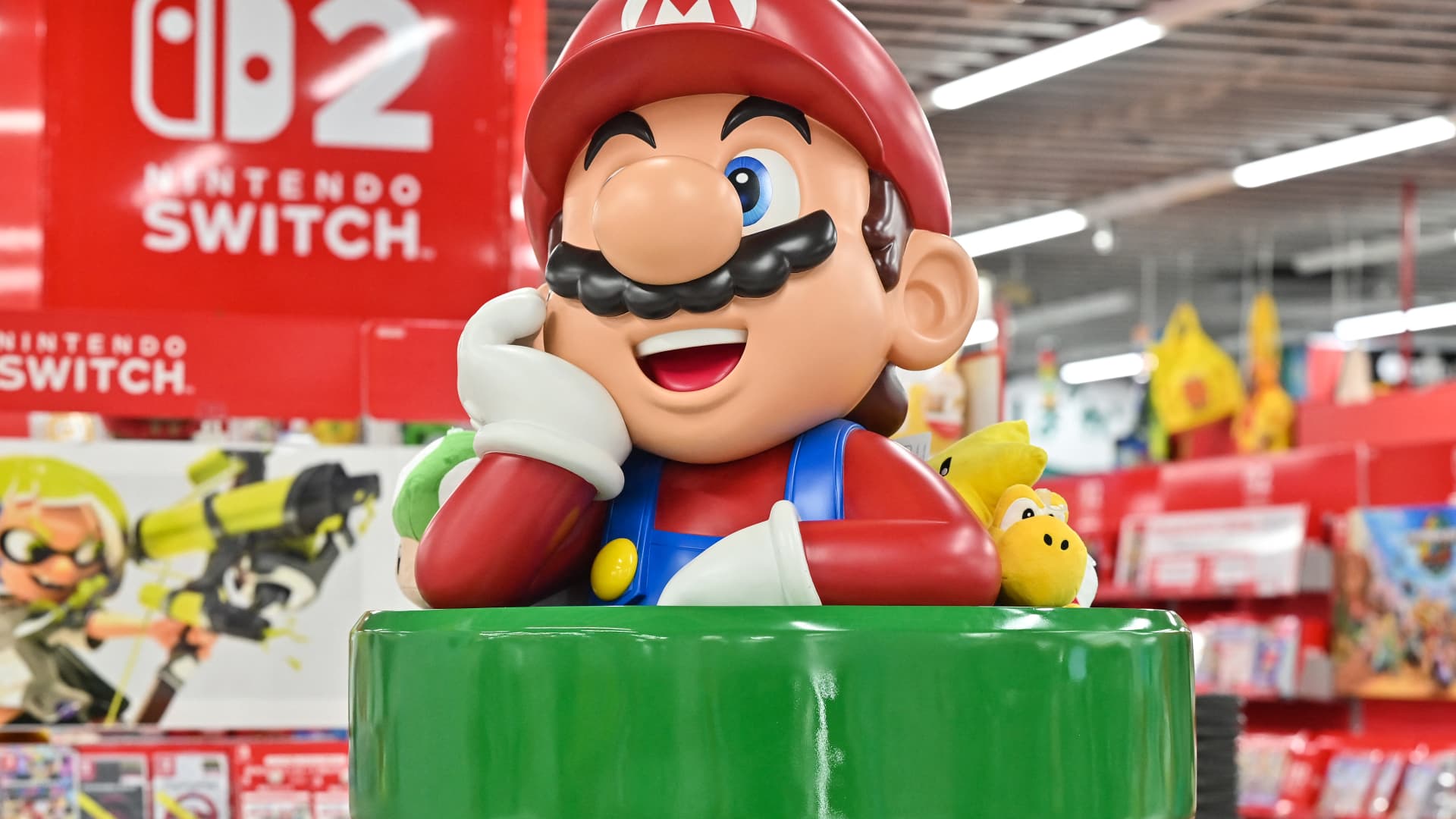
Nintendo has significantly boosted its Switch 2 sales forecast to 19 million units for the fiscal year ending March 2026, signaling robust demand for its latest console. This optimistic outlook highlights the growing momentum and positive market reception for the Japanese gaming giant’s new flagship device.
This upward revision directly impacts investor sentiment, suggesting strong revenue growth and a positive trajectory for Nintendo. Analysts are keenly observing profit margins following these impressive figures.
As of market close October 25, 2025, Nintendo’s stock has risen nearly 40% year-to-date. Q2 FY26 revenue reached ¥527.2 billion, surpassing estimates.
This analysis delves into the drivers behind this surge and its implications for investors.
| Metric | Previous | Current | Change |
|---|---|---|---|
| Switch 2 Sales Forecast (FY26) | 15 million units | 19 million units | +26.7% |
| Q2 Revenue | ~461.76 billion JPY | 527.2 billion JPY | +14.2% |
| Q2 Net Profit | ~63.6 billion JPY | 102.9 billion JPY | +61.8% |
| Switch 2 Units Sold (Launch to Sept 30) | N/A | 10.36 million units | New |
Expert Market Analysis
Nintendo’s decision to significantly elevate its Switch 2 sales forecast to 19 million units for the fiscal year ending March 2026 underscores a period of intense optimism surrounding its latest console. This upward revision, from an initial projection of 15 million units, is a strong indicator of sustained consumer interest and successful market penetration following the Switch 2’s June launch. The gaming industry has historically shown cyclical patterns, with console lifecycles often peaking around their mid-point, but Nintendo’s ability to maintain strong demand for its hybrid console, even years after its initial release, suggests a potent combination of brand loyalty and innovative product strategy. The success of the original Switch, which became its second-best selling console, provides a solid foundation and a proven playbook for replicating that achievement with its successor. Historical data from previous console launches suggests that such a significant forecast increase often correlates with sustained market dominance and positive investor sentiment towards gaming equities.
Delving into the financial performance, Nintendo’s second-quarter earnings for the period ending September 30, 2025, present a compelling picture of robust growth. Revenue surged to 527.2 billion Japanese yen, a substantial increase of over 90% year-on-year and surpassing analyst expectations of 461.76 billion yen. Net profit also saw an extraordinary rise of over 270%, reaching 102.9 billion yen against an expected 63.6 billion yen. These figures are indicative of strong sales volumes and healthy profit margins, likely boosted by higher attach rates for software and accessories. The company’s stock performance, up nearly 40% this year, reflects this financial strength and investor confidence. Key metrics like EBITDA margin and free cash flow are expected to show significant improvement based on these revenue and profit trends. Technical analysis of the stock shows a strong upward trend with increasing trading volumes, suggesting sustained momentum.
Comparing Nintendo’s performance within the broader gaming industry, particularly against competitors like Sony (PlayStation) and Microsoft (Xbox), reveals Nintendo’s unique market positioning. While Sony and Microsoft often focus on high-fidelity gaming and powerful hardware, Nintendo has consistently leveraged its strong intellectual property, such as Super Mario and Pokémon, and its innovative hardware design (the hybrid nature of the Switch). This strategy allows Nintendo to capture a broader audience, including families and casual gamers, who might not be drawn to traditional home consoles. The Switch 2’s success, driven by popular titles like “Mario Kart World” and “Donkey Kong Bonanza,” aligns with this proven strategy. Industry trends indicate a continued demand for accessible and engaging gaming experiences, a niche where Nintendo excels, often outperforming competitors in market share for specific demographics according to recent market reports.
From an investor’s perspective, Nintendo’s raised forecast and strong quarterly results present a bullish outlook, but potential risks remain. The critical holiday season will be a significant test for sustained demand and inventory management. While the launch of “Pokémon Legends: Z-A” and the anticipation for “Kirby Air Riders” and “Metroid Prime 4: Beyond” are positive catalysts, the gaming market is highly competitive and susceptible to evolving consumer preferences and technological advancements. Investors should consider the console’s price point, the breadth of its exclusive game library, and its ability to attract new users beyond the existing Switch install base. Key events to watch will include future software release schedules and any commentary on the competitive landscape during upcoming earnings calls. Entering positions now hinges on belief in Nintendo’s long-term ability to innovate and leverage its IP, with a cautious eye on potential supply chain disruptions and geopolitical factors impacting global markets.
Related Topics:
Nintendo Switch 2 sales, Nintendo forecast 2025, Gaming stocks Japan, Console sales update, Q2 FY26 earnings, Nintendo stock analysis, Switch 2 units sold, Market update gaming, NINTENDO CO LTD, Nintendo financial results
About the Author