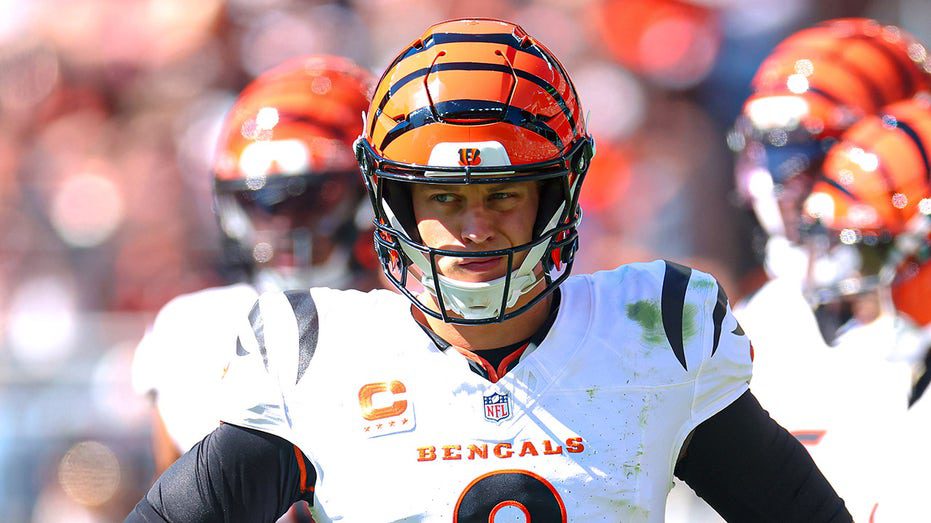
Burrow Blasts NFL Catch Rules: ‘It’s Not the Officials’ Fault’
🔑 KEY TAKEAWAYS
- ✓ Joe Burrow’s Bold Stance: The Bengals’ star quarterback defends NFL officials, asserting fans misunderstand the complex ‘catch’ rule.
- ✓ Controversial Play Focus: Debate centers on Brandin Cooks’ non-catch, plus similar incidents involving Xavier Hutchinson and Davante Adams.
- ✓ Rule Analyst Backs Calls: NFL rules analyst Walt Anderson confirmed the Cooks play was correctly ruled an interception due to lack of full control.
- ✓ Coaching Frustration: Former Bills coach Sean McDermott expressed outrage over the review process, questioning the lack of a thorough official look.
- ✓ Impact on Sports Fans: This ongoing debate highlights the intricate nature of sports rules and the constant tension between fan perception and official interpretation.
Cincinnati Bengals’ talismanic quarterback, Joe Burrow, has ignited a fierce debate across the American football landscape, weighing in sharply on recent controversial NFL playoffs moments. Despite his own team not featuring in the postseason, Burrow’s candid remarks on social media have strongly defended game officials, placing the onus on fans for misunderstanding the intricate ‘catch’ rulebook. His comments come amidst widespread fan frustration over crucial game-altering decisions, particularly the Brandin Cooks non-catch ruling that deeply impacted the Buffalo Bills’ playoff hopes.
This passionate intervention from a prominent NFL player underscores a perennial issue in professional sports: the fine line between split-second calls and the letter of the law. For sports enthusiasts and analysts in India, where cricket often sees its own share of DRS controversies, this discussion resonates deeply, highlighting universal challenges in officiating high-stakes competitions. Burrow’s unequivocal support for the officials, stating, “The two plays yesterday were not difficult calls, and they got them both right,” adds significant weight to the ongoing discourse.
The controversy stems primarily from Buffalo Bills wide receiver Brandin Cooks’ play against the Denver Broncos, ruled an interception instead of a catch, which could have altered the game’s outcome. Similar debatable moments arose in Sunday’s Divisional Round games involving Houston Texans’ Xavier Hutchinson and Los Angeles Rams’ Davante Adams. These incidents collectively fuel the narrative that NFL rules, especially regarding possession, remain a pain point for fans and a challenge for officials.
Dive deeper into Burrow’s perspective, the specific plays under scrutiny, and what this means for the future of NFL officiating and fan engagement. This analysis will dissect the complexities of the ‘catch’ rule, offering insights for every sports aficionado.
What is Joe Burrow’s stance on controversial NFL catch rules?
Joe Burrow firmly believes that NFL officials correctly applied the ‘catch’ rule in recent controversial playoff moments, asserting that widespread public misunderstanding of the rulebook causes much of the debate. He tweeted that the amount of people who don’t understand what a catch is “flabbergasts” him, placing the blame on fan interpretation, not officiating errors.
Burrow’s strong defense of the officials suggests a deep understanding of the intricacies of the NFL’s Rule 8, Section 1, Article 3, which defines a catch. His public comments aim to re-educate fans on the precise requirements for establishing possession and completing a football move. This perspective, coming from an active player, offers an ‘insider’ view that often contrasts with emotional fan reactions driven by game outcomes.
His support for the officials is notable, especially as many players and coaches often express frustration with calls. Burrow’s comments reinforce the idea that complex rules, though sometimes unpopular, are consistently applied by experienced referees, even in high-pressure playoff scenarios. This adds a layer of authority to the discussion, moving beyond simple fan grievances.
Which controversial plays sparked Burrow’s comments?
Joe Burrow’s comments were primarily sparked by the Brandin Cooks non-catch in the Buffalo Bills’ Divisional Round loss, where a potential game-winning reception was ruled an interception. He also referenced two other plays from Sunday’s games, likely involving Houston Texans’ Xavier Hutchinson and Los Angeles Rams’ Davante Adams, where similar catch-versus-fumble debates ensued.
The Brandin Cooks play remains a significant point of contention for Bills fans, as a ruling of a catch could have led to a field goal attempt and a potential win. The ball was pulled away by Broncos’ Ja’Quan McMillan, leading to the interception call. This specific incident became a flashpoint for the broader discussion on what constitutes control and a completed catch in the NFL.
While Burrow didn’t specify the Sunday plays, both Hutchinson and Adams had situations where they appeared to make a catch, but the ball came loose. In these cases, officials, after review, ruled that the offense maintained control, allowing the plays to stand. The differing outcomes for seemingly similar situations further fuel the debate among fans about consistency in rule application and interpretation, despite officials adhering to the rulebook.
How do NFL officials and analysts interpret the ‘catch’ rule?
NFL rules analyst Walt Anderson confirmed the Brandin Cooks play was correctly ruled an interception, citing that Cooks never had complete control of the ball before Ja’Quan McMillan pulled it away. Officials prioritize confirming the ruling on the field through multiple angles, aiming for efficiency and accuracy without unnecessary stoppages, unless clear evidence contradicts the initial call.
The NFL’s definition of a catch requires a player to secure control of the ball, touch the ground in bounds with both feet or another body part, and maintain control long enough to perform a football act, such as advancing the ball or protecting it. If the ball moves or comes loose during this process, especially due to a defensive player’s action, it can be ruled an incomplete pass or a fumble, even if it initially appeared to be a catch.
Anderson’s analysis emphasizes that replay reviews are not intended to re-officiate every play from scratch but to determine if the initial ruling was demonstrably wrong. This process, while aiming for correctness, often leaves fans feeling unsatisfied, particularly when the visual evidence appears ambiguous. The speed of the game and the nuanced language of the rulebook create a constant challenge for both players and officials, highlighting the complexity of football officiating.
What are the implications of these controversial calls for NFL fans and teams?
These controversial ‘catch’ rulings significantly heighten fan frustration and can profoundly impact team morale and playoff trajectories, as crucial game outcomes hinge on nuanced interpretations. For coaches like former Bills head coach Sean McDermott, the lack of perceived thoroughness in review processes creates immense dissatisfaction and calls for greater transparency and consistency.
The immediate implication for teams is the direct consequence on their season, as seen with the Buffalo Bills’ playoff exit. Such calls can shift momentum, affect game strategy, and ultimately determine which teams advance. For sports fans, these controversies often breed distrust in officiating, leading to intense social media debates and a sense of unfairness, even when officials are technically correct according to the rulebook.
The broader impact extends to coaching decisions and post-game analyses. Sean McDermott’s irate reaction, questioning why officials didn’t ‘slow it down’ for a more thorough look, highlights the pressure on coaches to advocate for their teams. This ongoing tension between rule application, official review protocols, and the emotional investment of fans and teams remains a critical aspect of professional football, continually shaping the narrative around the sport.
❓ Frequently Asked Questions
What defines a “catch” in the NFL rulebook?
An NFL catch requires a player to secure control of the ball, touch the ground in bounds with two feet or another body part, and maintain control long enough to perform a football act. The ball cannot move or come loose during this process, especially if a defender initiates contact, to be ruled a completed catch.
Why are NFL catch rules so frequently debated by fans?
NFL catch rules are frequently debated because their precise interpretation often clashes with a fan’s immediate visual perception of a play, especially in high-stakes situations. The nuanced requirements for ‘control’ and ‘a football move’ are complex, leading to emotional disagreements when calls alter game outcomes, creating a gap between technical rule application and fan expectation.
How do game officials review controversial catch plays?
Game officials review controversial catch plays by examining multiple camera angles to determine if the ruling on the field was clearly erroneous. The goal is to confirm or overturn the original call based on definitive evidence, focusing on whether the player established and maintained control according to the rulebook, rather than re-officiating the play from scratch.
Who benefits from Joe Burrow’s recent comments on NFL officiating?
Joe Burrow’s comments primarily benefit NFL officials and the league by attempting to clarify rule interpretations and reduce unwarranted criticism. By placing responsibility on fan understanding, he shifts focus from officiating errors to educational needs, potentially fostering greater respect for the officials’ challenging role and the complexities of the game’s rulebook among sports fans.
📚 Related Topics on Stock99.in
Explore more sports coverage:
- IPL 2026: Team Strategies and Player Auctions
- Football World Cup 2026: Early Predictions and Qualifiers
- Tennis Grand Slams 2026: Rising Stars and Tournament Previews
- The Evolution of Sports Officiating Technology: DRS to VAR
- Top 5 Controversial Calls in Cricket History
About the Author