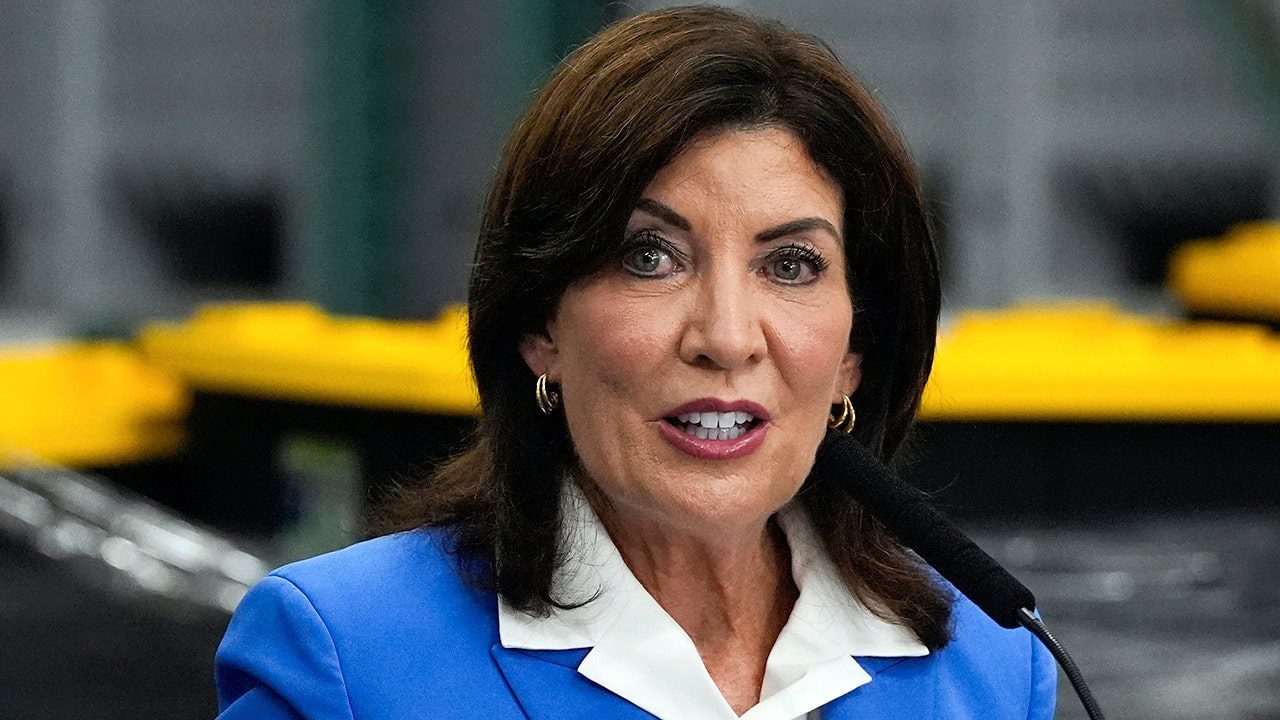
Key Takeaways
New York Governor Kathy Hochul supports legislation allowing residents to sue ICE agents. Discover the policy’s impact, legal context, and implications for federal accountability.
Overview
In a significant move impacting federal-state relations and civil liberties, New York Governor Kathy Hochul has formally endorsed legislation that would empower state residents to sue agents from U.S. Immigration and Customs Enforcement (ICE) for alleged constitutional violations. This proposal, articulated during her recent State of the State address, aims to establish a clear legal pathway for accountability.
This initiative carries considerable weight for News Readers, Policy Watchers, Informed Citizens, and Political Analysts alike, signalling a robust stance on federal oversight within state borders. It highlights a growing trend among states seeking to define the parameters of federal law enforcement actions.
Key components of the proposed measure, championed by State Sen. Brad Hoylman-Sigal and Assemblymember Micah Lasher, include provisions allowing lawsuits against federal officials for constitutional rights breaches, mirroring existing avenues for suing state and local officials under U.S. Code Title 42, Section 1983. Similar laws are already in effect in states such as California, Massachusetts, and New Jersey.
The policy also seeks to mandate judicial warrants for ICE raids in sensitive locations, restricting the use of state resources for federal immigration enforcement targeting individuals not involved in serious crimes. The implications for both immigrant communities and federal agencies warrant close monitoring as the legislative process unfolds.
Detailed Analysis
The proposed legislation in New York, actively supported by Governor Kathy Hochul, marks a pivotal development in the ongoing discourse surrounding federal immigration enforcement and individual constitutional rights within state jurisdictions. Historically, the principle of qualified immunity has largely shielded federal agents from civil lawsuits, making the legislative efforts in New York, and similar measures in other states, a direct challenge to this established norm. The underlying context for these actions often stems from perceived abuses of power or overreach by federal agencies, prompting states to seek mechanisms for local accountability. This builds upon existing legal frameworks, such as Title 42, Section 1983 of the U.S. Code, which permits individuals to sue state and local officials for rights violations, yet a comparable state-level mechanism for federal officials has largely been absent in New York.
Governor Hochul’s declaration that ‘Power does not justify abuse’ encapsulates the ethos behind the proposed measure, asserting that New Yorkers deserve their day in court if their constitutional rights are infringed upon by ICE agents acting outside their duties. Beyond enabling direct lawsuits, the governor’s proposals extend to practical guardrails, including requiring judicial warrants before ICE can conduct raids in sensitive locations like schools, churches, and hospitals. This specific recommendation directly counters a recent policy reversal by the Trump administration, which had rescinded a Biden administration directive barring immigration arrests in such areas, underscoring the political and ideological divisions inherent in immigration enforcement. Furthermore, New York plans to withhold state resources from federal immigration raids focused on individuals who have not committed serious crimes, a move that could significantly alter ICE’s operational capacity within the state.
Comparing New York’s legislative push to existing laws in states like California, Massachusetts, and New Jersey reveals a nascent trend of states asserting greater control over federal law enforcement actions within their borders. While the exact contours of each state’s legislation may vary, the common thread is the creation of state-level legal avenues for citizens to seek redress against federal officials. This stands in contrast to the federal government’s perspective, articulated by Department of Homeland Security spokeswoman Tricia McLaughlin, who accused Hochul of ‘smearing law enforcement’ and emphasized the dangers faced by agents enforcing the rule of law. The federal viewpoint often highlights the need for unimpeded operational flexibility to remove violent criminals and manage immigration, stressing the ‘incredible restraint and professionalism’ of agents, even in high-stress situations. The recent fatal shooting by an ICE agent in Minneapolis and a subsequent shooting incident in the same city have undeniably intensified this debate, pushing the issue to the forefront of national policy discussions.
For News Readers, Policy Watchers, Informed Citizens, and Political Analysts, the unfolding situation in New York presents a critical case study in federalism, civil liberties, and government accountability. The proposed legislation, if passed, could set a precedent for other states, potentially leading to a patchwork of varying rules governing federal agent conduct across the nation. Stakeholders on both sides — immigrant rights advocates, civil liberties organizations, and state officials versus federal law enforcement agencies and their proponents — will closely monitor legislative progress and any subsequent legal challenges. Citizens should observe how these measures, particularly the requirement for judicial warrants and the withholding of state resources, practically impact ICE’s operations and the experiences of immigrant communities. The outcome in New York will offer vital insights into the evolving balance of power between state and federal authorities and the enduring struggle to define and protect constitutional rights in the context of immigration enforcement.
About the Author