Key Takeaways
Motional unveils an AI-first robotaxi reboot, targeting 2026 for driverless service in Las Vegas. Explore the tech shift and its market implications.
Overview
In a pivotal strategic move, autonomous vehicle developer Motional has announced a comprehensive reboot of its robotaxi plans, pivoting to an AI-first approach. This shift aims to accelerate the deployment of a commercial driverless service, targeting a launch in Las Vegas by the end of 2026. This bold step comes after a challenging period for the joint venture, highlighting the dynamic nature of innovation in the burgeoning field of self-driving technology.
For Tech Enthusiasts, Innovators, and Startup Founders, this development underscores the increasing dominance of artificial intelligence and advanced machine learning models in solving complex real-world challenges like autonomous driving. It signals a critical evolution in how companies are approaching the scalability and cost-effectiveness of driverless solutions, setting a new benchmark for AI innovation.
Motional, backed by a significant $1 billion additional investment from Hyundai, previously underwent a 40% restructuring cut in May 2024, reducing its workforce to less than 600 employees. The company now plans to offer an employee-focused robotaxi service this year, followed by a public launch with a ride-hailing partner later, before removing human safety operators by year-end.
The successful implementation of this AI-first strategy will be a key metric to watch, potentially reshaping timelines and investment strategies across the autonomous mobility sector in Technology India and globally, influencing how new startups approach software development for future mobility solutions.
Key Data
| Metric | Previous State (Pre-Reboot) | Rebooted State (Target) | Change/Update |
|---|---|---|---|
| Primary Financial Backing | Hyundai + Aptiv (Aptiv later exited) | Hyundai (additional $1 billion investment) | Increased Hyundai commitment |
| Peak Employee Count | ~1,400 employees | Less than 600 employees (post-May 2024 layoffs) | -40% restructuring cut |
| Commercial Driverless Service Target | Missed initial deadline (with Lyft) | By end of 2026 in Las Vegas | New, AI-first driven timeline |
| Core Self-Driving System Approach | Classic robotics (individual ML models + rules-based) | AI Foundation Model-based (end-to-end architecture) | Significant technological paradigm shift |
Detailed Analysis
Motional, a joint venture originally formed by Hyundai Motor Group and Aptiv with a $4 billion valuation, found itself at a crucial juncture nearly two years ago. After missing a critical deadline for its driverless robotaxi service with Lyft and facing the departure of Aptiv as a financial backer, the company was in urgent need of reinvention. Hyundai stepped in with an additional $1 billion investment, but significant layoffs, including a 40% restructuring in May 2024, underscored the immense pressure. This period coincided with rapid advancements in AI, particularly the application of transformer architectures to physical AI systems, which began to reshape the landscape of autonomous driving technology. Motional’s decision to pause commercial activities and fundamentally restructure its approach was not merely a survival tactic but a strategic embrace of a paradigm shift.
The essence of Motional’s reboot lies in its transition from a ‘classic robotics’ methodology to an ‘AI foundation model-based’ one. Previously, Motional’s self-driving system relied on a complex web of individual machine learning models for tasks like perception, tracking, and semantic reasoning, supplemented by rules-based programs for other operations. While safe, this architecture proved difficult to generalize and scale affordably. Inspired by breakthroughs in large AI models akin to ChatGPT, Motional embarked on integrating these smaller, specialized models into a single, end-to-end architecture. CEO Laura Major emphasized that this unified backbone is crucial for two primary objectives: more effortless generalization to diverse cities and environments, and significant cost optimization. For example, adapting to different traffic light configurations in a new city no longer requires extensive redevelopment but rather targeted data collection and model training, streamlining deployment.
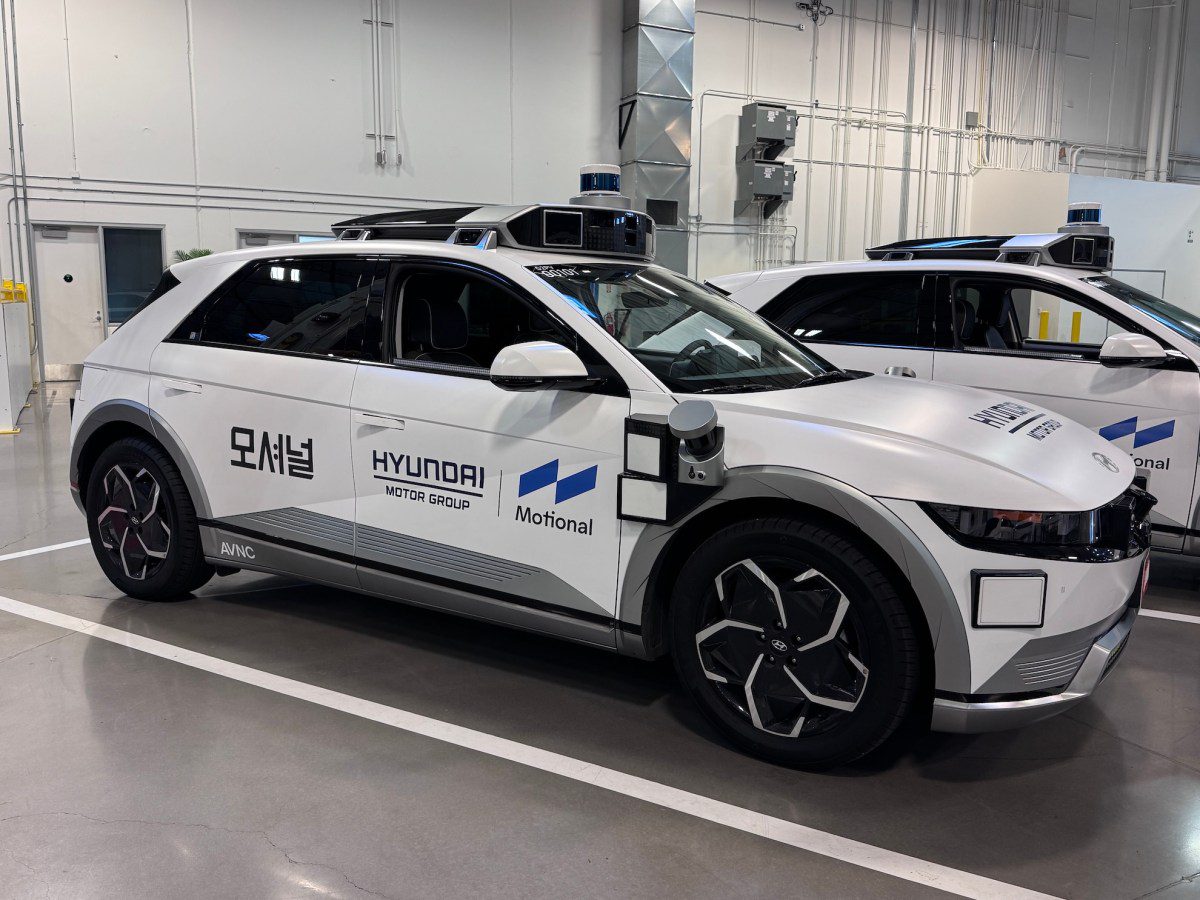
This strategic pivot positions Motional to directly address some of the most persistent challenges in autonomous vehicle development – scalability and economic viability. Unlike competitors or earlier iterations of self-driving systems that struggled with contextual adaptation across varied urban landscapes, an AI foundation model promises greater robustness and efficiency. The shift away from a highly modular, rules-heavy system towards a more holistic, data-driven approach mirrors broader trends in the AI industry, where large language models have demonstrated superior generalization capabilities. While the source content does not provide specific technical specifications, the described architectural change represents a profound update to the core ‘software stack’ of the robotaxi, enabling the vehicle to interpret complex real-world scenarios more cohesively. A recent 30-minute autonomous demo in Las Vegas showcased this progress, with a Hyundai Ioniq 5 successfully navigating the notoriously bustling pickup and drop-off areas of the Aria Hotel—a feat previously requiring human intervention.
For Tech Enthusiasts, Innovators, Developers, and Startup Founders, Motional’s strategic reboot offers invaluable insights into the evolving autonomous vehicle landscape and the power of AI innovation. This shift signals a maturing industry where foundational AI models are becoming indispensable for achieving widespread, affordable driverless mobility. The ability to generalize across diverse environments with reduced retraining costs presents a massive opportunity for startups developing complementary software or data solutions. Monitoring Motional’s commercial launch in Las Vegas by the end of 2026, especially its ability to operate truly driverless services, will provide crucial real-world data points on the effectiveness of this AI-first approach. The long-term vision of integrating Level 4 autonomy into personal cars, as articulated by Major, highlights the transformative potential beyond robotaxis, making this a pivotal development for the future of mobility in Technology India and worldwide. The commitment from Hyundai further de-risks this ambitious undertaking, providing the necessary capital for sustained innovation.
About the Author