Key Takeaways
DHS deployment in Minnesota raises investment concerns. Analyze local market impact, retail sector risk, and long-term economic outlook for investors.
Overview
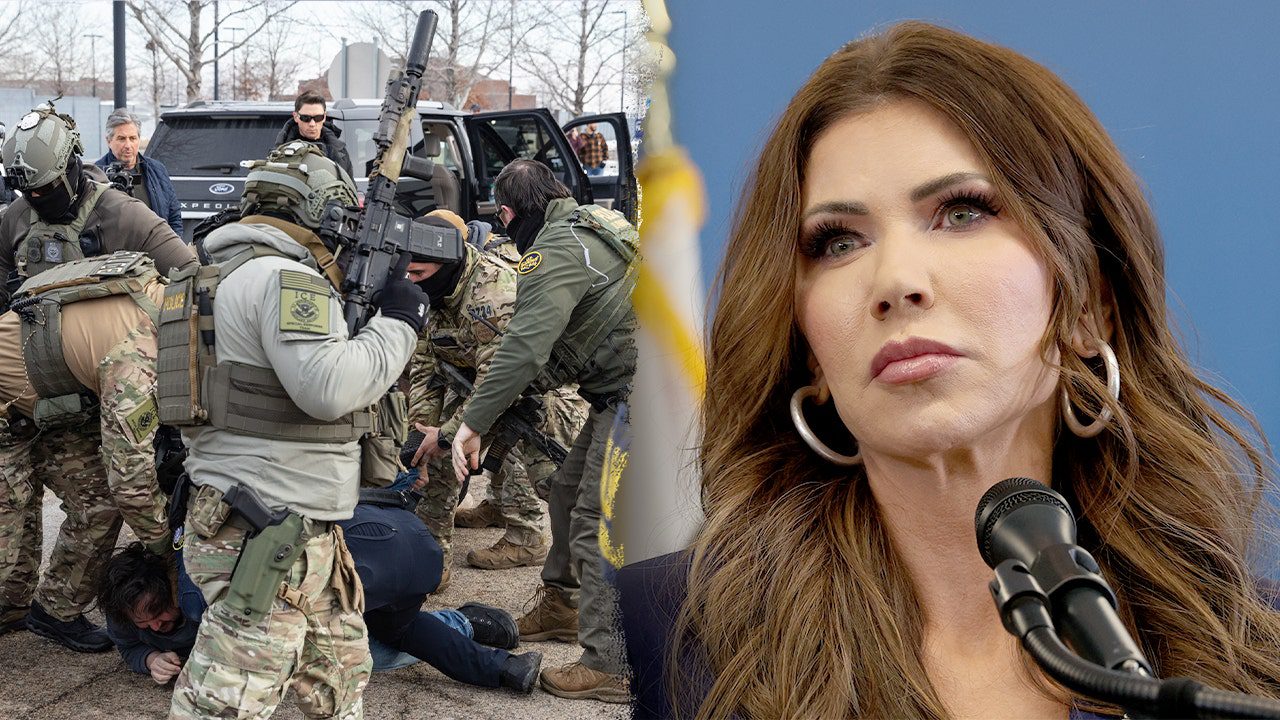
Recent developments regarding the deployment of additional federal agents to Minnesota by DHS Secretary Kristi Noem introduce a nuanced layer of risk assessment for investors monitoring the US regional economic landscape. This governmental action, amidst escalating local tensions, underscores the intricate relationship between civil stability and market confidence, a critical factor for both Retail Investors and Finance Professionals.
While directly impacting public safety and law enforcement operations, such deployments can subtly influence local business sentiment, consumer spending patterns, and consequently, the valuation of regionally exposed assets. Swing traders and long-term investors alike must consider the potential for unforeseen economic ripples.
The move involves hundreds more agents dispatched to Minneapolis, aiming to secure Immigration and Customs Enforcement (ICE) and Border Patrol operations. Protests have spread beyond Minnesota to cities like Los Angeles, Portland, and New York, indicating a broader environment of civil unrest.
This analysis delves into the potential financial implications for local economies and market sectors, outlining key considerations for investment strategy in such evolving socio-political environments, a crucial aspect often overlooked in standard financial analysis.
Detailed Analysis
The decision by DHS Secretary Kristi Noem to send hundreds of additional federal agents to Minnesota marks a significant governmental response to localized civil unrest, stemming from the fatal shooting by an ICE officer. For investors, this situation, while primarily a political and social event, necessitates a re-evaluation of specific economic exposures within the region. Historically, sustained periods of civil unrest or heightened security presence in a metropolitan area can lead to measurable shifts in local economic indicators, affecting sectors from retail and real estate to hospitality and local government bond markets. The immediate allocation of resources for increased federal presence implies a direct budgetary impact, which, while minor at a federal scale, signifies a commitment to stabilize an environment perceived as volatile. This commitment can be interpreted in two ways: either as a measure to restore order and thus confidence, or as an acknowledgment of persistent instability, which could deter new investment.
A detailed financial analysis of such an event, even without specific company earnings reports or technical levels directly tied to this deployment, focuses on broader macroeconomic and microeconomic indicators. Key metrics to consider include local consumer confidence indices, average daily foot traffic for retail establishments in affected areas, commercial real estate vacancy rates, and the performance of regionally focused small-cap equities. While the source content does not disclose specific financial metrics, the deployment of federal agents and the ongoing protests in Minneapolis, Los Angeles, Portland, and New York introduce an element of operational risk for businesses. Companies with significant physical presence or customer bases in these urban centers may face increased security costs, potential disruption to supply chains or business hours, and negative brand perception if associated with the conflict. The statements from Secretary Noem regarding accountability for ‘violent activities’ and impeding operations highlight a firm stance that could either quell unrest quickly or escalate tensions further, each outcome bearing different economic ramifications.
From a comparative analysis perspective, investors might look at how similar civic disturbances in other US cities have impacted local market performance. For instance, comparing the economic recovery and investment trends in cities that experienced prolonged protests in recent years could offer insights. While direct peer comparison in the context of federal deployments is rare, the underlying risk factors are consistent: uncertainty, potential property damage, and disruption to daily commerce. The mayor of Minneapolis, Jacob Frey, attributing the ‘chaos’ to ICE and the previous administration, suggests a potential for prolonged political friction, which could continue to affect local stability. This contrasts sharply with DHS Assistant Secretary Tricia McLaughlin’s assertion that these operations are making Minnesota safe. These divergent narratives can create investor apprehension, making it crucial to monitor local government statements, federal responses, and on-the-ground developments for clarity on the trajectory of the situation. [Suggested Line Graph: Retail activity index for Minneapolis vs. national average, 6 months pre-event to 6 months post-event, using publicly available economic data, if existing.]
For Retail Investors, Swing Traders, and Long-term Investors, this situation underscores the importance of geographical diversification within a portfolio. Exposure to real estate investment trusts (REITs) or companies heavily reliant on consumer spending within these specific metropolitan areas could face heightened volatility or downward pressure in the short to medium term. Finance Professionals should factor such socio-political risks into their valuation models, potentially adjusting discount rates or introducing specific risk premiums for assets exposed to regions prone to civil unrest. Monitoring local crime rates, police activity reports, and public opinion polls related to the federal presence can offer leading indicators for potential shifts in the investment climate. The key takeaway is not just the immediate incident, but the potential for prolonged instability and its multifaceted impact on the local economy, emphasizing the need for continuous risk assessment beyond traditional financial metrics.
About the Author