Key Takeaways
Minnesota challenges Trump admin’s federal immigration agents deployment, citing ‘unconstitutional invasion’. Analysis on US policy and state powers.
Overview
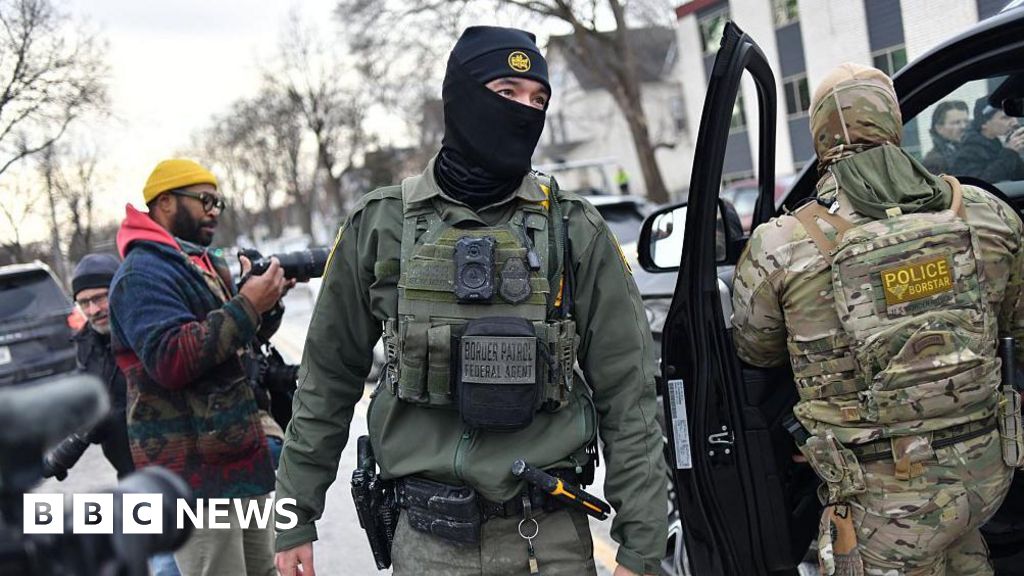
The US state of Minnesota has initiated legal action against the Trump administration, seeking to block the ongoing deployment of federal immigration agents within its borders. This lawsuit marks a significant escalation in the contentious debate over federal immigration enforcement powers versus state sovereignty, with potential ramifications for governance across the nation.
Minnesota’s Attorney General Keith Ellison contends the federal deployment constitutes an “unconstitutional federal invasion” and has actively disrupted public order, leading to “chaos and violence.” This legal challenge highlights the growing tension between state and federal authorities regarding jurisdiction over domestic law enforcement operations.
Key details include the deployment of approximately 2,000 federal agents to Minnesota, with plans for “hundreds more” under “Operation Metro Surge.” The lawsuit follows local protests, notably triggered by the fatal shooting of Renee Good by an immigration agent last week, a contentious incident currently under FBI investigation.
As the federal court considers a temporary restraining order, this case prompts News Readers, Policy Watchers, Informed Citizens, and Political Analysts to monitor the intricate balance of power and the evolving landscape of immigration policy in the US.
Key Data
| Aspect | Minnesota’s Position (AG Ellison & Mayor Frey) | Trump Administration’s Position (DHS McLaughlin) | Illinois/Chicago’s Similar Allegations |
|---|---|---|---|
| Nature of Deployment | “Unconstitutional federal invasion”; “unlawful deployment of thousands of armed, masked, and poorly trained federal agents” | Necessary for “targeting undocumented migrants”; “ensure their safety during operations” | “Organized bombardment”; “occupation”; “rampage” by “military-trained personnel” |
| Legal Claim Basis | Violates state’s “sovereign authority to protect health and wellbeing”; alleges “racial profiling” | Lawsuit is “baseless”; AG is “prioritising politics over public safety” | Federal agents “illegally targeting people”; deployment “not necessary” |
| Stated Purpose | Federal actions are “persecuting the state of Minnesota because of our political views” | Deployment “necessary to combat illegal immigration and crime” | Against “federal law enforcement operations in US cities” |
| Legal Action Sought | Asks federal court to declare deployment illegal; seeking temporary restraining order | Pledges to “significantly increase its deployment”; looks “forward to proving that in court” | Similar lawsuit filed against “occupation” by federal immigration agents |
Detailed Analysis
The legal showdown initiated by Minnesota’s Attorney General Keith Ellison against the Trump administration’s deployment of federal immigration agents signals a critical juncture in the ongoing constitutional debate over federalism and executive power in the United States. Historically, the balance between federal authority and state sovereignty has been a foundational pillar of American governance, often tested by varying interpretations of the Tenth Amendment, which reserves powers not delegated to the federal government to the states or the people. This particular conflict resonates with past disputes where federal forces have intervened in local affairs, sparking heated discussions about overreach and local autonomy. The context of this deployment is further colored by the Trump administration’s broader policy agenda on immigration, characterized by a more aggressive stance on enforcement and border security, which has frequently placed it at odds with states and cities adopting more accommodating approaches to undocumented populations. Minnesota, with its Democratic-led governorship and state legislature, represents a political alignment prone to challenging such federal directives, setting the stage for a high-stakes legal and political battle.
Minnesota’s legal brief asserts that the deployment constitutes an “unconstitutional federal invasion,” a strong rhetorical and legal claim. Attorney General Ellison argues that the influx of federal agents has actively destabilized communities, causing “chaos and violence,” and fundamentally undermining the state’s “sovereign authority to protect the health and wellbeing of every single person who lives within our borders.” Minneapolis Mayor Jacob Frey amplified these concerns, alleging that agents were engaged in “racial profiling,” targeting individuals based on assumptions about their immigration status. This alleged conduct, according to Frey, placed an undue burden on city resources, forcing police overtime and increasing emergency calls. The fatal shooting of Renee Good by an immigration agent last week in Minneapolis serves as a grim backdrop, with local officials disputing the necessity of lethal force, alleging she was merely attempting to drive away rather than run over agents. In stark contrast, the Trump administration, through the Department of Homeland Security (DHS), has dismissed Minnesota’s lawsuit as “baseless,” maintaining that Attorney General Ellison is “prioritising politics over public safety.” The administration justifies its “Operation Metro Surge” by stating the agents are “targeting undocumented migrants” and that further deployments are essential “to ensure their safety during operations” while combating “illegal immigration and crime.” With an estimated 2,000 agents already on the ground and “hundreds more” planned, this federal push underscores the administration’s unwavering commitment to its enforcement strategy.
This legal confrontation in Minnesota is not an isolated incident but rather a component of a broader, nationwide resistance to the Trump administration’s immigration policies. The state of Illinois and the city of Chicago, for instance, filed a strikingly similar lawsuit, characterizing the federal deployment as an “organized bombardment” and “occupation.” Their lawsuit paints a vivid picture of “uniformed, military-trained personnel, carrying semi-automatic firearms and military-grade weaponry, have rampaged for months through Chicago and the surrounding areas.” This parallel legal action from multiple states highlights a significant trend: states are increasingly leveraging their judicial systems to challenge federal executive actions they perceive as infringing upon state powers or local civil liberties. The shared language and similar allegations across these lawsuits suggest a coordinated legal strategy among states seeking to curtail federal immigration enforcement within their borders. From a legal perspective, these cases test the limits of executive power and the parameters of federal jurisdiction over domestic law enforcement, potentially setting precedents for future intergovernmental relations. The request for a temporary restraining order in Minnesota indicates the urgency with which state officials view these deployments, aiming to halt operations while the broader constitutional arguments are adjudicated. This multi-state challenge also carries considerable political weight, reflecting a deeply polarized national debate over immigration and the role of government.
For News Readers, the immediate focus lies on the federal court’s decision regarding Minnesota’s request for a temporary restraining order. This ruling will indicate the judiciary’s initial assessment of the state’s legal arguments and could dramatically alter the landscape of federal immigration operations in Minnesota. Continued monitoring of the FBI’s investigation into the Renee Good shooting remains crucial, as its findings could either substantiate local officials’ claims of excessive force or support federal agents’ accounts of self-defense. For Policy Watchers and Political Analysts, this legal battle offers a profound case study in American federalism. It underscores the ongoing tension between a president’s executive authority and the constitutional autonomy of individual states, particularly when political ideologies diverge significantly. The outcome of these lawsuits could redefine the boundaries of federal immigration enforcement within state borders, influencing how future administrations deploy federal agents in similar circumstances. Informed Citizens should closely follow the court proceedings and official statements, as the implications extend directly to civil liberties, public safety, and the equitable application of law. The allegations of racial profiling, if proven, raise serious concerns about governmental accountability and community trust. The strain on local resources and the calls to 911 further illustrate the direct impact on daily life. This legal challenge underscores that immigration policy is not merely a border issue but a complex domestic concern with profound effects on local governance and the rights of residents, demanding continued vigilance and engagement.
About the Author