Key Takeaways
An ICE agent shot a Venezuelan man in Minneapolis, sparking fresh protests. Get key details on this breaking incident, official statements, and rising community tensions in the US today.
Overview
A critical incident unfolded in North Minneapolis, where an Immigration and Customs Enforcement (ICE) agent shot a Venezuelan national in the leg on Wednesday evening. This breaking news significantly intensifies already heightened tensions surrounding federal immigration operations in the United States, drawing immediate public and political scrutiny across global current affairs discussions.
This event follows the fatal shooting of U.S. citizen Renee Macklin Good by an ICE agent in the same city just one week prior, underscoring a disturbing pattern of confrontational encounters. For general readers and news consumers, the situation raises urgent questions about federal agency conduct, community safety, and the escalating human impact of immigration enforcement policies, demanding clear and accessible reporting for today’s updates.
The Department of Homeland Security (DHS) stated the agent acted after being “ambushed and attacked” during a targeted traffic stop. The Venezuelan national, who allegedly fled, crashed, and violently resisted arrest, sustained a non-life-threatening leg injury requiring hospital treatment. This developing situation fuels further debate.
Occurring minutes before Minnesota Gov. Tim Walz’s address condemning ICE, this incident adds a crucial political dimension. This balanced analysis explores the immediate reactions and longer-term implications for all stakeholders.
Detailed Analysis
The recent shooting of a Venezuelan national by an Immigration and Customs Enforcement (ICE) agent in Minneapolis is not an isolated event but rather a flashpoint within a much larger, ongoing debate about immigration enforcement and federal agency accountability in the United States. This incident, occurring on a Wednesday evening in North Minneapolis, has further inflamed a city already on edge, particularly following the tragic killing of U.S. citizen Renee Macklin Good by another ICE agent just one week prior. These successive events paint a clear picture of escalating tensions, where community apprehension meets assertive federal operations, creating a volatile environment that demands the attention of general readers and news consumers alike seeking to understand current affairs.
The broader context for this recent shooting involves a surge in federal immigration agent presence within Minnesota, a development that has drawn significant criticism from state leadership. Governor Tim Walz, in a statewide address delivered mere minutes after the Wednesday shooting, unequivocally called on the federal government to “end this occupation.” His powerful message urged residents witnessing immigration agents in their neighborhoods to “take out that phone and hit record,” advocating for the creation of a public database to document ICE’s actions. This call to action highlights a fundamental disagreement between state and federal authorities regarding the scope and methods of immigration enforcement, transforming local incidents into national political debates about civil liberties and federal overreach.
According to the Department of Homeland Security (DHS), the incident began with agents conducting a targeted traffic stop involving the Venezuelan national. The DHS narrative indicates that the man initially fled the scene in his vehicle, subsequently crashing into another car. He then attempted to flee on foot but was apprehended by immigration officers. The situation reportedly escalated when the man “resisted arrest and violently assaulted the officer.” Furthermore, the DHS statement claims that “two other people came out from a nearby apartment and also attacked the law enforcement officer with a snow shovel and broom handle.” In response to this alleged ambush and attack, the agent fired, striking the man they were attempting to apprehend in the leg. The City of Minneapolis later confirmed that the man was transported to a local hospital with a non-life-threatening injury.
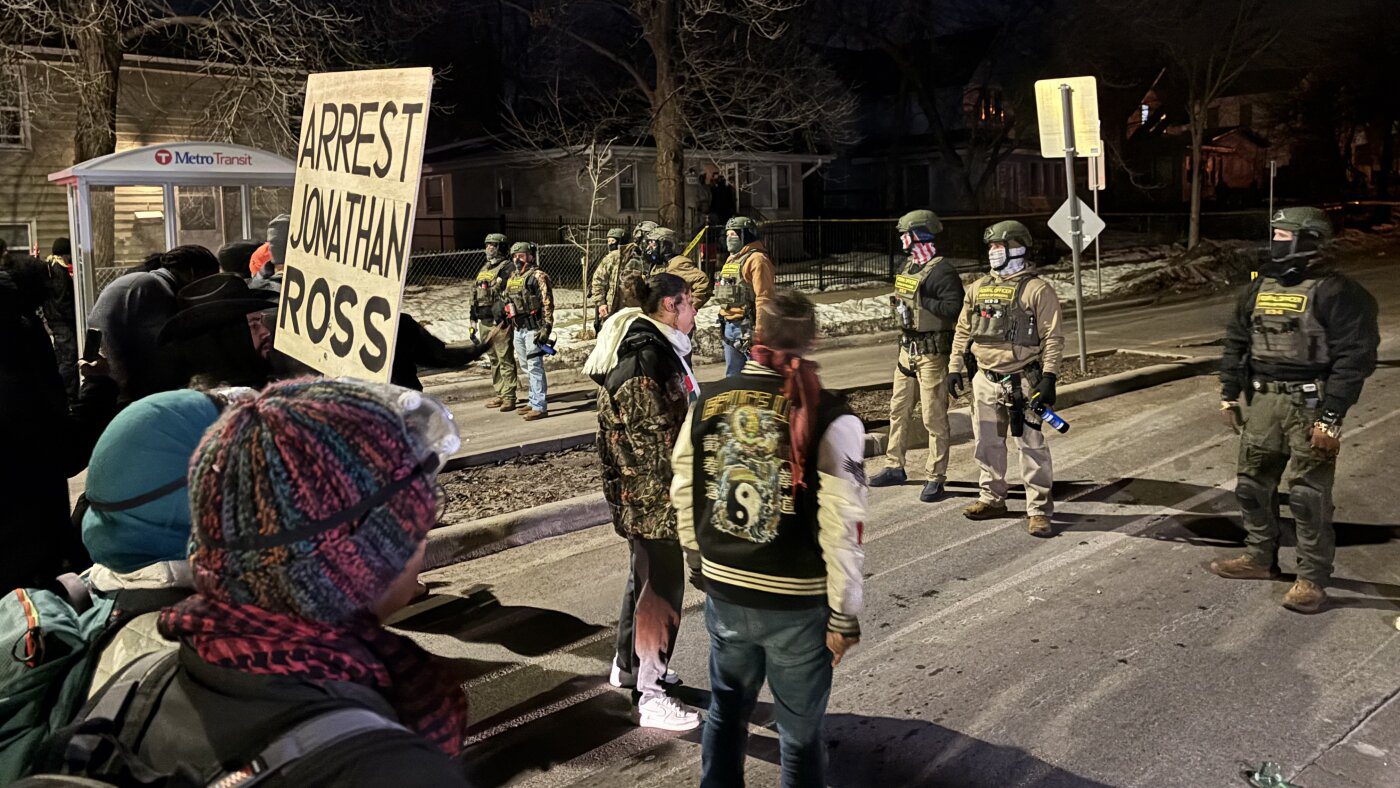
The immediate aftermath of the shooting saw protesters quickly converge on the area, echoing the widespread public outrage that followed Renee Macklin Good’s death. Federal immigration agents, responding to the gathering crowds, deployed irritants and flashbangs in an attempt to disperse the demonstrators. This use of force against protesters, a recurring theme in confrontations between federal agents and residents, further fueled public resentment. Statements from community members underscore the profound impact of these events; Karen, a Minneapolis nurse, expressed her fears for public safety, stating, “I’m a nurse and I’m afraid people are going to get hurt. I’m here to keep my neighbors safe.” Another demonstrator, Cameron, highlighted the economic and social toll, noting that the federal presence has forced local restaurants to close due to employees’ fear of ICE, concluding that agents “have the city turned into a war zone just like they want it to be. They’re here to scare people.” These firsthand accounts reveal a deep-seated mistrust and a pervasive sense of insecurity within the community, offering valuable insight into today’s updates on public sentiment.
A critical comparative analysis between this recent shooting and the fatal incident involving Renee Macklin Good reveals unsettling parallels and distinctions. Both events involved ICE agents, occurred in Minneapolis, and led to the use of force against individuals. However, the outcomes differed: one fatal, the other non-fatal. Good was a U.S. citizen, whereas the recent victim is a Venezuelan national, drawing different legal and public discourse implications. The circumstances of the encounters also varied; while both involved ICE operations, the specific details of resistance and external intervention differed. These comparisons highlight a pattern of aggressive federal enforcement within the city, regardless of the target’s citizenship status, and a consistent community response of protest and condemnation.
Broader industry trends indicate a national pattern of increased, and often controversial, federal immigration enforcement, particularly in cities that have adopted sanctuary policies or express opposition to such operations. The narrative presented by DHS often emphasizes officer safety and adherence to protocols, while community activists and some local politicians describe these actions as aggressive, destabilizing, and an infringement on civil liberties. This dichotomy creates a significant challenge for federal-local relations, often leading to clashes and a breakdown of trust. The Minneapolis incidents, therefore, are not isolated anomalies but symptomatic of a wider national tension surrounding immigration policy and its ground-level implementation. The impact on immigrant communities is particularly severe, fostering an environment of fear that can lead to underreporting of crimes, reluctance to access public services, and overall social fragmentation.
For general readers and news consumers, the ongoing situation in Minneapolis serves as a crucial case study in the dynamics of federal power, local resistance, and human rights. The immediate takeaway is a city grappling with profound unease, where daily life is disrupted by the visible presence and actions of federal agents. The repeated calls for recording ICE activities signal a community seeking to assert its agency and demand transparency amidst perceived overreach, a trend that could influence future policy discussions regarding civilian oversight of law enforcement. Looking ahead, it will be critical to monitor several key developments: the outcomes of any official investigations into both the Renee Macklin Good shooting and this most recent incident, any further statements or policy shifts from DHS or the Biden administration regarding immigration enforcement strategies, and the sustained efforts by Governor Walz and local activists to challenge or mitigate federal operations within Minnesota. These events underscore the urgent need for comprehensive dialogue, accountability, and a balanced approach to immigration policies that respects both national security concerns and the human dignity of all individuals, whether citizens or immigrants, residing in the country. The long-term implications could shape the future of federal-state cooperation and the rights of communities to determine their own safety and ethos in the face of national mandates.
About the Author