Key Takeaways
Nasa’s first-ever ISS medical evacuation brings four astronauts back to Earth. Understand the implications for future space missions and astronaut safety protocols.
Overview
Four astronauts have made an unprecedented return to Earth from the International Space Station (ISS) in Nasa’s first-ever medical evacuation, cutting their mission short due to an undisclosed health issue. This historic event underscores the inherent risks and rapid response capabilities in human spaceflight.
The swift return, driven by a “lingering risk” and diagnostic uncertainty, highlights the critical importance of ground-based medical evaluations for complex health concerns in space exploration.
Commander Zena Cardman, Mike Fincke, Oleg Platonov, and Kimiya Yui successfully splashdowned in the Pacific. Nasa confirmed the affected astronaut is “stable,” with specific details remaining confidential.
This incident offers key insights into international space agencies’ management of unexpected health crises, influencing future protocols.
Detailed Analysis
The International Space Station (ISS) has represented a pinnacle of multinational cooperation, continuously inhabited since 2000 by astronauts from Europe, Japan, the US, and Russia. Living and working for extended periods in microgravity presents unique physiological challenges, making medical contingencies a critical aspect of mission planning. While astronauts receive extensive training for emergencies, a full-scale medical evacuation from orbit has remained an exceedingly rare event for the US space agency. Despite computer modeling predicting such an occurrence every three years, Nasa’s human spaceflight history, spanning 65 years, had surprisingly not experienced one until now. This recent incident transforms medical evacuations from a theoretical possibility into a tangible reality, reshaping future preparedness strategies for Nasa and its partners. The underlying commitment to astronaut welfare consistently drives decisions, even when it means altering mission timelines, providing crucial context for this unprecedented event.
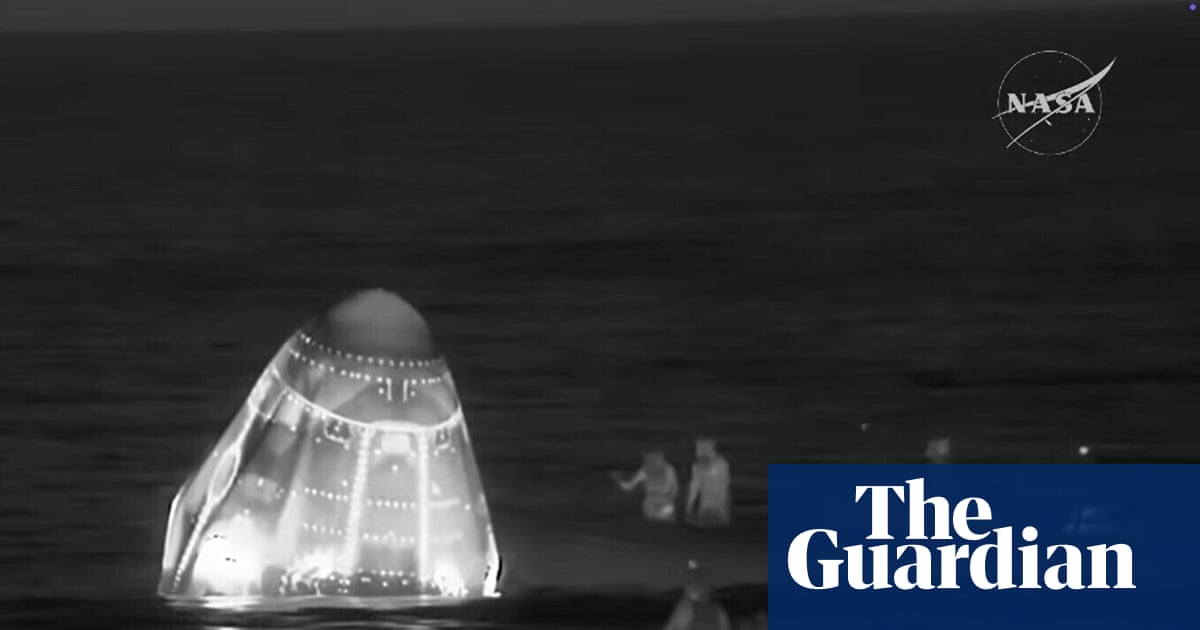
The emergency return involved four astronauts: US commander Zena Cardman, US pilot Mike Fincke, Russian cosmonaut Oleg Platonov, and Japanese astronaut Kimiya Yui. Their mission was abruptly cut short due to an undisclosed medical issue, although Nasa affirmed the affected crew member was “stable” upon their middle-of-the-night splashdown in the Pacific Ocean near San Diego. Post-landing, all four were carried out of the capsule on stretchers, a standard procedure after five months in low gravity, and they greeted the recovery teams with smiles and waves. Cardman highlighted the crew’s cohesion, stating, “what was not surprising to me was how well this crew came together as a family to help each other and just take care of each other.” Mike Fincke further elaborated via social media that the return was a “deliberate decision to allow the right medical evaluations to happen on the ground, where the full range of diagnostic capability exists.” Nasa officials like Rob Navias and chief health officer James Polk reiterated the “stable condition” and cited “lingering risk” and “a lingering question as to what that diagnosis is” as factors in the decision.
While Nasa had avoided a medical evacuation for 65 years, computer models had estimated a need for one every three years, suggesting the agency had been fortunate. In contrast, the Soviet space program experienced such an event in 1985 when cosmonaut Vladimir Vasyutin developed a serious infection aboard Salyut 7, necessitating an early return. Other less severe health issues also shortened flights for Soviet cosmonauts. The current evacuation will impact ISS operations; until SpaceX delivers another crew, Nasa must postpone routine and emergency spacewalks, which require at least two astronauts plus internal backup. Currently, US astronaut Chris Williams and Russian cosmonauts Sergey Kud-Sverchkov and Sergei Mikaev remain on the ISS. The continued bilateral cooperation between the US and Russia, where agencies take turns transporting each other’s citizens, highlights one of the few stable areas of collaboration between the two nations amidst broader geopolitical tensions.
This medical evacuation, a first for Nasa, reinforces that human spaceflight remains inherently risky despite advanced technology. For news consumers, it highlights the resilience and rapid adaptability of international space crews, prioritizing safety and teamwork. The decision for ground evaluations underscores orbital medical facility limitations, emphasizing robust Earth-based support. Monitor updates on the astronaut’s health (likely confidential), re-establishment of full ISS operations including spacewalks, and any adjustments to future protocols. Continued US-Russia cooperation on the ISS, amidst geopolitical tensions, also remains vital for space exploration, ultimately emphasizing the human element at its core.
About the Author