Key Takeaways
Nasa astronauts make historic early return from ISS due to medical emergency. Discover the implications for space station operations and future human spaceflight.
Overview
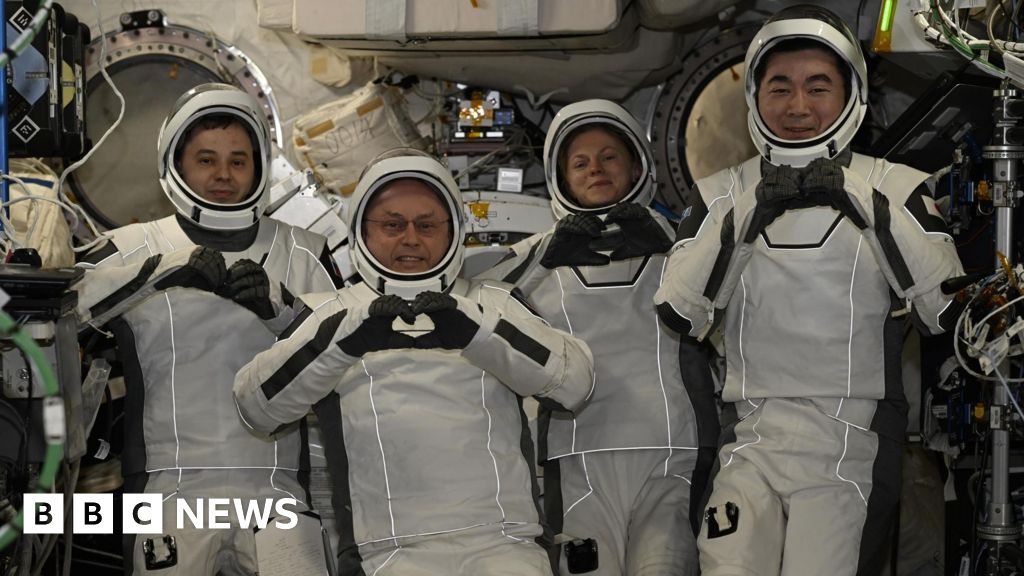
In an unprecedented development for the International Space Station (ISS), four Nasa astronauts and their international colleagues, collectively known as Crew 11, have commenced a medical evacuation, departing the orbiting laboratory a full month ahead of schedule. This marks the first time in the ISS’s 26-year history that such an early return due to a medical issue has occurred, drawing significant attention in global current affairs.
This critical event underscores the inherent risks and complexities of human spaceflight, reminding General Readers and News Consumers of the delicate balance involved in maintaining crew health hundreds of miles above Earth. The swift, yet carefully coordinated, action highlights the robust protocols in place for astronaut safety.
Nasa confirmed a crew member experienced a medical issue but remains in stable condition, with the agency withholding specific details. The crew, originally scheduled for a six-and-a-half-month stay, is expected to splash down off the coast of California in the early hours of Thursday local time, cutting their mission short from a mid-February return.
As control of the ISS transitions to a smaller, three-person crew, the immediate future of scientific research and routine operations faces new challenges, making this a pivotal moment to monitor in today’s space updates.
Detailed Analysis
The recent departure of four astronauts from the International Space Station (ISS) represents a unique chapter in human spaceflight, echoing concerns about long-duration missions and the crucial need for onboard medical support. Since its continuous inhabitation began in the year 2000, the ISS has served as a beacon of international cooperation and scientific advancement, orbiting Earth at an altitude of 250 miles, completing 16 orbits daily at an astonishing speed of 17,500 miles per hour. This incident, therefore, is not merely a logistical adjustment but a significant event prompting reflection on the operational resilience and emergency preparedness of global space agencies. The context of space exploration has evolved dramatically, from the early, shorter duration missions to the sustained presence on the ISS, and now towards ambitious goals of lunar and Martian colonization. Each such event contributes invaluable lessons to the ongoing human endeavor to push beyond Earth’s confines, shaping future protocols and technological developments in space medicine and mission planning. The immediate response and the handover of command further highlight the procedural strictness and the seasoned experience that underpins every aspect of ISS operations, demonstrating a measured approach to unforeseen challenges in a high-stakes environment.
The affected Crew 11, comprising Nasa’s Mike Fincke and Zena Cardman, Japan’s Kimiya Yui, and cosmonaut Oleg Platonov, had arrived on the ISS on August 1st with expectations of completing a standard six-and-a-half-month mission, set to conclude in mid-February. However, events took an unexpected turn last week when a scheduled spacewalk by Fincke and Cardman was abruptly called off. Hours later, Nasa publicly announced a crew member had fallen ill, prompting the decision for an early return. While the agency maintained the crew member’s stable condition, specific details regarding the individual’s identity or the nature of the medical issue remained undisclosed, adhering to privacy protocols standard in such situations. The handover of command from Mr. Fincke to Russian cosmonaut Sergey Kud-Sverchkov was described by Fincke as ‘bittersweet,’ acknowledging the mixed emotions of leaving early while prioritizing crew welfare. In a social media update, he reassured the public that all crew members were ‘stable, safe, and well cared for.’ This swift, yet poignant, transition underscored the gravity of the situation, impacting the ISS’s operational tempo and the scientific tasks originally planned for a full crew complement. The ISS, despite carrying some medical equipment and having astronauts trained for minor issues, does not have a dedicated doctor on board, making critical medical evacuations a complex endeavor requiring rapid terrestrial support and logistical coordination.
This medical evacuation, unprecedented for the ISS, finds only two prior parallels in the history of human spaceflight, both occurring during the Soviet era. In 1985, cosmonaut Vladimir Vasyutin and his crew returned four months early from the Salyut 7 space station due to a urological issue. Two years later, in 1987, Aleksandr Laveykin departed the Mir space station ahead of schedule due to a heart arrhythmia. These historical incidents highlight the perennial challenge of maintaining human health in microgravity environments and the critical need for proactive medical monitoring. The current situation leaves the ISS with a reduced crew of just three: Nasa’s Chris Williams and cosmonauts Kud-Sverchkov and Sergei Mikaev, a significantly slimmer team until another four astronauts arrive in February. This reduction will inevitably mean a scaling back of scientific work, as Kud-Sverchkov acknowledged, stating, ‘Despite all the changes and all the difficulties, we are going to do our job onboard ISS, performing all the scientific tasks, maintenance tasks here, whatever happens.’ The need for a ‘group hug,’ as Kud-Sverchkov’s first command, perfectly encapsulates the human element and solidarity inherent in such high-pressure, isolated environments, further emphasizing the unique nature of space exploration.
For General Readers and News Consumers, this incident serves as a stark reminder of the frontiers of human endeavor and the meticulous planning required for operations beyond Earth. It brings to the forefront the critical discussion around future human space exploration, including space tourism and potential long-term settlements on the Moon or Mars. As more individuals, including private citizens, venture into space, the demand for sophisticated, in-situ medical care and potentially onboard doctors will become increasingly pressing. The resilience and adaptability demonstrated by the international crew and ground control highlight the robustness of existing protocols, but also signal areas for future enhancement as missions extend further and longer. The balanced response by Nasa, prioritizing crew health while maintaining operational continuity, reinforces public trust in space agencies. Looking ahead, audiences should monitor the safe return and recovery of the evacuated astronaut, as well as the successful integration of the new crew arriving in February, which will restore the ISS to its full operational capacity. This event, though challenging, ultimately contributes invaluable data and experience to the long-term goal of making human presence in space safer and more sustainable.
About the Author