Key Takeaways
Iran protests spark major geopolitical risk. Understand the impact on crude oil prices and Indian Stock Market for Q1 2026. Essential financial analysis for investors.
Overview
Escalating protests and a soaring death toll in Iran, coupled with US President Donald Trump’s warning of “very strong action” against executions, introduce significant geopolitical uncertainties for global financial markets, including the Indian Stock Market India. This rapidly developing situation demands close monitoring by Retail Investors and Finance Professionals alike.
The potential for wider regional instability stemming from these domestic events could impact crude oil prices, supply chains, and investor sentiment across emerging markets. Such shifts directly influence Nifty and Sensex performance, prompting Swing Traders to reassess short-term volatility.
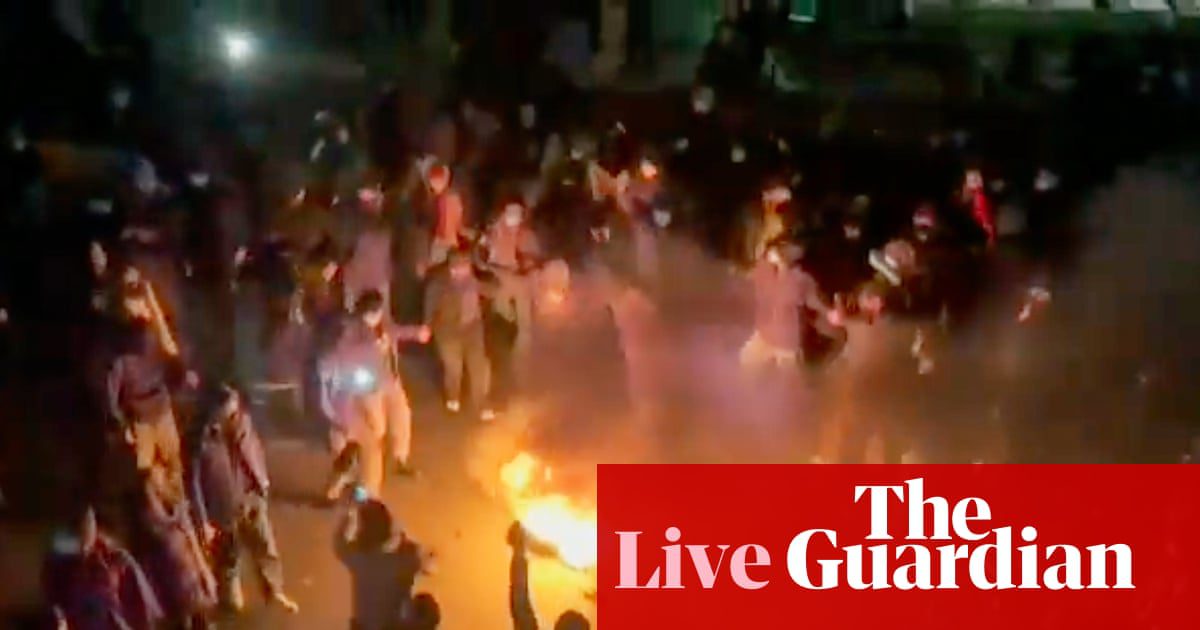
Reports indicate a death toll of at least 2,571 protesters, with over 18,100 detained, alongside the imminent execution of Erfan Soltani amid a five-day internet blackout.
This Financial Analysis will explore the short, medium, and long-term implications, outlining critical factors for Long-term Investors and identifying key market indicators to observe.
Detailed Analysis
The escalating civil unrest gripping Iran, characterized by widespread anti-government protests and a severe, often brutal, state crackdown, has rapidly transformed into a significant geopolitical flashpoint with profound potential economic ramifications for the global stage. Historically, events of such magnitude in major energy-producing and transit regions are well-documented market movers, frequently triggering heightened volatility across a spectrum of international financial instruments and commodity markets. The current cascade of events, initiating with protests last Thursday, bears an unsettling resemblance to the nation’s 1979 Islamic Revolution, not in exact replication, but in the potential for fundamental, long-term shifts in geopolitical alignment and regional power dynamics. Thousands have been reported detained, and a pervasive five-day internet blackout, intended by authorities to stifle dissent and control narrative, has inadvertently underscored the regime’s desperation and its willingness to isolate from the global information network. This digital isolation further compounds economic uncertainty, severely obstructing cross-border trade, hindering direct foreign investment communication, and disrupting general business operations within Iran. The recent and stark warning from US President Donald Trump, threatening ‘very strong action’ should Iran proceed with reported executions, including the harrowing case of 26-year-old Erfan Soltani, injects a new, unpredictable layer of international tension. This diplomatic intervention not only escalates the rhetorical conflict but also firmly places the Iranian crisis on the global agenda, demanding immediate and rigorous Financial Analysis from Retail Investors and Finance Professionals tracking the Stock Market India, NSE, and BSE for emerging geopolitical risks and their potential impact on global investment flows.
The sheer, tragic scale of the government crackdown, meticulously detailed by human rights organizations, constitutes a critical, multifaceted risk factor for international markets. The Human Rights Activists News Agency’s report of a staggering death toll, at least 2,571 individuals including 12 children, and the detention of over 18,100 people, while not conventional direct financial metrics, serve as potent proxies for extreme social and political instability. Such widespread civil unrest, particularly when met with lethal force and widespread arrests, invariably correlates with a significant increase in the geopolitical risk premium demanded by investors for assets within the region and other susceptible emerging markets. The reported imminent execution of protesters like Erfan Soltani, a case forcefully highlighted by Amnesty International as part of a pattern of ‘swift trials and arbitrary executions to crush and deter dissent,’ amplifies global condemnation and could trigger renewed calls for more stringent international sanctions or outright divestment campaigns. This scenario directly impacts foreign direct investment, severely curtails trade flows, and restricts Iran’s access to international capital, potentially creating significant ripple effects for any nation with economic ties, however tangential. Furthermore, the sustained internet blackout, now entering its fifth day, significantly impedes reliable information flow both within and outside Iran, creating an opaque operating environment that fundamentally deters sound investor sentiment. The deliberate lack of verifiable real-time data on the ground fosters deep uncertainty, a condition fundamentally antithetical to calculated Investment decision-making and efficient Trading. Iran’s status as the world’s most prolific executioner after China, with at least 1,500 people reportedly hanged last year according to the Norway-based Iran Human Rights group, further entrenches its image as a high-risk nation, intensifying perceived and actual investment risk in the broader Middle East.
A comparative Financial Analysis of Iran’s unfolding crisis with historical geopolitical flashpoints and ongoing regional instabilities provides crucial insights for investors. Drawing parallels to past periods of acute volatility, such as the various Strait of Hormuz tensions or political disruptions across other Middle Eastern nations, underscores the acute potential for sustained market volatility, particularly within global commodity markets. Crude oil, being a critically sensitive asset given Iran’s strategic location and potential to disrupt supply lines, often experiences sharp price escalations during periods of perceived or actual supply disruption in the Persian Gulf. A protracted crisis in Iran could easily lead to an oil supply shock, significantly impacting import-dependent economies like India. This, in turn, fuels inflationary pressures globally and can depress domestic consumer spending, presenting considerable headwinds for the Stock Market India, directly influencing major indices like the Nifty and Sensex. The increasingly hardened stance from the US, characterized by the State Department’s advisory for American citizens to depart Iran and President Trump’s cancellation of diplomatic meetings, sends a clear diplomatic signal of escalating international pressure. This could translate into further economic isolation for Iran, potentially tightening existing sanctions and impacting global trade routes, especially shipping insurance premiums and freight costs. Conversely, the unprecedented intervention of private sector entities, exemplified by Elon Musk’s SpaceX offering free Starlink satellite internet, introduces a novel and complex dimension. While primarily a humanitarian effort, it also signifies the prolonged nature of the internet blackout and potentially empowers the protest movement by circumventing state control over information, leading to a complex, unpredictable medium-term outlook. [Suggested Line Graph: Global Crude Oil Price Volatility vs. Iran Geopolitical Events 2020-2026, illustrating historical crude oil price fluctuations juxtaposed with major political and security events in Iran and the broader Middle East, clearly indicating periods of heightened market sensitivity to regional instability and the resulting market update.]
For Retail Investors and agile Swing Traders, the immediate implication of the escalating Iran crisis is an undeniable surge in market volatility and heightened uncertainty. Indian benchmark indices, including those trading on the NSE and BSE, are highly susceptible to global sentiment shifts and acute crude oil price movements. Therefore, close monitoring of technical levels, particularly around established support and resistance points for key sectors and commodities, becomes paramount for refining responsive trading strategies aimed at mitigating short-term risk while identifying tactical opportunities amidst the turbulence. Long-term Investors and discerning Finance Professionals must undertake a more comprehensive and strategic review of their existing portfolios, meticulously assessing both direct and indirect exposure to oil-sensitive sectors such as manufacturing, transportation, chemicals, and energy-intensive industries. This critical assessment necessitates evaluating the risk-reward profile of traditional safe-haven assets like gold, which often appreciates significantly during periods of geopolitical turmoil, and carefully considering defense sector stocks as potential beneficiaries of heightened global tensions and increased security spending. Furthermore, the situation fundamentally redefines emerging market risk, prompting a thorough re-evaluation of international diversification strategies. Key metrics to monitor actively include global crude oil futures (Brent and WTI), the daily exchange rate of the Indian Rupee against the US Dollar, and official diplomatic statements emanating from Washington, Tehran, and other major world powers. Regular updates on international sanctions regimes, crude oil inventory reports, and any progress on restoring internet connectivity within Iran will also provide crucial market signals. The ongoing, fluid situation in Iran underscores the critical imperative of integrating sophisticated geopolitical risk analysis into every facet of comprehensive Investment decision-making, preparing not merely for immediate market reactions but for potentially structural shifts that demand dynamic financial planning and agile portfolio adjustments for sustained long-term resilience and capital protection.
About the Author