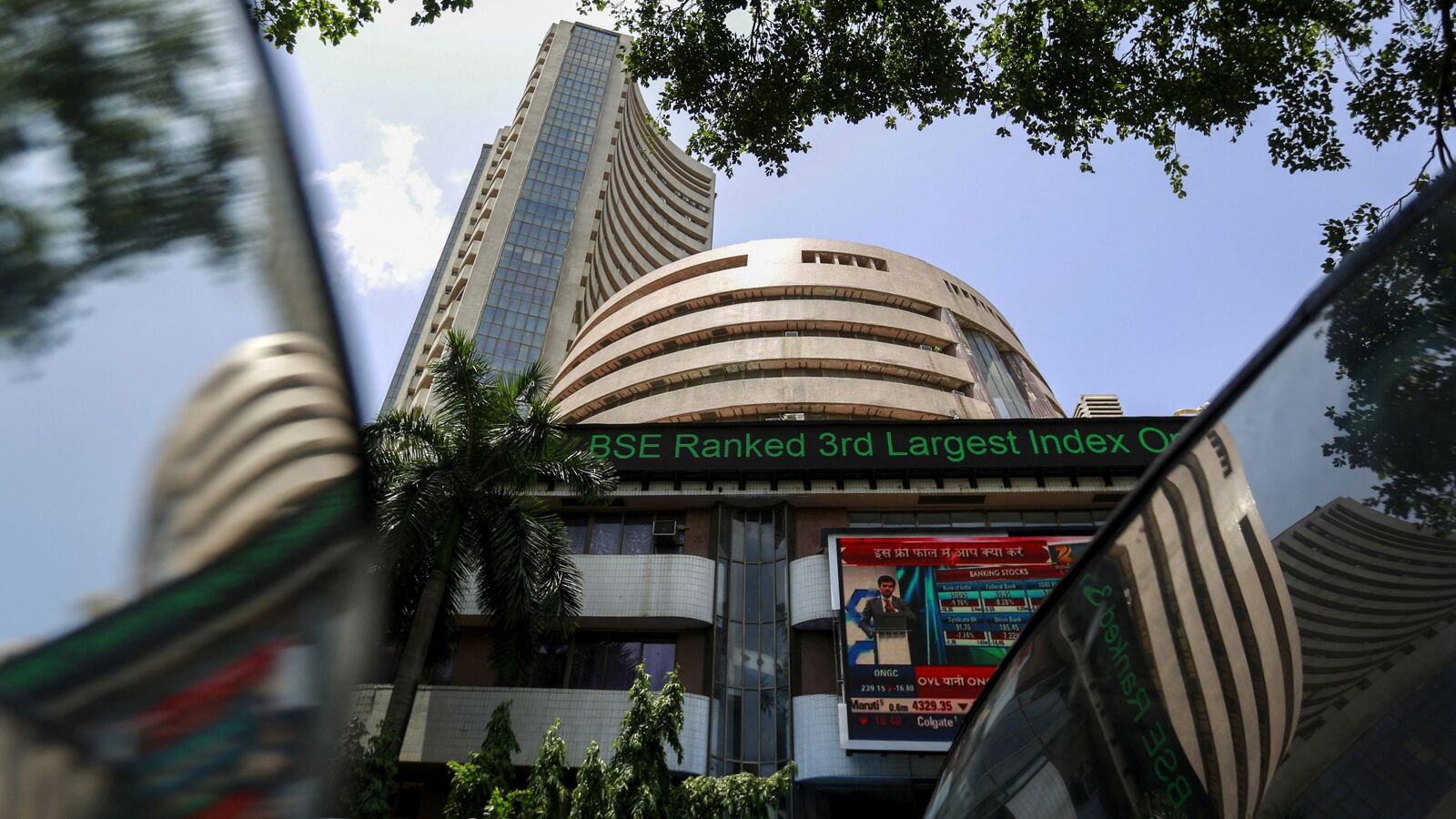
Indian stock markets experienced profit booking last Friday, halting a six-day rally. The Sensex and Nifty 50 saw modest declines, signaling cautious investor sentiment amidst global trade concerns and rising crude oil prices. As of market close on October 25, 2025, the Sensex stood at 84,211.88 and Nifty 50 at 25,795.15.
These movements are crucial for investors, indicating potential shifts in confidence and risk appetite. Understanding these triggers is key for informed investment decisions in the upcoming trading sessions.
Key metrics show a slight dip across broader markets: Sensex down 0.41%, Nifty 50 down 0.37%. This widespread profit-taking sentiment requires close observation.
This analysis delves into the top five potential market movers for the week ahead.
| Metric | Previous | Current | Change |
|---|---|---|---|
| Sensex | 84,556.40 | 84,211.88 | -0.41% |
| Nifty 50 | 25,891.15 | 25,795.15 | -0.37% |
| BSE Midcap | 70,500.10 | 70,324.87 | -0.25% |
| BSE Smallcap | 35,800.50 | 35,730.90 | -0.19% |
Expert Market Analysis
The Indian equity market’s recent profit-booking session on Friday, which concluded a significant six-day rally, warrants a deep dive into underlying market dynamics and investor sentiment. The benchmark Sensex and Nifty 50 indices experienced declines of 0.41% and 0.37% respectively, closing at 84,211.88 and 25,795.15. This downward trend was not confined to large caps; broader markets, including the BSE Midcap and Smallcap indices, also registered losses. This widespread decline suggests a prevailing cautious sentiment and a broad profit-taking dynamic across various market segments. Such a pattern, marked by a weakening market breadth, underscores the current caution, a phenomenon observed in volatile market conditions throughout the year. While these dips may seem concerning in the short term, they often present strategic opportunities for astute investors who can identify resilient sectors or fundamentally robust companies poised for subsequent recovery and growth.
The current market environment is characterized by a delicate balance between robust domestic growth narratives and significant global macroeconomic headwinds. A primary driver of global sentiment is the anticipation surrounding the US Federal Reserve’s policy meeting scheduled for October 28-29, with widespread expectations of a potential interest rate cut. This policy decision is a significant factor influencing global liquidity flows and overall investor risk appetite. Concurrently, the ongoing Q2 FY26 earnings season is providing critical insights into corporate profitability and sector-specific performance. Companies like Kotak Mahindra Bank, IOC, and Larsen & Toubro are set to release their results, offering vital data points for market participants. Historically, periods of global policy uncertainty, such as an impending Fed meeting, have often led to increased market volatility, making a data-dependent and cautious approach essential for effectively navigating market movements and mitigating potential risks associated with large swings.
When compared to global peers, the Indian market’s resilience has been noteworthy, though it remains susceptible to external shocks. While the US-China trade negotiations continue to be a key geopolitical event to monitor, the potential for a favorable trade agreement between India and the US offers a significant domestic catalyst that could bolster market sentiment and drive investment. In contrast, the recent decline in gold and silver prices, following a stronger US dollar and easing geopolitical tensions, presents a contrasting dynamic for commodity-linked investors. This mixture of economic signals, including the sharp fall in gold futures by 2.80% and silver futures by 5.83% on Friday, necessitates a diversified portfolio approach, carefully considering both risk-on and risk-off assets to manage potential fluctuations effectively and preserve capital.
In conclusion, the Indian stock market is navigating a pivotal juncture, with the US Federal Reserve’s policy decision, the progress of the Q2 FY26 earnings season, and evolving global trade dynamics acting as primary catalysts for near-term movements. Investors should meticulously weigh the potential upsides from strong corporate earnings reports and favorable trade deals against the inherent risks posed by a potential global economic slowdown and commodity price fluctuations. The observed cautious sentiment suggests that a selective, data-driven investment strategy will be most effective in the coming trading sessions. Continuous monitoring of the performance of heavyweight sectors and upcoming economic indicators will be crucial for identifying short-term opportunities and managing risks effectively within a dynamic market landscape.
Related Topics:
Indian Stock Market, Market Outlook 2025, Sensex, Nifty 50, US Fed Policy, Q2 FY26 Earnings, Global Trade, Commodity Prices, Investor Sentiment, Profit Booking
About the Author