Key Takeaways
Lionel Messi’s India tour highlights stark contrast: massive fan support for icons, but local football leagues struggle financially. Get insights.
Market Introduction
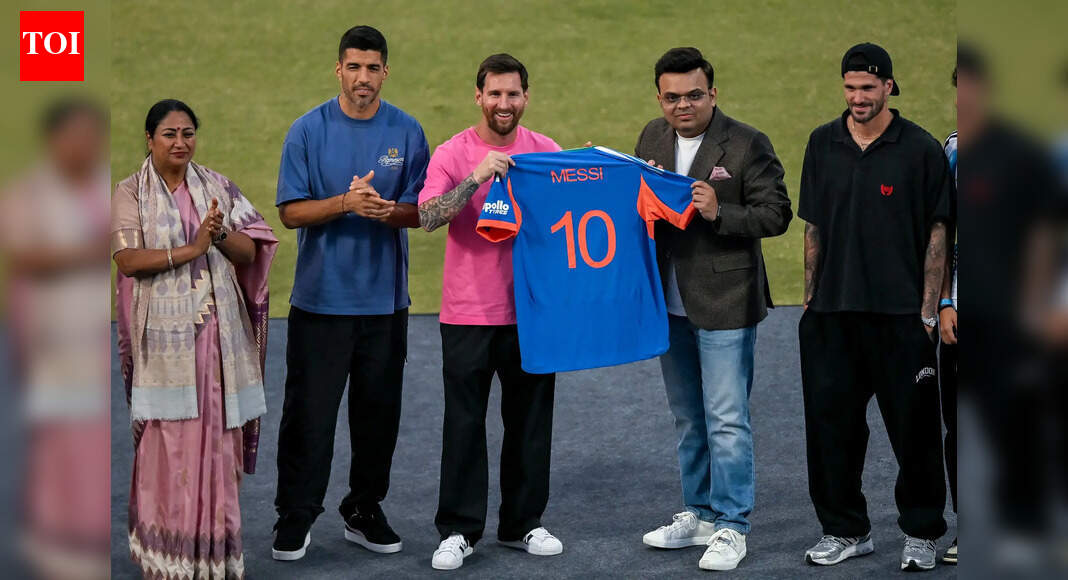
The recent Lionel Messi, Luis Suarez, and Rodrigo De Paul tour of India ignited a passionate, undeniable fervor among fans, yet simultaneously cast a harsh, revealing light on the struggling state of Indian Football. As India international Sandesh Jhingan poignantly noted, “we do love the sport, but perhaps not enough to support own players.” This stark paradox underscores a critical juncture for sports in India.
Why does this matter now for Sports Fans, Cricket Enthusiasts, and Sports Analysts? Tens of thousands packed stadiums, spending heavily, to glimpse global icons. Yet, this incredible display of passion and purchasing power exists in direct contrast to the chronic underfunding and lack of support plaguing domestic leagues, raising urgent questions about sustainability.
Organizers poured “hundreds of crores” into the GOAT Tour, matched by “tens of crores” from fans and sponsors. Meanwhile, a recent All India Football Federation (AIFF) Request For Proposal (RFP) for the Indian Super League (ISL) seeking an annual payment of ₹37.5 crore found no takers, nor did the I-League’s ₹4 crore RFP.
The euphoria of Messi’s departure will soon subside, but the critical conversation around nurturing and sustaining football at home, as highlighted by Jhingan, must now begin. What lies ahead for the beautiful game in India demands immediate attention and strategic insights.
Data at a Glance
| Football Investment Metric | Category | Amount/Detail | Status/Outcome |
|---|---|---|---|
| GOAT Tour Organizer Spend | International Event | Hundreds of Crores | Successful Event |
| GOAT Tour Fan Spend | Fan Engagement | Tens of Crores | High Ticket Sales (₹4000+) |
| ISL Annual Payment RFP | Domestic League | ₹37.5 Crores | No Takers |
| I-League Annual Payment RFP | Domestic League | ₹4 Crores | No Takers |
| ISL Club Annual Spend (Approx) | Domestic Club Operations | ₹60 Crores | Clubs Bleeding Finances |
| ISL Club Annual Losses (Approx) | Domestic Club Operations | ₹25 Crores | Significant Losses |
In-Depth Analysis
The recent ‘G.O.A.T. Tour’ starring Lionel Messi, Luis Suarez, and Rodrigo De Paul swept across India, igniting a whirlwind of passion and drawing tens of thousands to stadiums from Kolkata to New Delhi. This wasn’t merely a series of exhibition matches; it was a cultural phenomenon, a testament to India’s undeniable love for football as a global spectacle. Yet, beneath the dazzling lights and selfie-hungry crowds, a stark and rather depressing reality for Indian football, a sport often overshadowed by Cricket in India, quietly intensified. The irony was palpable: while fans queued for hours and paid thousands to witness international legends, the very foundation of India’s domestic game remains teetering on the brink, struggling for basic recognition and financial viability. This tour, in its electrifying success, inadvertently shone a harsh spotlight on the systemic challenges that continue to plague local football.
Delving into the financial disparities, the contrast becomes even more jarring. Organizers, eager to capitalize on the global appeal of football icons like Messi, reportedly invested “hundreds of crores” into facilitating the G.O.A.T. Tour. Fans, equally enthusiastic, shelled out “tens of crores,” with tickets fetching upwards of ₹4000 for a mere glimpse of the magician. Sponsors, including prominent entities like JSW and RPSG Group, also committed substantial sums. Yet, a month prior to this extravagant affair, the All India Football Federation (AIFF) found no takers for its crucial Request For Proposal (RFP) for the Indian Super League (ISL), which sought an annual payment of ₹37.5 crore. The I-League, the nation’s second-tier competition, faced a similar fate with its ₹4 crore annual requirement. This financial chasm highlights a critical misdirection of passion and capital within the sports ecosystem.
Further exacerbating the issue is the stark difference in audience engagement and recognition. While Messi’s tour generated frenzied social media activity, even Indian football legend Bhaichung Bhutia, with 84 national appearances, struggled for entry into a New Delhi stadium as an official guest, failing to be recognized by security. This incident, coupled with Sunil Chhetri, India’s all-time top scorer, receiving fewer headlines than Sachin Tendulkar during the tour, speaks volumes about the perceived value of local heroes versus global celebrities. The financial health of ISL clubs is precarious, with teams spending approximately ₹60 crore annually but suffering losses to the tune of ₹25 crore. Darren Caldeira, Bengaluru FC Director of Football, aptly summarized the sentiment, questioning the reward for backing a sport that many shy away from, especially as ISL game tickets, priced modestly at ₹100-300, see dwindling attendance.
For Sports Fans, Cricket Enthusiasts, and Sports Analysts, the Messi tour serves as a potent, albeit painful, revelation. It unequivocally proves that India possesses a vast, passionate football fanbase with significant purchasing power. The challenge is not a lack of interest, but rather the failure to convert this enthusiasm for global icons into sustainable support for domestic football. The current “logjam” and calls for a “financial reset” by ISL clubs, advocating for revised player salaries, underscore the urgency of the situation. Monitoring the AIFF’s response to club demands and the eventual timeline for the ISL and I-League seasons will be crucial. This is a pivotal moment for Indian football, demanding that stakeholders and fans alike look beyond fleeting celebrity appearances and collectively champion the homegrown game, transforming passive admiration into active, sustained development and viewership, ensuring the beautiful game truly thrives on Indian soil, not just through borrowed glory but through earned success.
About the Author