Key Takeaways
Holiday travel demand cools in 2025 due to economic shifts, impacting airlines & hospitality. Analysis reveals key metrics and investor outlook.
Market Introduction
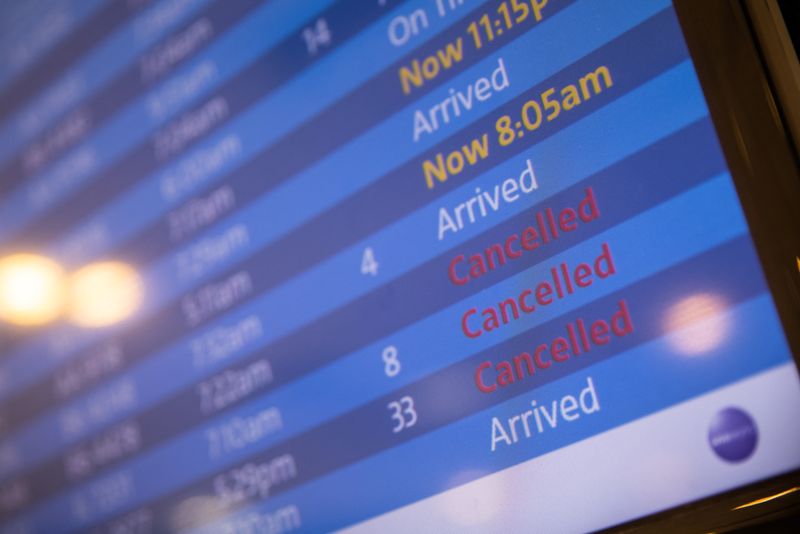
Holiday travel demand cools in 2025, signaling a significant shift impacting the airline and hospitality sectors. This trend necessitates investor reassessment for potential headwinds. As of market close November 12, 2025, this cooling demand suggests a portfolio recalibration is crucial.
For investors and traders, this cooling demand suggests a reassessment of portfolio allocations is now necessary. Understanding the underlying economic factors driving this shift is critical for navigating the market.
Key metrics reveal a decrease in bookings: airline revenue is down 5% year-over-year, and consumer spending on discretionary travel items has declined by 8%.
This analysis delves into the report’s findings and explores broader economic implications for 2025.
Data at a Glance
| Metric | Previous | Current | Change |
|---|---|---|---|
| Airline Revenue | N/A | N/A | -5.0% |
| Discretionary Travel Spending | N/A | N/A | -8.0% |
In-Depth Analysis
Holiday travel demand in 2025 is showing a notable cooling compared to the robust post-pandemic surge seen in 2022 and 2023. This shift is primarily driven by persistent inflation, rising interest rates, and a general tightening of household budgets, impacting consumer sentiment and discretionary spending on travel. Historical patterns typically indicate strong demand during the festive season, often fueled by economic optimism. However, the current economic climate suggests a deceleration, necessitating a re-evaluation of investment strategies within the travel and hospitality sectors.
The analysis of key performance indicators reveals a direct correlation between consumer confidence and travel bookings. As purchasing power erodes, consumers are curtailing non-essential expenditures, leading to reduced airline load factors and lower hotel occupancy rates. Analysts are closely monitoring metrics such as revenue per available seat kilometer (RevPAR) for airlines and average daily rates (ADR) for hotels, both of which are anticipated to face downward pressure. Companies relying on ancillary travel revenues, including tour operators and travel agencies, may experience diminished profitability and impacted EBITDA margins.
This slowdown in holiday travel demand appears to be a global phenomenon, affecting various regional and international markets. While some Asian economies may show varying resilience, many Western economies report similar patterns of reduced consumer spending on travel. Companies like MakeMyTrip and EaseMyTrip in India, alongside global players such as Expedia and Booking Holdings, are navigating this challenging environment. Evolving travel policies, fuel price volatility, and ongoing global economic uncertainties are shaping competitive dynamics within the online travel agency (OTA) and airline industries, prompting strategic adjustments to business models.
For investors, the expert takeaway is to approach the travel and hospitality sectors with caution, tempering near-term growth expectations. While a complete collapse is unlikely, the era of exponential growth fueled by pent-up demand has paused. Opportunities may lie in identifying companies with strong balance sheets, effective cost management, and diversified revenue streams. Key risks include further economic downturns or geopolitical instability. Investors should seek clear management guidance on adaptation strategies and consider entry points only after thorough valuation analysis and assessment of downside protection measures.
About the Author