Key Takeaways
US Vice President Vance meets Danish and Greenlandic officials over Trump’s push to buy Greenland. Understand the geopolitical crisis, NATO implications, and local sentiment.
Overview
The geopolitical landscape is shifting, with Greenland now at the center of a significant international dispute. US Vice President JD Vance is set to meet with Denmark’s foreign minister Lars Løkke Rasmussen and Greenlandic counterpart Vivian Motzfeldt in Washington. These high-stakes discussions aim to address U.S. President Donald Trump’s controversial insistence on acquiring the Arctic island, a move Denmark’s prime minister warned could risk NATO’s stability.
This situation holds profound implications for current affairs and global diplomacy, impacting not just the immediate parties but also the broader international community. Greenland, a semiautonomous territory of the United States’ NATO ally Denmark, finds itself in an unexpected spotlight, raising questions of sovereignty and strategic interests.
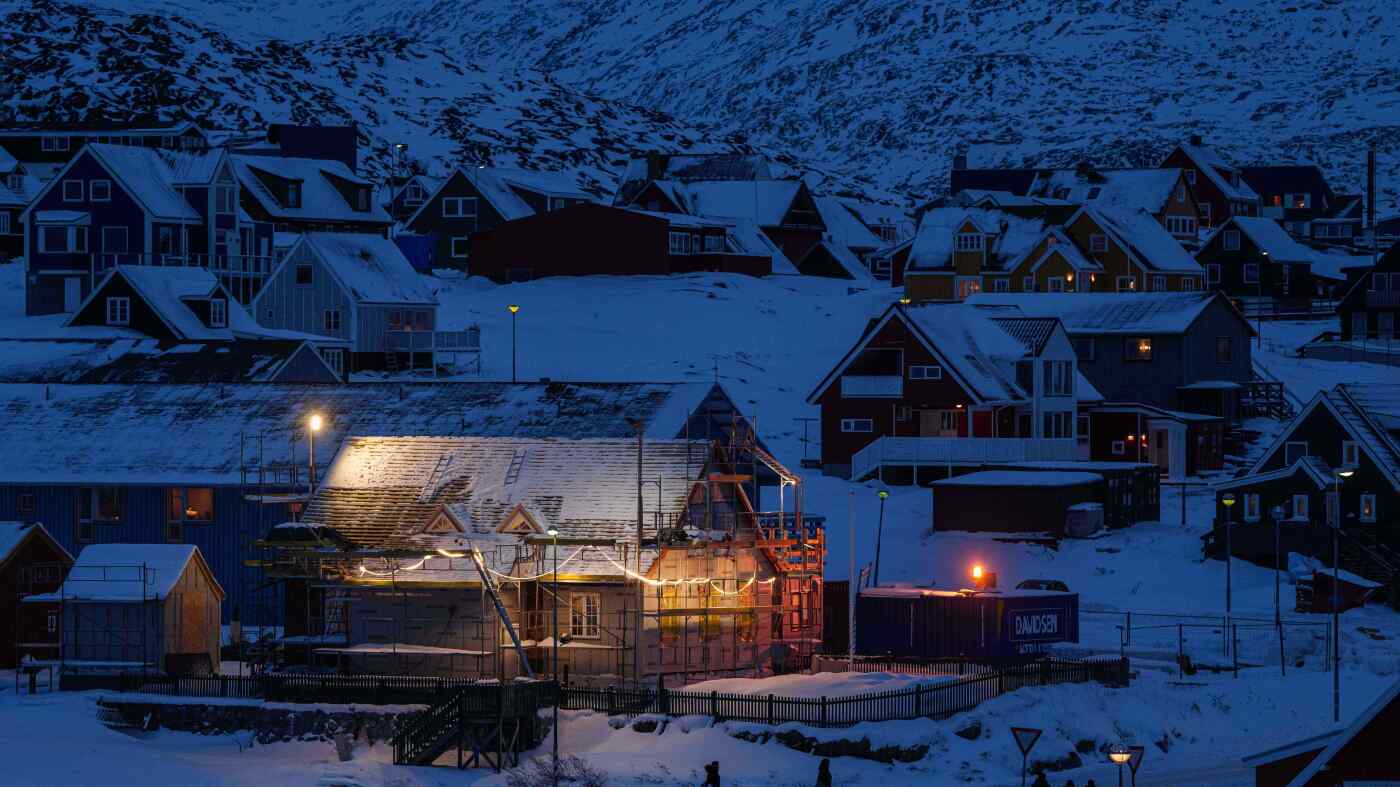
Local residents in Nuuk, Greenland’s capital, have unequivocally stated that the island is “not for sale,” urging American officials to “back off.” Greenland’s Prime Minister Jens-Frederik Nielsen further reinforced this by choosing Denmark, NATO, and the EU over the United States.
The outcome of these talks will be closely watched, particularly as the melting Arctic ice opens new trade routes and access to critical mineral deposits, making Greenland a pivotal strategic asset in today’s global dynamics amidst the ongoing Greenland crisis.
Detailed Analysis
The current diplomatic standoff regarding Greenland stems from U.S. President Donald Trump’s repeated assertions of wanting to acquire the island, even suggesting the White House has not ruled out taking it by force. This audacious stance has ignited a significant international incident, drawing a stern rebuke from Denmark, Greenland’s sovereign state. Denmark’s Prime Minister has warned that such aggressive rhetoric could potentially undermine the very foundation of NATO, an alliance critical to transatlantic security. Historically, the U.S. has maintained a military presence in Greenland, underscoring its long-standing strategic interest in the Arctic region. However, a direct demand for ownership, particularly with implied threats, marks an unprecedented escalation, forcing Danish and Greenlandic officials to Washington for urgent talks to de-escalate the burgeoning Greenland crisis.
U.S. Vice President JD Vance’s meeting with Danish Foreign Minister Lars Løkke Rasmussen and Greenlandic counterpart Vivian Motzfeldt signals an attempt to navigate this delicate geopolitical situation. At the heart of the matter are Greenland’s strategic importance and its people’s unequivocal rejection of any sale. Residents of Nuuk, Greenland’s capital, openly expressed their desire for American officials to “back off,” asserting their right to self-determination. Greenland’s Prime Minister Jens-Frederik Nielsen echoed this sentiment, publicly stating a clear preference for Denmark, NATO, and the EU over the U.S. in this context. Trump’s stated justifications for wanting Greenland, citing threats from Russian and Chinese ships, are largely dismissed by locals as “fantasy,” suggesting the true motivation lies in leveraging Greenland’s untapped critical minerals and new trade routes emerging from climate change.
The U.S.’s assertive approach towards Greenland draws parallels with other international disputes where larger powers exert pressure on smaller, strategically vital territories. Hans Nørgaard, a local Greenlander, directly linked Trump’s behavior to Russian President Vladimir Putin’s actions in Ukraine and Chinese President Xi Jinping’s aspirations for Taiwan, highlighting a perceived pattern of aggressive expansionism. While Denmark has expressed willingness for the U.S. to bolster its existing military bases on Greenland, this falls far short of ceding sovereignty. The current arrangement provides Greenlanders with essential social services like free healthcare and education from Denmark, benefits they fear losing under U.S. control. This stark contrast between national sovereignty and external territorial ambitions underscores the complex dynamics at play in today’s global current affairs.
For general readers and news consumers, the Greenland crisis serves as a critical example of evolving geopolitical competition, particularly in resource-rich and strategically important Arctic regions. The upcoming discussions between U.S., Danish, and Greenlandic officials in Washington are paramount. Their outcome will not only determine the immediate fate of the island but also carry significant implications for the principles of national sovereignty, the stability of international alliances like NATO, and the future of Arctic governance. Stakeholders worldwide, including India, should monitor how this diplomatic challenge unfolds, as it could set precedents for how territorial disputes are managed amidst shifting global power dynamics and climate-induced opportunities. The resilience of international law and the voices of local populations remain key metrics to observe.
About the Author