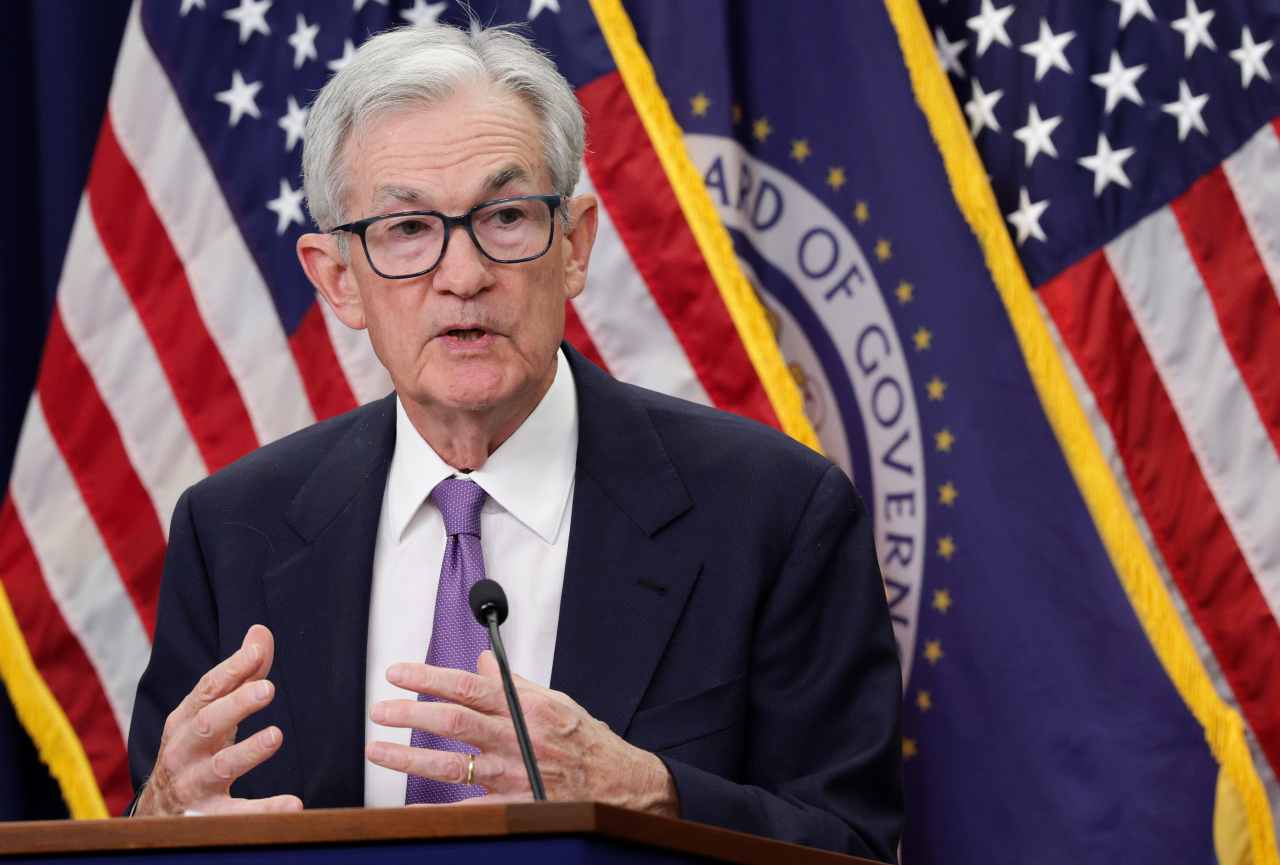
Fed rate cut expectations for December 2025 have significantly shifted, with traders now pricing in a 67% chance, down from 90% previously. This recalibration follows recent commentary from Fed Chair Powell, signaling investor uncertainty regarding monetary policy. This volatility impacts market sentiment and investment strategies across all asset classes.
The Federal Reserve’s monetary policy decisions are a cornerstone of global financial markets. The anticipation of interest rate adjustments in December 2025 is dominating investor discussions, historically impacting equity valuations, bond yields, and economic growth.
Key metrics to watch include inflation data, employment figures, and future policy statements for clearer direction. Market analysts report investor sentiment remains cautious.
This analysis delves into expert opinions and market implications for 2025.
Expert Market Analysis
The Federal Reserve’s monetary policy decisions form the bedrock of global financial markets, with the anticipated interest rate adjustments in December 2025 currently central to investor discourse. Historically, the cycles of Fed rate cuts have been meticulously observed for their profound impact on equity valuations, bond yields, and the broader trajectory of economic growth. The recent recalibration of market expectations, transitioning from a high probability of a rate cut to a more circumspect outlook, underscores a complex interplay between moderating inflation data, the resilience of the labor market, and prevailing geopolitical uncertainties that actively shape the Fed’s forward guidance. This shift is particularly significant for investors navigating the evolving economic landscape, indicating a more data-dependent approach from the central bank, often seen during periods of economic transition.
A closer examination of the market’s fundamental and technical underpinnings reveals the substantial impact of this policy shift. Although inflation shows signs of cooling, persistent wage growth and ongoing supply-side pressures continue to challenge the Federal Reserve’s established inflation targets. Consequently, traders are keenly monitoring key economic indicators, including the Consumer Price Index (CPI), the Producer Price Index (PPI), and the Non-Farm Payrolls (NFP) report, to gauge the economy’s underlying strength and momentum. Furthermore, the Federal Reserve’s balance sheet size, interest rate differentials between the U.S. and other major central banks, and the continuation of quantitative tightening (QT) are critical variables influencing overall market liquidity and investor risk appetite. A comprehensive understanding of these interdependencies is paramount for analyzing the Fed’s potential future actions, reflecting a sophisticated approach to market valuation.
In a comparative global context, the Federal Reserve’s policy stance often serves as a benchmark. While some emerging market central banks might consider earlier rate cuts due to distinct economic cycles, the Fed’s decision-making is predominantly influenced by domestic inflation dynamics and employment figures. For instance, the European Central Bank (ECB) might adopt a more dovish tone if Eurozone growth falters, potentially creating monetary policy divergence impacting currency markets and international trade flows. Similarly, the Bank of Japan (BOJ) continues its unique monetary path, influencing global capital flows. The performance of major equity indices, such as the S&P 500, Dow Jones Industrial Average, and Nasdaq Composite, is intrinsically linked to the Fed’s policy trajectory and perceived direction, highlighting its systemic importance.
The prevailing consensus among market experts suggests that while the probability of a December rate cut has diminished, it remains a tangible possibility, contingent upon forthcoming economic data. Investors are consistently advised to maintain a well-diversified portfolio, prioritizing companies with robust balance sheets and resilient business models capable of withstanding diverse interest rate environments. Key risks include a sudden inflation resurgence or a significant economic downturn, either of which could trigger a rapid policy pivot from the Fed. Conversely, sustained disinflation coupled with continued labor market strength could still lead to a dovish surprise. Staying abreast of Fed communications and economic releases is indispensable for informed investment decisions, given current market volatility and the data-dependent nature of monetary policy.
Related Topics:
Fed rate cut outlook 2025, monetary policy analysis, Federal Reserve strategy, interest rate expectations, market sentiment 2025, economic indicators, US central bank policy, December 2025 rate cut
About the Author