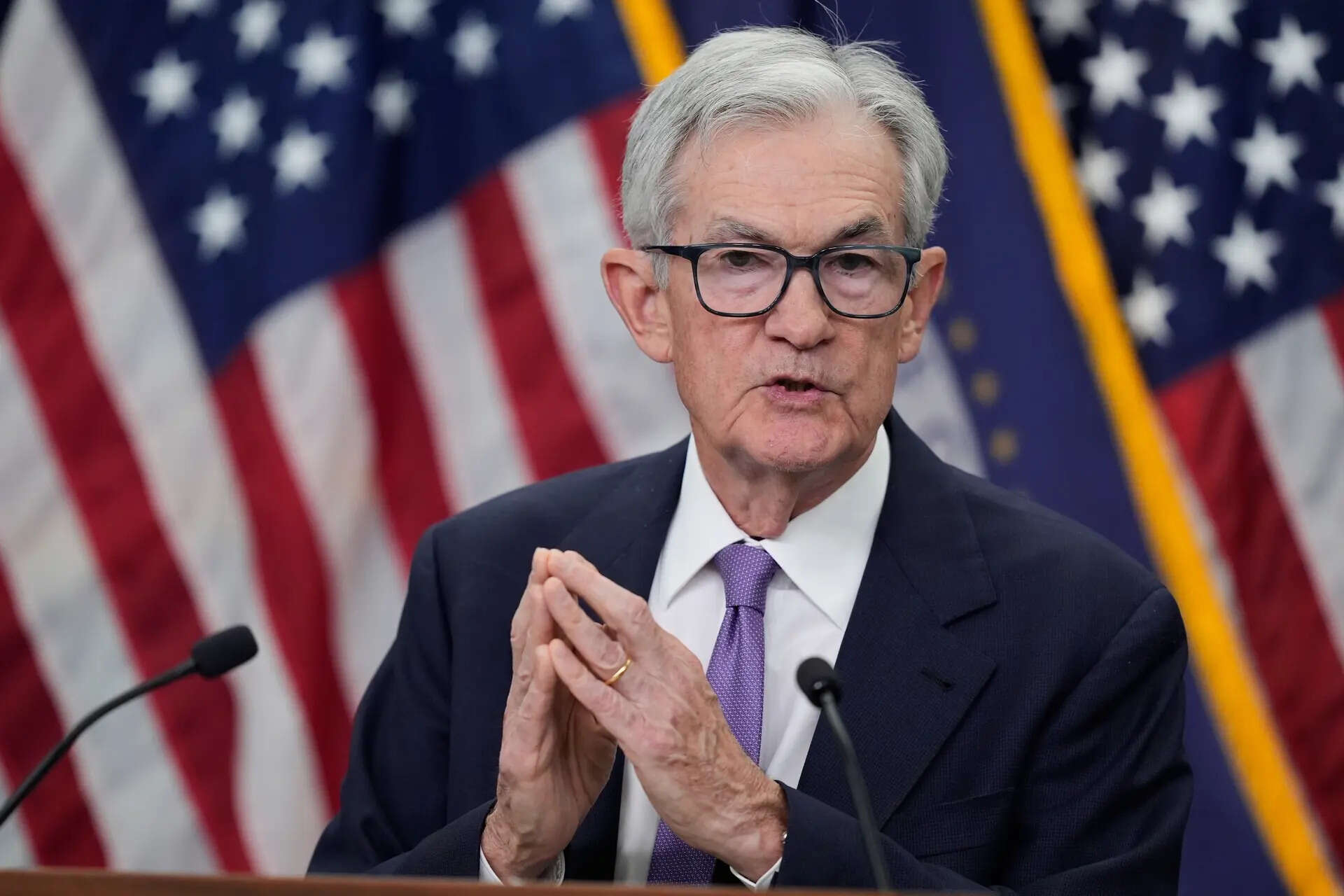
Federal Reserve Chair Jerome Powell signals uncertainty regarding a December interest rate cut, impacting global investor strategies for 2025. This cautious stance introduces potential market volatility across various asset classes, a key concern for investors navigating the current economic climate.
The Fed’s dual mandate of price stability and maximum employment necessitates balancing inflation concerns against economic growth. This directly influences borrowing costs and investment decisions worldwide, affecting corporate and consumer loans.
As of market close today, key inflation metrics like CPI and PCE remain under watch. Recent indicators suggest moderation, but “two-sided risks” persist.
Our analysis delves into Powell’s remarks and their market implications for 2025.
Expert Market Analysis
Federal Reserve Chair Jerome Powell’s recent commentary has injected significant uncertainty into market expectations for interest rate policy. Powell’s assertion that a December rate cut is “far from a foregone conclusion” underscores the complex economic data the Federal Open Market Committee (FOMC) is currently evaluating. This statement follows a period of substantial rate hikes aimed at combating elevated inflation. However, recent economic indicators suggest a moderation in price pressures, while simultaneously presenting “two-sided risks.” These risks imply that inflation could potentially reaccelerate, or conversely, economic growth might falter more severely than anticipated. The Fed’s core principles, focused on achieving price stability and fostering maximum employment, mandate a careful balancing act in every monetary policy decision. Historical patterns suggest that periods of economic transition, much like the current juncture, often see central banks adopt a highly data-dependent approach, making clear forward guidance exceptionally challenging and highly susceptible to shifts based on newly released economic reports. The acknowledgment of “strongly differing views” among FOMC members further highlights this inherent difficulty, indicating a lack of definitive consensus on the optimal path forward for monetary policy, a crucial element for forward-looking investment strategies in 2025.
From a fundamental perspective, the Fed’s decisions are heavily influenced by key inflation metrics such as the Consumer Price Index (CPI) and the Personal Consumption Expenditures (PCE) price index. Equally important are labor market indicators, including the unemployment rate and wage growth trends. Should inflation prove more persistent than expected or show signs of re-emerging, the Fed may opt to maintain higher interest rates for an extended duration. Such a scenario could exert downward pressure on corporate earnings and temper overall economic expansion, impacting P/E ratios and valuation multiples. Conversely, if disinflation continues its downward trajectory and the labor market begins to weaken significantly, the likelihood of an interest rate cut would increase. However, the “two-sided risks” Powell articulated suggest that either outcome remains plausible. Technically, the market’s reaction to this news can be observed through movements in bond yields and equity markets. A prolonged period of higher interest rates typically places pressure on growth-oriented stocks and can lead to increased market volatility as investors re-evaluate asset valuations, a key consideration for portfolio management.
Comparing the Fed’s current measured approach to that of other global central banks reveals a varied landscape. While some central banks in emerging markets have already initiated monetary policy easing cycles, developed economies, including the United States, are proceeding with greater caution and deliberation. For instance, the European Central Bank (ECB) has also signaled a patient approach, though the specific economic conditions it faces differ from those in the US. Within the context of the US economy, sectors highly sensitive to interest rate fluctuations, such as the technology industry, will be closely monitoring developments. Companies that rely significantly on debt financing may encounter higher borrowing costs, potentially impacting their profit margins and overall financial health. Furthermore, consumer spending, a primary engine of economic growth, could be influenced by borrowing costs for major purchases like homes and vehicles. While regulatory scrutiny on financial institutions’ capital adequacy remains a constant backdrop, the immediate impact of Powell’s statements is more directly related to the cost of capital and overall investment sentiment rather than direct regulatory changes.
The implications of this uncertainty are substantial for both retail and institutional investors looking towards 2025. The ambiguity surrounding the timing and magnitude of any potential interest rate cuts necessitates a recalibration of investment strategies. Investors might consider reallocating capital towards assets that exhibit lower sensitivity to interest rate fluctuations or concentrate on companies possessing robust balance sheets and resilient business models. The “two-sided risks” present a dual landscape of opportunities and challenges; while a pause in rate hikes might contribute to market stabilization, the persistent threat of inflation or an economic slowdown means that rigorous risk management is paramount. Key economic events to monitor will include upcoming inflation reports, employment data releases, and any further communication from Federal Reserve officials. While a December rate cut is no longer a certainty, the market will continue to price in potential future easing, making it critically important for investors to stay informed about the Fed’s evolving economic outlook and its discernible impact on asset prices and the broader financial ecosystem.
Related Topics:
Federal Reserve, Jerome Powell, US interest rates, interest rate cut outlook, monetary policy analysis, US economy 2025, market volatility, investor strategies
About the Author