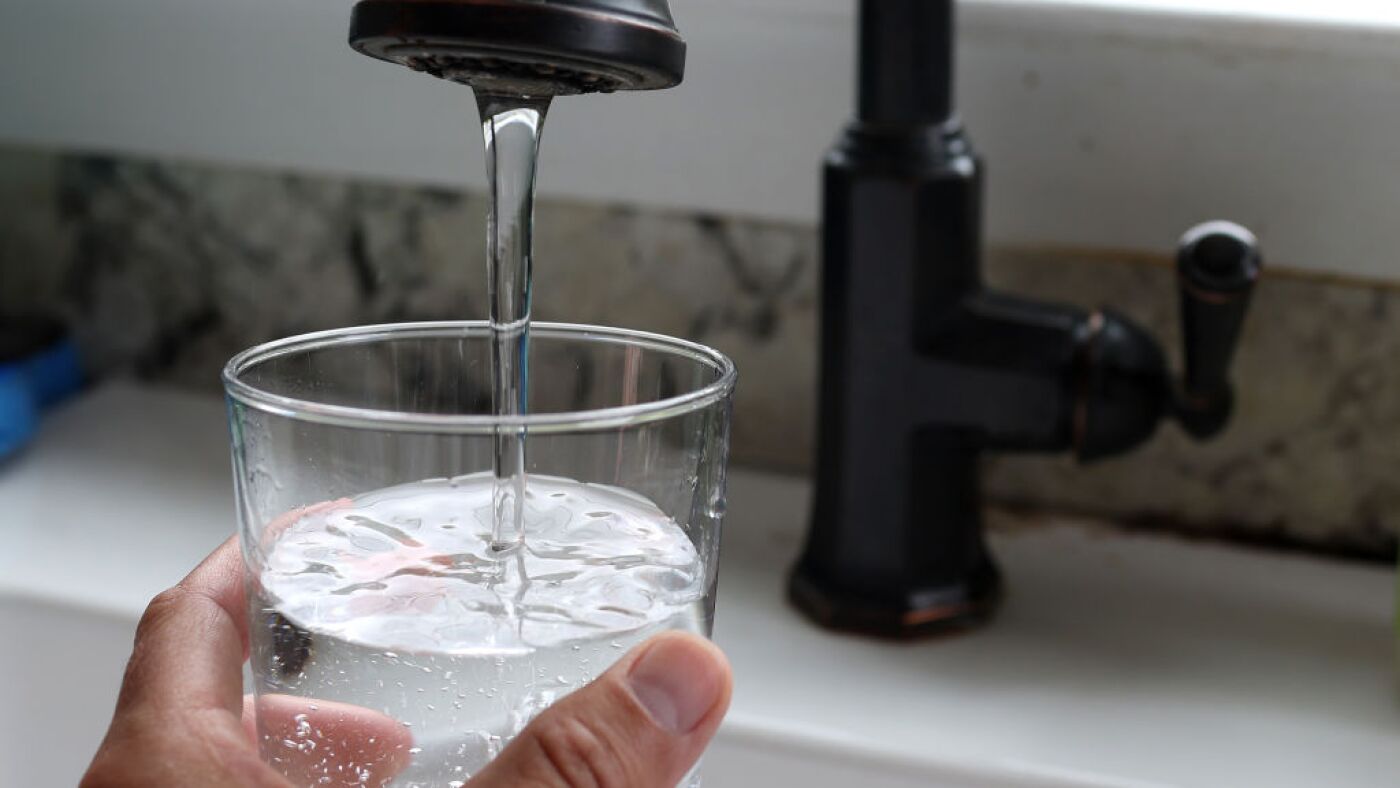

The EPA is flagging microplastics and pharmaceuticals as potentially concerning contaminants in drinking water, along with other chemicals and microbes.
Justin Sullivan/Getty Images
hide caption
toggle caption
Justin Sullivan/Getty Images
Responding to public health concerns about microplastics and pharmaceuticals in the nation’s drinking water, the Trump administration for the first time has placed them on a draft list of contaminants maintained by the Environmental Protection Agency.
The EPA announced the move Thursday, touting it as a “historic step” for the Make America Healthy Again, or MAHA, movement, which often raises concerns about toxic chemicals and plastic pollution in our food and environment.
“For too long, Americans have vocalized concerns about plastics and pharmaceuticals in their drinking water. That ends today,” EPA Administrator Lee Zeldin said in a statement.
The Safe Drinking Water Act requires the agency to publish an updated version of its Contaminant Candidate List every five years. Microplastics and pharmaceuticals appear in the draft of the upcoming list, alongside per- and polyfluoroalkyl substances, or PFAS, and other chemicals.
Their inclusion on the list gives local regulators a tool to evaluate risks in their water supply, the EPA says, and it can set the stage for more research and regulatory action — but doesn’t actually guarantee that will happen.
“This is an important first step, and I think we should recognize that,” says Sherri Mason, a researcher at Gannon University who has published studies on plastic pollution in freshwater.
However, others who have pressed for more federal action to protect drinking water see the move as a disingenuous effort to play to the MAHA base without taking substantive action.
“I think it’s fair to call this theater,” says Katherine O’Brien, an attorney with the advocacy group Earthjustice.
“It’s a distraction from the real harm that these very same agencies are doing to public health by undermining actual legal protections against toxic chemical exposure in our drinking water, and in our food,” she added.
O’Brien and others representing environmental groups noted the Trump administration has aggressively worked to pull back on regulations of toxic chemicals in the environment, including PFAS in drinking water.
She points out that some “well-known, highly toxic drinking water contaminants,” in some cases, have languished on this list for years.
Just last month, EPA announced it wouldn’t be making any regulatory actions related to nine chemicals that were listed on the most recent version of this contaminant list.
Environmental groups and a handful of governors have recently petitioned the EPA to add microplastics to the forthcoming version of the Unregulated Contaminant Monitoring Rule, or UCMR, which the agency recently submitted to the White House.

If microplastics are included in that update, the agency would be required to start collecting data about the prevalence of microplastics in drinking water.
Mary Grant with Food & Water Watch, one of the groups to petition the government, says it’s still possible the Trump administration will add microplastics to the UCMR, in addition to what it announced this week.
“We are hoping for both outcomes,” says Grant, “because on its own, this is not enough.”
The process of collecting data — and rulemaking — for drinking water can drag on for many years. Based on Thursday’s action alone, it could be a decade or longer before any new regulations come to fruition, Grant says.
“We need to understand the scope of the crisis in our drinking water,” she says.
The draft Contaminant Candidate List will be open for public comment for 60 days.
Source: https://www.npr.org/2026/04/02/nx-s1-5771155/epa-microplastics-pharmaceuticals-drinking-water
About the Author